Chicken Carbonara (Classic)
Chicken Carbonara (Classic)
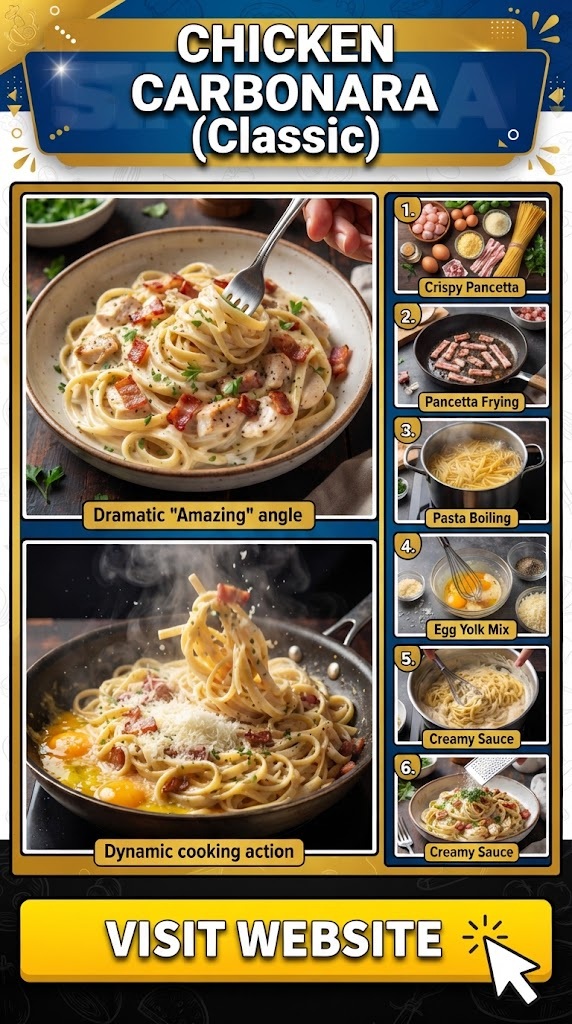
Chicken Carbonara is a creamy, comforting pasta dish that combines tender chicken, smoky bacon, perfectly cooked spaghetti, Parmesan cheese, and a silky egg-based sauce. It is one of those dinners that tastes restaurant-quality but can be prepared in your own kitchen with simple ingredients.
Unlike many modern versions of carbonara, a classic carbonara sauce does not require heavy cream. The signature creamy texture comes from eggs, freshly grated Parmesan or Pecorino Romano, rendered bacon fat, and a little hot pasta water. When these ingredients are combined at the right temperature, they create a smooth, glossy sauce that coats every strand of pasta.
Adding chicken makes the dish especially satisfying. The chicken provides lean protein and turns traditional carbonara into a complete family dinner. It is perfect for busy weeknights, date-night dinners, weekend meals, or whenever you want something warm and indulgent.
Why You’ll Love This Chicken Carbonara
There are plenty of reasons this recipe deserves a place in your regular dinner rotation.
It’s comforting.
The combination of pasta, cheese, bacon, eggs, and chicken creates an incredibly satisfying meal.
It’s surprisingly simple.
You don’t need complicated cooking techniques or unusual ingredients.
It’s creamy without heavy cream.
The sauce gets its luxurious texture from eggs, cheese, bacon fat, and pasta water.
It’s ready quickly.
Once your ingredients are prepared, the entire dish comes together in roughly 30 minutes.
It’s family-friendly.
The familiar flavors make this an easy dinner for both adults and children.
It’s customizable.
You can use spaghetti, linguine, fettuccine, or another long pasta depending on what you have available.
Complete Chicken Carbonara Recipe
Recipe Overview
Prep Time: 15 minutes
Cook Time: 20 minutes
Total Time: About 35 minutes
Servings: 4–6
Difficulty: Easy to Intermediate
Cuisine: Italian-inspired
Course: Main Course
Ingredients
For the Chicken
- 2 large boneless, skinless chicken breasts
- 1 tablespoon olive oil
- ½ teaspoon salt
- ½ teaspoon freshly ground black pepper
- ½ teaspoon garlic powder
- ¼ teaspoon paprika
- ¼ teaspoon Italian seasoning
For the Pasta
- 12 ounces spaghetti
- 1 tablespoon salt for the pasta water
- 1 to 1½ cups reserved pasta water
For the Carbonara Sauce
- 4 large eggs
- 2 large egg yolks
- 1 cup freshly grated Parmesan cheese
- ½ cup finely grated Pecorino Romano, optional
- ½ teaspoon freshly ground black pepper
- 1 small garlic clove, optional
For the Bacon
- 6 ounces bacon, chopped into small pieces
For Finishing
- ¼ cup freshly grated Parmesan
- Freshly ground black pepper, to taste
- 1–2 tablespoons chopped fresh parsley, optional
- Extra Pecorino Romano, optional
Ingredient Notes
Chicken
Boneless, skinless chicken breasts are convenient and lean. Chicken thighs can also be used if you prefer darker meat with a richer flavor.
For evenly cooked chicken, try to use pieces that are similar in thickness. If your chicken breasts are very thick, carefully slice them horizontally or gently pound them to an even thickness.
Spaghetti
Spaghetti is the classic choice because the long strands allow the sauce to cling beautifully. However, linguine, bucatini, fettuccine, or spaghetti alla chitarra can also work.
Bacon
Traditional Italian carbonara generally uses guanciale, with pancetta being another common option. Bacon is widely available and provides a delicious smoky flavor, making it an excellent practical choice for this chicken version.
If using very fatty bacon, you may not need additional cooking oil for the bacon.
Eggs
Eggs are one of the most important ingredients because they create the creamy texture.
Use fresh eggs and combine the whole eggs and yolks with the cheese before adding the mixture to the pasta.
Parmesan and Pecorino Romano
Freshly grated cheese melts much more smoothly than pre-shredded cheese.
Parmesan gives the sauce a nutty, slightly sweet flavor, while Pecorino Romano has a sharper, saltier character. A combination of the two produces excellent flavor.
Pasta Water
Do not throw away all of your pasta water.
The starchy water helps loosen the sauce and allows the cheese and egg mixture to emulsify with the bacon fat. It is one of the secrets to getting silky carbonara instead of a thick or clumpy sauce.
How to Make Chicken Carbonara
Step 1: Prepare the Chicken
Begin by preparing the chicken.
Place the chicken breasts on a clean cutting board and pat them dry with paper towels. Removing excess moisture helps the chicken brown better during cooking.
Season both sides with:
- Salt
- Black pepper
- Garlic powder
- Paprika
- Italian seasoning
Rub the seasoning gently over the chicken so it is evenly coated.
If your chicken breasts are very thick, slice them horizontally into thinner pieces. This helps them cook faster and more evenly.
Step 2: Cook the Chicken
Heat a large skillet over medium-high heat.
Add the olive oil and allow it to become hot but not smoking.
Place the seasoned chicken into the skillet.
Cook for approximately 5–7 minutes on the first side, depending on thickness. Turn the chicken and continue cooking until the second side is browned and the chicken is cooked through.
The chicken should reach a safe internal temperature of 165°F (74°C) at the thickest part.
Transfer the cooked chicken to a plate and let it rest for several minutes.
Resting allows the juices to redistribute throughout the meat, helping the chicken remain moist.
Once slightly cooled, slice the chicken into thin strips or bite-sized pieces.
Set aside.
Step 3: Cook the Bacon
Using the same skillet, add the chopped bacon.
Cook over medium heat until the bacon becomes browned and crisp around the edges.
The bacon will release flavorful fat as it cooks.
Do not discard all of the bacon fat. That flavorful fat will become part of the carbonara sauce.
If there is an excessive amount of fat, carefully remove some, leaving approximately 2–3 tablespoons in the skillet.
Turn the heat to low.
Step 4: Prepare the Egg and Cheese Mixture
While the bacon is cooking, prepare the sauce mixture.
In a medium bowl, whisk together:
- 4 eggs
- 2 egg yolks
- 1 cup Parmesan
- ½ cup Pecorino Romano
- ½ teaspoon black pepper
Whisk until the mixture becomes thick and well combined.
It should resemble a thick, creamy paste rather than a thin liquid.
Set the bowl aside.
This mixture should be ready before your pasta finishes cooking because carbonara comes together quickly.
Step 5: Boil the Pasta
Bring a large pot of water to a rolling boil.
Add approximately 1 tablespoon of salt.
Add the spaghetti and cook according to the package directions.
For the best carbonara, cook the pasta until it is al dente. This means the pasta should be tender but still have a slight firmness when bitten.
Before draining the pasta, reserve at least 1 to 1½ cups of pasta water.
This step is extremely important.
Drain the pasta, but do not rinse it.
Rinsing removes the starch that helps the sauce cling to the noodles.
Step 6: Combine the Pasta and Bacon
Immediately transfer the hot drained pasta into the skillet containing the bacon and bacon fat.
Toss the pasta thoroughly so each strand becomes lightly coated with the flavorful fat.
If the skillet is extremely hot, remove it from the burner before adding the egg mixture.
This is one of the most important steps in the entire recipe.
Step 7: Add the Egg Mixture
Slowly pour the egg and cheese mixture over the hot pasta while tossing continuously.
Keep the pasta moving.
The heat from the pasta gently cooks the eggs while the cheese melts and combines with the bacon fat.
You are aiming for a smooth, glossy sauce.
Do not place the skillet over high heat while adding the egg mixture.
Too much direct heat can scramble the eggs.
If the sauce looks too thick, add a few tablespoons of reserved pasta water and toss again.
Continue adding pasta water gradually until the sauce becomes silky and coats the spaghetti.
Step 8: Add the Chicken
Add the sliced cooked chicken to the pasta.
Toss everything together until the chicken is evenly distributed throughout the carbonara.
If necessary, add another small splash of pasta water.
The finished sauce should cling to the pasta without becoming watery.
Step 9: Finish the Dish
Taste the carbonara carefully before adding additional salt.
The bacon, Parmesan, and Pecorino can already provide plenty of salt.
Add freshly ground black pepper according to your preference.
Sprinkle additional Parmesan or Pecorino over the top.
Fresh parsley can also be added for color and freshness.
Serve immediately.
The Secret to Silky Carbonara
The biggest challenge when making carbonara is preventing the eggs from scrambling.
The solution is temperature control.
You want the pasta to be hot enough to cook the eggs gently, but you don’t want the egg mixture sitting over intense direct heat.
A reliable method is:
- Cook the pasta.
- Reserve pasta water.
- Toss pasta with bacon fat.
- Remove the pan from direct heat.
- Add the egg-and-cheese mixture.
- Toss continuously.
- Add pasta water gradually.
- Continue tossing until glossy and creamy.
Think of the process as creating an emulsion rather than simply pouring eggs over pasta.
Why Pasta Water Matters
Pasta water isn’t just leftover cooking liquid.
When pasta cooks, some starch moves into the water.
That starchy liquid helps bind the fat, cheese, and egg mixture together.
If your carbonara is too thick, pasta water can loosen it.
If it seems slightly dry, pasta water can help create a smoother consistency.
Always add it gradually.
Adding too much at once can make the sauce watery.
How to Avoid Scrambled Eggs
If you’ve ever tried carbonara and ended up with scrambled eggs, you’re not alone.
Here are the most common mistakes.
The pan is too hot
Direct high heat can cook the eggs too quickly.
The egg mixture is added without stirring
Keep the pasta moving as you add the egg mixture.
You don’t use enough pasta water
A small amount of starchy water helps create a smooth sauce.
You add cold ingredients
The cheese and egg mixture should be prepared ahead of time and ready to combine with the hot pasta.
You walk away
Carbonara requires attention during the final minute. Stay near the pan and keep tossing.
What Does Chicken Carbonara Taste Like?
Chicken carbonara has a rich, savory flavor with several layers.
The chicken adds mild, juicy meatiness.
The bacon contributes smoky, salty richness.
Parmesan provides nuttiness and umami.
Pecorino adds a sharper cheese flavor.
Eggs give the sauce its luxurious texture.
Black pepper adds a warm, slightly spicy finish.
The result is creamy, salty, savory, cheesy, and deeply comforting without needing a heavy cream sauce.
Can You Make Carbonara Without Cream?
Absolutely.
Traditional carbonara does not require heavy cream.
The creamy texture comes from the combination of:
- Eggs
- Egg yolks
- Cheese
- Bacon fat
- Hot pasta
- Starchy pasta water
When these ingredients are properly emulsified, the result can be incredibly creamy.
If you prefer a creamier modern-style pasta, you can add a small amount of heavy cream, but it is not necessary for this recipe.
Best Cheese for Chicken Carbonara
Parmesan is widely available and works very well.
For a more traditional flavor, use Pecorino Romano.
You can also combine the two.
A good combination is:
2 parts Parmesan + 1 part Pecorino Romano
Always grate the cheese finely.
Large chunks of cheese can take longer to melt and may create an uneven sauce.
Can You Use Chicken Thighs?
Yes.
Chicken thighs are excellent if you prefer richer, juicier meat.
Boneless, skinless chicken thighs are easiest to prepare.
Season them in the same way as chicken breast and cook until they reach a safe internal temperature of 165°F (74°C).
Slice them before adding them to the finished pasta.
Can You Use Pancetta Instead of Bacon?
Yes.
Pancetta provides a less smoky and more traditional Italian-style flavor.
Simply dice the pancetta and cook it until the fat renders and the pieces become lightly crisp.
Guanciale is another excellent option if available.
Can You Add Garlic?
Garlic is optional.
Traditional carbonara generally does not depend on garlic, but many home cooks enjoy adding it.
If using garlic, finely mince one small clove and briefly cook it in the rendered bacon fat.
Avoid burning it because burnt garlic can make the entire dish bitter.
Can You Add Vegetables?
Absolutely.
Although classic carbonara is simple, chicken carbonara can be customized with vegetables.
Good choices include:
- Peas
- Spinach
- Mushrooms
- Asparagus
- Broccoli
- Roasted red peppers
- Sun-dried tomatoes
For a more traditional flavor, keep the vegetables limited so they don’t overpower the egg, cheese, bacon, and pepper.
Recipe Variations
Spicy Chicken Carbonara
Add ¼–½ teaspoon crushed red pepper flakes to the bacon while cooking.
You can also add a pinch of cayenne to the chicken seasoning.
The heat works especially well with the rich cheese sauce.
Garlic Chicken Carbonara
Add minced garlic to the bacon fat after the bacon has cooked.
Cook for approximately 30 seconds before adding the pasta.
Mushroom Chicken Carbonara
Sauté sliced mushrooms in the skillet after cooking the chicken.
Cook until the mushrooms become browned and their moisture has evaporated.
Then continue with the recipe.
Spinach Chicken Carbonara
Add a couple of handfuls of fresh spinach to the hot pasta during the final tossing stage.
The heat will wilt the spinach.
Extra-Cheesy Carbonara
Increase the Parmesan slightly if you enjoy a stronger cheese flavor.
Be careful with salt because additional cheese increases the overall saltiness.
Tips for Perfect Chicken Carbonara Every Time
1. Use freshly grated cheese
Freshly grated cheese melts more smoothly.
2. Save plenty of pasta water
You can always use extra water, but you cannot recover it after draining if you didn’t save it.
3. Don’t rinse the pasta
The starch on the pasta helps the sauce adhere.
4. Use freshly cracked black pepper
Freshly ground pepper provides much more aroma.
5. Don’t overcook the chicken
Chicken breast can become dry if cooked too long.
6. Remove the pan from direct heat
This reduces the chance of scrambled eggs.
7. Toss continuously
Movement helps emulsify the sauce.
8. Serve immediately
Carbonara thickens as it cools.
Common Mistakes
Mistake 1: Using too much cream
Heavy cream can make the sauce excessively rich and can hide the traditional flavors.
Mistake 2: Overcooking the pasta
Soft pasta can become mushy when combined with the hot sauce.
Mistake 3: Not reserving pasta water
Without pasta water, it can be harder to achieve the right consistency.
Mistake 4: Adding eggs to a blazing-hot pan
This is the fastest way to create scrambled egg pieces.
Mistake 5: Using pre-shredded cheese
Some packaged cheeses contain anti-caking agents that can interfere with smooth melting.
Mistake 6: Adding too much salt
Bacon and cheese already contain significant salt.
Always taste before seasoning at the end.
How to Store Leftover Chicken Carbonara
Carbonara is best served immediately, but leftovers can be refrigerated.
Allow the pasta to cool slightly before transferring it to an airtight container.
Refrigerate within two hours of cooking.
Use refrigerated leftovers within approximately 3–4 days.
Keep in mind that the sauce will become thicker as it cools.
How to Reheat Carbonara
The microwave can work, but gentle reheating is important.
Place the pasta in a microwave-safe bowl.
Add 1–2 tablespoons of water.
Heat in short intervals, stirring between each interval.
This helps prevent the eggs from becoming rubbery.
Alternatively, reheat the pasta gently in a skillet over low heat with a splash of water.
Avoid high heat.
What to Serve With Chicken Carbonara
Because carbonara is rich, lighter side dishes work particularly well.
Green Salad
A crisp green salad with a simple vinaigrette provides freshness and acidity.
Garlic Bread
Warm garlic bread is perfect for soaking up any remaining sauce.
Roasted Vegetables
Roasted broccoli, asparagus, or zucchini can balance the richness of the pasta.
Steamed Green Beans
Simple green beans provide a fresh contrast.
Tomato Salad
Fresh tomatoes with herbs and a light dressing add brightness.
How to Make This Recipe for a Crowd
If you’re serving a larger group, increase the ingredients proportionally.
However, avoid overcrowding the skillet.
For very large quantities, cook the pasta in batches and combine everything in a large warm bowl.
The egg-and-cheese mixture should be incorporated while the pasta is still hot.
This gives you better control over the temperature and helps prevent scrambling.
Meal Prep Considerations
Chicken carbonara isn’t the ideal meal-prep pasta because the egg-based sauce is at its best immediately after cooking.
However, you can prepare some components in advance.
Cook and slice the chicken ahead of time.
Chop the bacon.
Grate the cheese.
Whisk the eggs and yolks together.
When you’re ready for dinner, cook the pasta and quickly assemble the carbonara.
This can significantly reduce preparation time.
Frequently Asked Questions
Is Chicken Carbonara traditional?
Traditional carbonara generally does not contain chicken. This recipe is a chicken variation inspired by classic carbonara techniques.
Does carbonara contain cream?
Classic carbonara does not require cream. Eggs, cheese, pasta water, and rendered pork fat create the creamy sauce.
Can I use milk instead of cream?
You don’t need milk or cream for this recipe.
What pasta is best for carbonara?
Spaghetti is one of the best choices. Linguine and bucatini also work well.
Why did my carbonara become dry?
It may have needed more pasta water. Carbonara thickens quickly, so gradually adding starchy pasta water helps maintain a silky texture.
Why did my sauce become lumpy?
The eggs may have been exposed to excessive heat, or the cheese may not have been finely grated.
Can I use leftover chicken?
Yes. Cooked leftover chicken works well. Simply slice it into bite-sized pieces and warm it gently before serving.
Can I freeze chicken carbonara?
Freezing is not recommended because the egg-and-cheese sauce can separate and become grainy when thawed.
For the best texture, make carbonara fresh.
Nutrition Information
Approximate nutrition per serving will vary depending on the exact ingredients and portion size.
A serving generally provides a substantial amount of:
- Protein from chicken and eggs
- Carbohydrates from pasta
- Fat from bacon, eggs, cheese, and olive oil
- Calcium from Parmesan and Pecorino
- Energy suitable for a satisfying main meal
For precise nutritional information, calculate the recipe using the exact brands and quantities you use.
Final Recipe Card
Chicken Carbonara
Servings: 4–6
Prep: 15 minutes
Cook: 20 minutes
Total: About 35 minutes
Ingredients
- 2 large boneless, skinless chicken breasts
- 1 tablespoon olive oil
- ½ teaspoon salt
- ½ teaspoon black pepper
- ½ teaspoon garlic powder
- ¼ teaspoon paprika
- ¼ teaspoon Italian seasoning
- 12 ounces spaghetti
- 6 ounces chopped bacon
- 4 large eggs
- 2 egg yolks
- 1 cup freshly grated Parmesan
- ½ cup Pecorino Romano
- 1–1½ cups reserved pasta water
- Extra black pepper, to taste
- Fresh parsley, optional
Directions
- Season the chicken with salt, pepper, garlic powder, paprika, and Italian seasoning.
- Heat olive oil in a large skillet over medium-high heat.
- Cook chicken until browned and cooked through, reaching 165°F (74°C).
- Transfer chicken to a plate, rest, and slice.
- Cook chopped bacon in the same skillet until browned and crisp.
- Leave a few tablespoons of bacon fat in the skillet.
- Whisk eggs, egg yolks, Parmesan, Pecorino, and black pepper in a bowl.
- Boil salted water and cook spaghetti until al dente.
- Reserve 1–1½ cups pasta water before draining.
- Add hot pasta to the bacon skillet and toss.
- Remove the skillet from direct heat.
- Add the egg-and-cheese mixture while continuously tossing.
- Add reserved pasta water a little at a time until the sauce becomes smooth and glossy.
- Add sliced chicken and toss everything together.
- Taste and adjust pepper if needed.
- Garnish with Parmesan, Pecorino, and parsley.
- Serve immediately while hot and creamy.
Final Thoughts
Classic Chicken Carbonara is a fantastic example of how a handful of everyday ingredients can create an impressive dinner. The key isn’t adding lots of cream or complicated ingredients. Instead, success comes from controlling the temperature, using good cheese, cooking the pasta properly, and taking advantage of starchy pasta water.
The combination of tender seasoned chicken, crispy bacon, salty Parmesan, sharp Pecorino, fresh black pepper, and silky egg sauce creates a pasta dinner that feels both comforting and special.
Once you understand the technique, you’ll be able to make this dish confidently and adapt it to your family’s preferences. Keep the pasta al dente, grate your cheese fresh, reserve plenty of pasta water, and most importantly, don’t let the eggs cook over intense direct heat.
Serve the pasta immediately with plenty of freshly grated cheese and black pepper, and you’ll have a rich, satisfying Chicken Carbonara that’s perfect for a cozy family dinner or an impressive weekend meal.