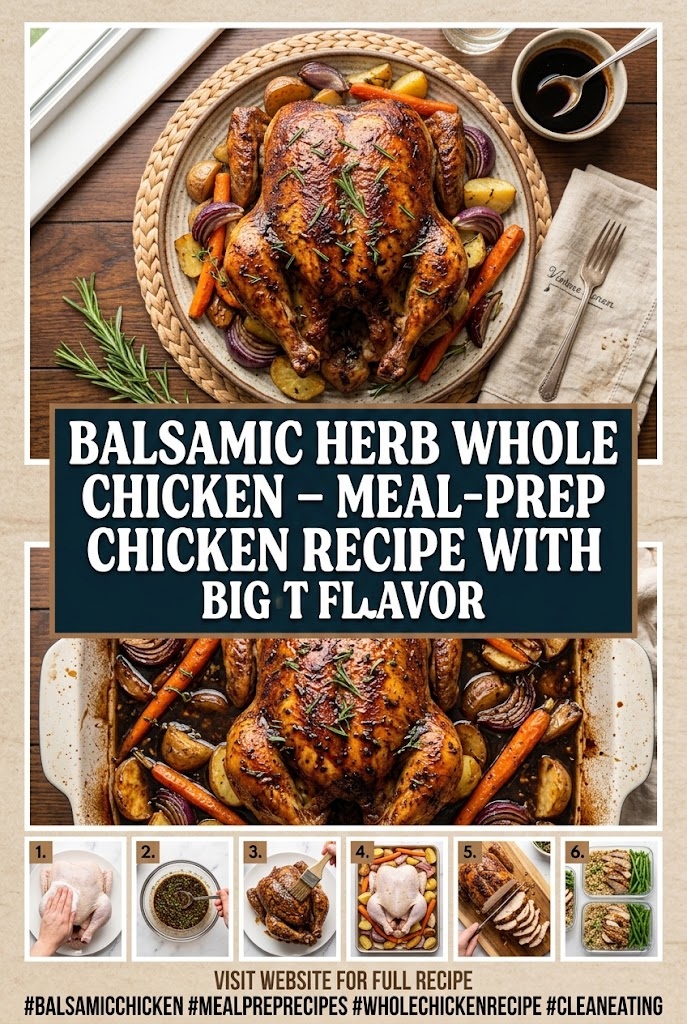
Balsamic Herb Whole Chicken – Meal-Prep Chicken Recipe With Big Flavor
The Game-Changer for Your Weekly Meal Prep
In the world of home cooking, few things are as iconic, comforting, and versatile as a perfectly roasted whole chicken. It is the centerpiece of Sunday dinners, the backbone of a healthy lifestyle, and the ultimate secret weapon for anyone looking to master the art of meal prepping. However, even the most classic dish can benefit from a modern, flavor-packed upgrade. Enter the Balsamic Herb Whole Chicken.
This isn’t just another roast chicken recipe. It is a masterclass in balancing acidity, sweetness, and earthy aromatics. By marrying the deep, complex tang of balsamic vinegar with a bouquet of fresh Mediterranean herbs, you transform a simple bird into a culinary powerhouse. Whether you are a busy professional looking to streamline your Monday-to-Friday lunches or a parent trying to get a nutritious dinner on the table that everyone actually wants to eat, this recipe is your new gold standard.
Why Roasting a Whole Chicken is the Ultimate Meal Prep Hack
In an era of pre-packaged chicken breasts and frozen tenders, the art of roasting a whole bird is sometimes overlooked. Yet, from a meal-prep perspective, it is the most efficient and economical choice you can make.
1. Cost-Effectiveness
Buying a whole chicken is significantly cheaper per pound than buying individual cuts like boneless, skinless breasts or thighs. When you buy the whole bird, you aren’t paying for the labor of the butcher. Plus, you get the bones, which are liquid gold for making homemade bone broth.
2. Flavor Variety
A whole chicken offers a mix of white and dark meat. This is crucial for meal prepping because it prevents “palate fatigue.” You can use the lean breast meat for a zesty salad on Monday and the rich, succulent thigh meat for a hearty grain bowl on Tuesday.
3. Maximum Yield
A standard 4-to-5-pound chicken can easily provide 4 to 6 servings of protein. When paired with the right grains and vegetables, one roasting session on Sunday can fuel half your week.
4. Culinary Versatility
The flavor profile of balsamic and herbs is neutral enough to fit into various cuisines but bold enough to stand on its own. It pairs beautifully with Italian flavors, Greek salads, or even a simple American-style roasted vegetable medley.
The Science of Flavor: Why Balsamic and Herbs Work
To understand why this recipe is so successful, we have to look at the “Flavor Quadrant”: Fat, Acid, Salt, and Heat.
- The Fat: Chicken skin, when rendered properly, provides a rich, savory base.
- The Acid: Balsamic vinegar is the star here. Unlike harsh white vinegar, balsamic offers a complex acidity with underlying notes of dark fruit and wood. It cuts through the richness of the chicken and helps tenderize the meat.
- The Salt: Salt is essential for drawing out moisture from the skin (to make it crispy) and seasoning the meat deeply.
- The Heat: High-temperature roasting triggers the Maillard reaction, a chemical reaction between amino acids and reducing sugars that gives browned food its distinctive flavor.
The addition of herbs—specifically rosemary, thyme, and oregano—adds an “earthy” top note that bridges the gap between the sweetness of the balsamic and the savoriness of the poultry.
The Essential Ingredient List
To achieve “Big Flavor,” you need quality ingredients. Here is a breakdown of what you’ll need and why each component matters.
The Bird
- One 4–5 lb Whole Chicken: Look for “air-chilled” chicken if possible. Air-chilled birds haven’t been soaked in water, meaning the skin will get much crispier and the flavor will be more concentrated.
The Balsamic Herb Rub
- Balsamic Vinegar: Use a decent quality balsamic. It doesn’t need to be 25-year-old traditional grade, but avoid the “balsamic glazes” that are mostly corn syrup. You want a liquid that is pourable but slightly viscous.
- Extra Virgin Olive Oil: This helps the rub spread and assists in the browning process.
- Garlic: Use fresh cloves, minced finely. Powdered garlic is a fine backup, but fresh garlic provides a pungent kick that balsamic loves.
- Fresh Rosemary: Woody and pine-like, rosemary is the classic pairing for roasted meats.
- Fresh Thyme: Offers a subtle, lemony, and earthy flavor.
- Dried Oregano: Provides a Mediterranean “pizza-herb” depth that rounds out the fresh herbs.
- Kosher Salt and Coarse Black Pepper: Essential for basic seasoning.
- Honey or Maple Syrup (Optional): Just a teaspoon helps the balsamic caramelize even further.
The Aromatics (For the Cavity)
- Half a Lemon: The steam from the lemon inside the bird flavors the meat from the inside out.
- Half an Onion: Adds a savory aroma to the juices.
- Extra Herb Sprigs: Waste nothing; put the stems and extra sprigs inside.
Step-by-Step Guide to the Perfect Roast
Step 1: Preparation is Key
Remove your chicken from the refrigerator at least 30 to 45 minutes before cooking. A cold bird will cook unevenly. Pat the chicken extremely dry with paper towels. Moisture is the enemy of crispy skin. If the skin is wet, it will steam rather than roast.
Step 2: The Spatchcock Technique (Optional but Recommended)
If you want your chicken to cook in nearly half the time and ensure every inch of skin is crispy, consider “spatchcocking” (butterflying) the bird. Use kitchen shears to cut out the backbone, then flip it over and press down on the breastbone until it lies flat. This exposes more surface area to the heat. However, if you prefer the classic look of a whole roasted bird, proceed with it whole.
Step 3: Mixing the Rub
In a small bowl, whisk together the balsamic vinegar, olive oil, minced garlic, chopped herbs, salt, and pepper. It should look like a thick, dark vinaigrette.
Step 4: Coating the Bird
Don’t just pour the rub over the top. Use your hands to rub it under the skin of the breast and thighs. This ensures the meat is seasoned, not just the skin. Then, coat the entire exterior of the bird. If you have time, let the seasoned chicken sit for 20 minutes to absorb the flavors.
Step 5: Stuffing the Cavity
Place the lemon, onion, and herb sprigs inside the cavity. This creates an “aromatherapy” session for the chicken as it roasts, keeping the breast meat moist.
Step 6: The Roasting Process
Preheat your oven to 425°F (218°C). A high initial temperature is vital for rendering the fat and starting the caramelization of the balsamic.
- Place the chicken on a rack inside a roasting pan. This allows air to circulate underneath the bird.
- Roast for about 15 minutes at the high temp, then reduce the oven to 375°F (190°C).
- Baste the chicken with its own juices halfway through the cooking time.
- Cook until a meat thermometer inserted into the thickest part of the thigh (not touching the bone) reads 165°F (74°C). This usually takes 1 to 1.5 hours depending on the size of the bird.
Step 7: The Most Important Step – Resting
Once the chicken is out of the oven, do not touch it. Let it rest on a cutting board for at least 15–20 minutes. This allows the juices to redistribute through the meat. If you cut it too soon, all that delicious moisture will run out, leaving you with dry chicken.
Troubleshooting Common Issues
“The skin is getting too dark too fast!”
Balsamic vinegar contains sugar, which can burn. If you notice the chicken is getting very dark but the internal temperature is still low, loosely tent the bird with aluminum foil. This will protect the skin while allowing the meat to continue cooking.
“The meat is dry.”
This usually happens from overcooking or skipping the resting phase. Always use a digital meat thermometer. Remember that “carry-over cooking” will occur; if you pull the bird at 160°F, it will often reach 165°F while resting.
“The skin isn’t crispy.”
This is usually due to moisture. Ensure the bird is patted dry and that you aren’t “crowding” the pan with too many vegetables, which can release steam and soften the skin.
Meal Prep Strategy: One Chicken, Five Days
The true power of the Balsamic Herb Whole Chicken lies in its life after the Sunday dinner. Here is how to stretch one bird into a week of gourmet meals.
Monday: The Classic Roast Dinner
Enjoy the chicken fresh out of the oven with roasted root vegetables (carrots, potatoes, parsnips) that were cooked in the same pan as the chicken. The vegetables will have absorbed the balsamic drippings.
Tuesday: The Balsamic Chicken Power Bowl
Shred the leftover breast meat. Serve it over a bed of quinoa or farro with baby spinach, cherry tomatoes, cucumbers, and a dollop of hummus. The balsamic notes in the chicken act as a built-in dressing.
Wednesday: Mediterranean Chicken Wraps
Slice the remaining chicken thin. Wrap it in a warm pita with tzatziki sauce, pickled red onions, and feta cheese. The herbs in the chicken perfectly complement the cool yogurt sauce.
Thursday: Pesto and Balsamic Chicken Pasta
Toss some penne or fusilli with basil pesto and chunks of the balsamic chicken. The acidity of the balsamic provides a brilliant contrast to the richness of the pine nuts and parmesan in the pesto.
Friday: The “Kitchen Sink” Salad
Chop up the last of the meat (including the dark meat from the legs). Toss it with mixed greens, dried cranberries, goat cheese, and toasted walnuts. Drizzle with a little extra balsamic vinaigrette to tie it all together.
The Bonus: Homemade Bone Broth
Once the meat is gone, do not throw away the carcass! Put the bones in a slow cooker or a large pot with some celery, carrots, and water. Simmer for 12–24 hours. The balsamic and herb residue on the bones will create a rich, deeply flavored broth that is far superior to anything you can buy in a carton.
Nutrition Profile: Why This Fits Your Goals
Whether you are following a Keto, Paleo, Whole30, or just a generally healthy diet, this recipe fits perfectly.
- High Protein: Essential for muscle repair and satiety.
- Low Carb: Unlike fried chicken or chicken with sugary BBQ sauces, the balsamic herb rub adds negligible carbohydrates.
- Healthy Fats: Using olive oil provides monounsaturated fats, which are heart-healthy.
- Rich in Micronutrients: Fresh herbs are packed with antioxidants. Rosemary, for example, contains compounds that have anti-inflammatory properties.
Elevating the Dish: Gourmet Variations
Once you’ve mastered the basic Balsamic Herb Whole Chicken, you can start experimenting with these variations to keep your meal prep exciting.
The Spicy Balsamic Kick
Add half a teaspoon of red pepper flakes to your rub. The heat from the pepper balances the sweetness of the balsamic beautifully.
The Citrus-Honey Glaze
Whisk in a tablespoon of orange marmalade or honey into your balsamic mixture. This creates a thicker, stickier glaze that results in a more “lacquered” look.
The Garlic Lover’s Version
Instead of mincing the garlic, use a garlic press to create a paste, and double the amount. Rub the paste directly onto the meat under the skin.
Pairing Recommendations
Best Side Dishes
- Roasted Brussels Sprouts: The charred leaves of the sprouts love the tang of balsamic.
- Polenta or Grits: The creamy texture is a perfect vehicle for the balsamic pan juices.
- Arugula Salad: The peppery bite of arugula cuts through the richness of the roasted bird.
Beverage Pairings
- Red Wine: Look for a medium-bodied red with good acidity, like a Chianti or a Pinot Noir. The acidity in the wine will mirror the acidity in the balsamic.
- White Wine: An oaked Chardonnay can handle the richness, but a crisp Sauvignon Blanc offers a refreshing contrast.
- Non-Alcoholic: A sparkling water with a splash of pomegranate juice and a sprig of rosemary is a sophisticated, non-alcoholic pairing.
The Art of Carving: Doing Justice to Your Work
Many people find carving a whole chicken intimidating, but it is a simple process once you know the anatomy.
- Legs First: Cut the skin between the leg and the body. Pull the leg back to find the joint, and slice through it. Repeat on the other side.
- Wings: Pull the wing away from the body and cut through the joint.
- The Breast: Find the breastbone (the center line). Slice down one side of the bone, keeping your knife as close to the bone as possible. Use long, smooth strokes to remove the entire breast. Repeat on the other side.
- Slicing: Slice the breast meat against the grain for maximum tenderness.
Storing and Reheating for Meal Prep Success
To keep your chicken tasting fresh all week, follow these storage tips:
- Cooling: Allow the meat to reach room temperature before putting it in airtight containers. Putting hot meat in the fridge creates condensation, which leads to soggy skin and faster spoilage.
- Separation: If you plan on making salads, keep the chicken in a separate container from the greens to prevent wilting.
- Reheating: To prevent the “warmed-over flavor” (WOF) that chicken sometimes gets, reheat it gently. If using an oven, 300°F with a splash of water or broth in the pan covered with foil works best. If using a microwave, use 50% power and heat in short bursts.
- Freezing: Roasted chicken freezes exceptionally well. Shred the meat and store it in freezer bags for up to 3 months. It’s perfect for quick soups or tacos later on.
Why This Recipe Deserves a Permanent Spot in Your Rotation
In the fast-paced modern world, we often sacrifice flavor for convenience. We settle for bland, meal-prepped chicken because it’s “easy.” The Balsamic Herb Whole Chicken proves that you don’t have to make that sacrifice.
With about 15 minutes of active prep time, you produce a dish that looks like it belongs in a high-end bistro. You get the nutritional benefits of a home-cooked meal, the economic benefits of a whole-animal purchase, and a flavor profile that is sophisticated and deeply satisfying.
This recipe is more than just a meal; it’s a strategy. It’s about reclaiming your time during the week by investing a little bit of effort on the weekend. It’s about eating food that makes you feel good and tastes even better. So, the next time you’re at the grocery store, skip the pre-cut packs and head straight for the whole birds. Your taste buds—and your schedule—will thank you.
Summary Checklist for Success
- Dry the skin: Use paper towels until it’s bone-dry.
- Season under the skin: Get that balsamic herb mixture directly on the meat.
- High heat start: 425°F to get the rendering process moving.
- Use a thermometer: Pull at 160–165°F.
- REST the meat: 20 minutes of patience for a juicy result.
- Save the bones: Make that broth for the ultimate meal-prep win.
By following these principles, you are not just cooking chicken; you are mastering a foundational skill that will serve you for a lifetime. The Balsamic Herb Whole Chicken is a testament to the idea that simple ingredients, treated with respect and the right technique, can create something truly extraordinary. Happy roasting!