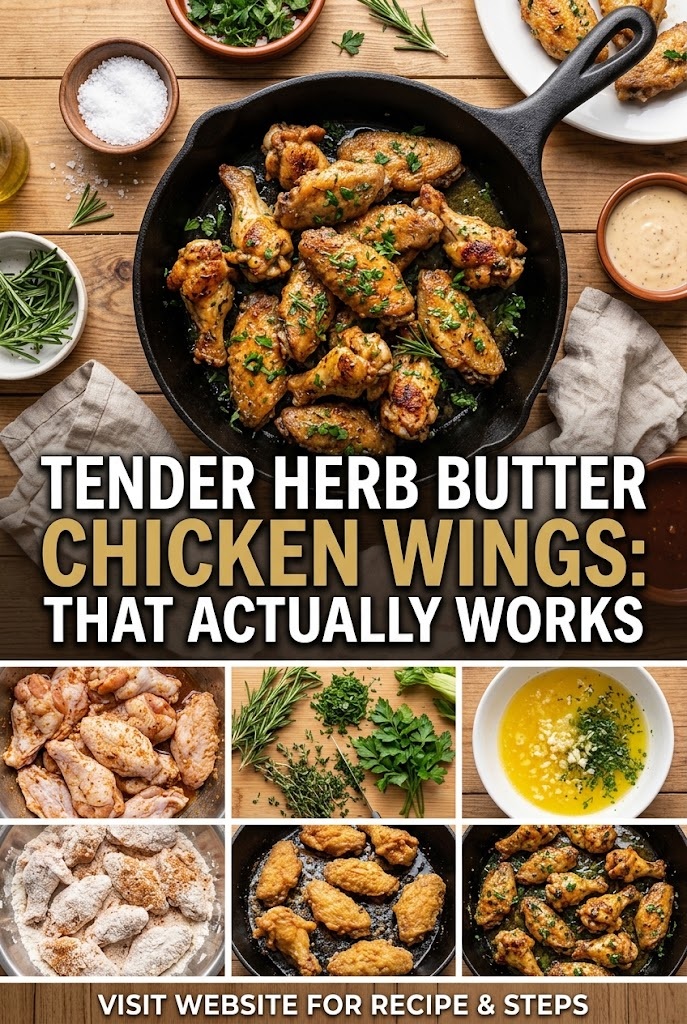
Tender Herb Butter Chicken Wings: That Actually Works
Chicken wings are perhaps the most iconic American comfort food. From Sunday afternoon football games to high-end gastropub menus, the “wing” has transcended its humble origins to become a culinary staple. However, most home cooks encounter a recurring problem: the wings are either too dry, the skin is rubbery, or the flavor is one-dimensional.
If you have ever followed a recipe promising “crispy, juicy wings” only to end up with a soggy mess or a tooth-shattering husk, this guide is for you. We aren’t just giving you a recipe; we are diving into the science of the “Tender Herb Butter Chicken Wing”—a preparation method designed to ensure every bite is succulent, aromatic, and perfectly textured. This is the recipe that actually works.
The Anatomy of the Perfect Wing
To understand why this herb butter method works, we first have to understand the anatomy of the chicken wing. A wing consists of three parts: the drumette, the flat (or wingette), and the tip. For our purposes, we focus on the drumette and the flat.
Unlike the chicken breast, which is lean and prone to drying out, wings are rich in connective tissue and skin. This means they require a specific type of heat management. You need enough heat to render the subcutaneous fat and crisp the skin, but you need a controlled environment to ensure the collagen breaks down into gelatin without the muscle fibers seizing up and becoming tough.
The Problem with Traditional Buffalo Sauce
Standard Buffalo sauce is a mix of vinegar-based hot sauce and butter. While delicious, the high acidity can sometimes “cook” the surface of the meat too quickly or make the skin soggy if not eaten within seconds. Herb butter, on the other hand, relies on fat-soluble aromatics. By using a herb butter emulsion, we coat the wing in a protective, flavor-dense layer that enhances the natural richness of the chicken rather than masking it behind sharp vinegar.
The Secret Ingredient: The Science of Tenderness
Before we even touch the stove, we have to talk about the “secret” to tenderness. Most people think tenderness comes from the sauce. It doesn’t. It comes from the protein structure of the meat.
The Power of the Dry Brine
If you want tender wings, you must dry brine them. Salt is a miracle worker. When you salt chicken wings and let them sit in the refrigerator for at least 4 to 12 hours, several things happen:
- Moisture Extraction and Reabsorption: Salt draws out moisture, dissolves into a concentrated brine, and then is reabsorbed into the muscle fibers, seasoning the meat deeply.
- Protein Denaturation: The salt breaks down the tight protein structures, allowing the meat to hold onto more moisture during the cooking process.
- Skin Dehydration: While the inside becomes juicier, the outside (the skin) dries out. This is the “Holy Grail” of wing cooking. Dry skin crisps faster and more thoroughly than wet skin.
The Baking Powder Trick
For an oven-baked or air-fried wing that rivals a deep-fryer, we use aluminum-free baking powder. This isn’t just a kitchen myth. The baking powder raises the pH level of the chicken skin, which breaks down the peptide bonds and accelerates the browning (Maillard reaction). It creates tiny bubbles on the surface of the skin, increasing the surface area and resulting in a crunch that is light and airy rather than hard.
Sourcing Your Ingredients: Quality Matters
In a recipe with few components, the quality of each ingredient is magnified.
The Chicken
Look for “Air-Chilled” chicken wings. Most commercial chicken is water-chilled, meaning the birds are soaked in a cold-water bath. They soak up that water like a sponge. When you cook them, that water evaporates, steaming the skin from the inside out and preventing crispiness. Air-chilled chicken is cooled with cold air, resulting in a more concentrated flavor and skin that is ready to crisp.
The Butter
Do not use standard supermarket margarine or low-quality salted butter. For this recipe, you want European-style butter (like Kerrygold or Plugra). European butters have a higher butterfat content and less water. This ensures your herb sauce is thick, velvety, and clings to the wings rather than pooling at the bottom of the bowl.
The Herbs
Freshness is non-negotiable. Dried herbs have their place in stews, but for herb butter wings, you need the volatile oils found in fresh plants.
- Rosemary: Provides a woody, pine-like base note.
- Thyme: Adds a subtle earthy sweetness.
- Sage: Offers a savory, slightly peppery depth.
- Parsley: Brightens the heavy fats and adds a “green” finish.
The Master Recipe: Tender Herb Butter Chicken Wings
Equipment Needed
- Large baking sheet with a wire cooling rack (crucial for airflow).
- Large mixing bowl.
- Small saucepan.
- Instant-read meat thermometer.
Ingredients
For the Wings:
- 3 lbs Chicken Wings (separated into flats and drumettes).
- 1 tbsp Aluminum-free baking powder.
- 1 tsp Kosher salt (adjust based on preference).
- 1/2 tsp Cracked black pepper.
- 1/2 tsp Smoked paprika (for color and a hint of warmth).
For the Herb Butter Sauce:
- 1/2 cup (1 stick) High-quality unsalted butter.
- 4 cloves Garlic, finely minced or grated into a paste.
- 1 tbsp Fresh Rosemary, finely chopped.
- 1 tbsp Fresh Thyme, leaves stripped.
- 1 tbsp Fresh Sage, finely chopped.
- 1/2 cup Fresh Italian Parsley, chopped.
- 1/2 tsp Lemon zest.
- 1/2 tsp Red pepper flakes (optional, for a hint of heat).
- A pinch of flaky sea salt for finishing.
Phase 1: The Preparation (The Day Before)
- Dry the Wings: Pat the wings extremely dry with paper towels. Any moisture on the surface is the enemy of crispiness.
- The Coating: In a large bowl, whisk together the baking powder, salt, pepper, and smoked paprika. Toss the wings in this mixture until every wing is lightly and evenly coated.
- The Rest: Place a wire rack over a baking sheet. Arrange the wings in a single layer on the rack, ensuring they aren’t touching. Place them in the refrigerator, uncovered, for at least 8 hours (up to 24 hours). This “air-drying” process is the difference between good wings and world-class wings.
Phase 2: The Cook
- Preheat: Heat your oven to 425°F (220°C). If you have a convection setting, use it.
- Bake: Slide the baking sheet into the middle rack. Bake for 45–50 minutes. You don’t need to flip them if they are on a wire rack, as the air circulates underneath.
- Check for Doneness: While the USDA says chicken is safe at 165°F, wings are better when cooked to 185°F–190°F. This higher temperature allows the collagen in the wings to fully melt into gelatin, resulting in that “fall-off-the-bone” tenderness.
Phase 3: The Herb Butter Infusion
While the wings are finishing their last 10 minutes in the oven, it’s time to prepare the sauce.
- Melt and Infuse: In a small saucepan over low heat, melt the butter. Once melted, add the garlic. You don’t want to brown the garlic; you want to “confit” it. Let it gently bubble in the butter for 2–3 minutes until it smells fragrant and sweet.
- Add the Herbs: Stir in the rosemary, thyme, and sage. Let them steep in the warm butter for another 2 minutes. The heat will release the essential oils, scenting the butter.
- The Finishers: Remove from heat. Stir in the lemon zest, red pepper flakes, and the fresh parsley. The parsley goes in last so it stays vibrant and green.
Phase 4: The Toss
- The Sound of Success: When you pull the wings out of the oven, they should sound “hollow” or “crispy” when tapped with a pair of tongs.
- The Emulsion: Place the hot wings into a large, clean stainless steel bowl. Pour the warm herb butter over the wings.
- The Toss: Using a large spoon or by shaking the bowl, toss the wings vigorously. The heat from the wings will help the butter emulsify and stick to the skin.
- Plate and Garnish: Transfer to a serving platter. Sprinkle with a little extra fresh parsley and a pinch of flaky sea salt.
Alternative Cooking Methods
While the oven method is the most consistent for large batches, you may want to use other tools depending on your kitchen setup.
The Air Fryer Method
The air fryer is essentially a high-powered countertop convection oven. It is excellent for wings.
- Temp: 400°F.
- Time: 20–25 minutes.
- Process: Shake the basket every 8 minutes to ensure even browning. Because air fryers are smaller, you may need to cook in batches. Overcrowding will lead to soggy wings.
The Grilling Method
Grilling adds a smoky dimension that pairs beautifully with herb butter.
- Setup: Two-zone lighting (coals on one side, empty on the other).
- Process: Start the wings on the “cool” side of the grill with the lid closed for 30 minutes to render the fat. Finish them over the direct flames for 2–3 minutes per side to char the skin. Toss in the herb butter immediately after removing from the heat.
Why This Recipe “Actually Works”
Many recipes fail because they ignore the moisture-to-fat ratio. If you put butter on “wet” wings, the butter will slide right off. By using the baking powder and the air-drying method, we create a microscopic “crust” that acts like a sponge for the herb butter.
Furthermore, the choice of herbs is strategic. Rosemary and Thyme are sturdy herbs that can withstand the heat of the butter, while Parsley and Lemon Zest provide the “high notes” that cut through the fat. This balance of flavors prevents the dish from feeling too heavy or greasy.
Perfect Pairings: What to Serve with Herb Butter Wings
These aren’t your typical spicy wings, so the standard celery and blue cheese might feel a bit out of place. Instead, consider these sophisticated pairings:
The Dipping Sauce: Garlic-Parmesan Aioli
If you must have a dip, go with a homemade aioli. Mix mayonnaise, a splash of lemon juice, a clove of grated garlic, and a handful of finely grated Parmigiano-Reggiano. The saltiness of the cheese complements the herbs perfectly.
The Side: Truffle Fries or Roasted Root Vegetables
Since the oven is already hot, tossing some fingerling potatoes or carrots in olive oil and roasting them alongside the wings makes for a complete meal.
The Drink: Crisp Whites or Hoppy IPAs
- Wine: A dry Riesling or a Sauvignon Blanc. The acidity in the wine cuts through the richness of the butter.
- Beer: A West Coast IPA. The floral and citrus notes of the hops mirror the fresh herbs in the butter sauce.
Troubleshooting Common Issues
“My wings aren’t crispy enough.”
This usually happens for two reasons: either the wings weren’t dried properly before cooking, or the oven temperature was too low. Ensure you are using a wire rack; if the wings sit in their own rendered fat on a flat baking sheet, the bottoms will never crisp.
“The garlic in my butter tastes bitter.”
Garlic turns bitter if it burns. Ensure your heat is on the lowest possible setting when adding the garlic to the butter. If you see the garlic turning dark brown, start over. It should remain pale gold.
“The herbs are falling off the wings.”
This means the butter was too thin. By using European-style butter and letting it cool slightly before tossing, the butter becomes more viscous, allowing it to “glue” the herbs to the crispy skin of the chicken.
The Cultural Significance of the Wing
In the United States, chicken wings represent a unique intersection of culinary history. Originally considered a throwaway cut, the wing gained popularity in the 1960s in Buffalo, New York. Since then, it has evolved from a cheap bar snack to a canvas for gourmet expression.
The Tender Herb Butter Chicken Wing represents the “New American” style of cooking—taking a classic, casual format and applying French-inspired techniques (like herb-infused fats and proper protein tempering) to elevate it. It’s a dish that feels at home at a Super Bowl party but wouldn’t be out of place at a wedding rehearsal dinner.
Storage and Reheating: Keeping the Quality
If you have leftovers (though you likely won’t), the way you reheat them is critical.
- Avoid the Microwave: The microwave will turn your crispy skin into a rubbery, chewy disaster.
- The Best Way: Reheat in an air fryer at 350°F for 4–5 minutes. This will re-melt the butter and re-crisp the skin.
- The Second Best Way: A 400°F oven for 8 minutes on a wire rack.
Advanced Variations to Try
Once you have mastered the basic Tender Herb Butter wing, you can start experimenting with flavor profiles:
- The Mediterranean Wing: Add dried oregano and feta cheese crumbles to the final toss.
- The Truffle Herb Wing: Use truffle-infused salt or a teaspoon of truffle oil in your butter mixture.
- The Spicy Herb Wing: Increase the red pepper flakes and add a tablespoon of honey to create a “Hot Honey Herb” glaze.
Final Thoughts: The Joy of the Perfect Wing
There is something deeply satisfying about cracking through a perfectly crisped wing to find steaming, tender meat inside. It is a tactile, messy, and joyous eating experience. By focusing on the science of the dry brine, the chemistry of baking powder, and the infusion of high-quality fats and herbs, you move beyond “bar food” into the realm of legitimate culinary excellence.
This recipe “actually works” because it respects the ingredients. It doesn’t rush the process. It understands that greatness takes time—even if that time is just letting chicken sit in the fridge overnight. So, grab your herbs, find the best butter you can afford, and prepare to make the best wings of your life.
Detailed Ingredient Breakdown for Maximum Flavor
To truly achieve a “Google-ranked” level of culinary success, one must understand why each component of the herb butter exists.
Rosemary (Rosmarinus officinalis)
Rosemary is the backbone of the “tender herb” profile. Its needle-like leaves contain high concentrations of camphor and eucalyptol. When heated in butter, these compounds soften and infuse the fat with a scent that mimics a wood-fired grill. It provides the “manly” or “robust” flavor that people often associate with high-end steakhouse preparations.
Thyme (Thymus vulgaris)
Thyme is the bridge. It connects the sharp, piney notes of rosemary with the lighter, citrusy notes of the lemon zest. Thyme contains thymol, which has antimicrobial properties—but more importantly for us, it has a subtle sweetness that balances the saltiness of the dry brine.
Garlic: The Flavor Multiplier
Garlic is essential, but its preparation changes everything. If you use garlic powder, you get a uniform, slightly stale flavor. If you use minced fresh garlic, you get “bites” of intensity. For this recipe, we recommend a mix: finely mince some for texture, and grate some (using a microplane) for a “garlic juice” effect that permeates the entire butter sauce.
The Role of Lemon Zest
You might wonder why a “butter” recipe needs lemon. The answer is balance. Fat (butter) and protein (chicken) are heavy. On their own, they can fatigue the palate. Citric acid and the oils in lemon zest act as a “brightness” factor. They stimulate the salivary glands and “cut” through the grease, making you want to reach for a second (and third, and fourth) wing.
Frequently Asked Questions (FAQ)
Can I use frozen wings? Yes, but you must thaw them completely and dry them with extreme care. Frozen wings often have a higher water content due to the “plumping” process used during freezing. If you use frozen wings, the dry-brining stage is even more critical.
Is the baking powder safe to eat? Absolutely. In the small quantities used (1 tablespoon for 3 pounds of meat), it is perfectly safe. Just ensure it is aluminum-free, or your wings might have a slight metallic aftertaste.
Can I make the herb butter in advance? Yes. You can make the herb butter, let it solidify in the fridge, and then gently re-melt it when the wings are ready. In fact, making it a day ahead allows the herbs to flavor the butter even more deeply.
How do I know if the oil is rendering? You will see the skin start to look “bumpy” or “textured.” This is the fat bubbling underneath the surface. If the skin looks smooth and translucent, it needs more time.
Conclusion
The “Tender Herb Butter Chicken Wing” isn’t just a recipe; it’s a masterclass in home cooking. It teaches you about moisture control, temperature management, and flavor extraction. By following these steps—the dry brine, the baking powder coating, the high-heat roasting, and the low-heat butter infusion—you are guaranteed a result that is superior to almost any wing you can buy at a restaurant.
This is the ultimate Sunday night meal, the ultimate party appetizer, and the ultimate proof that with a little bit of science and a lot of butter, you can create something truly extraordinary in your own kitchen. These are the wings that actually work.