
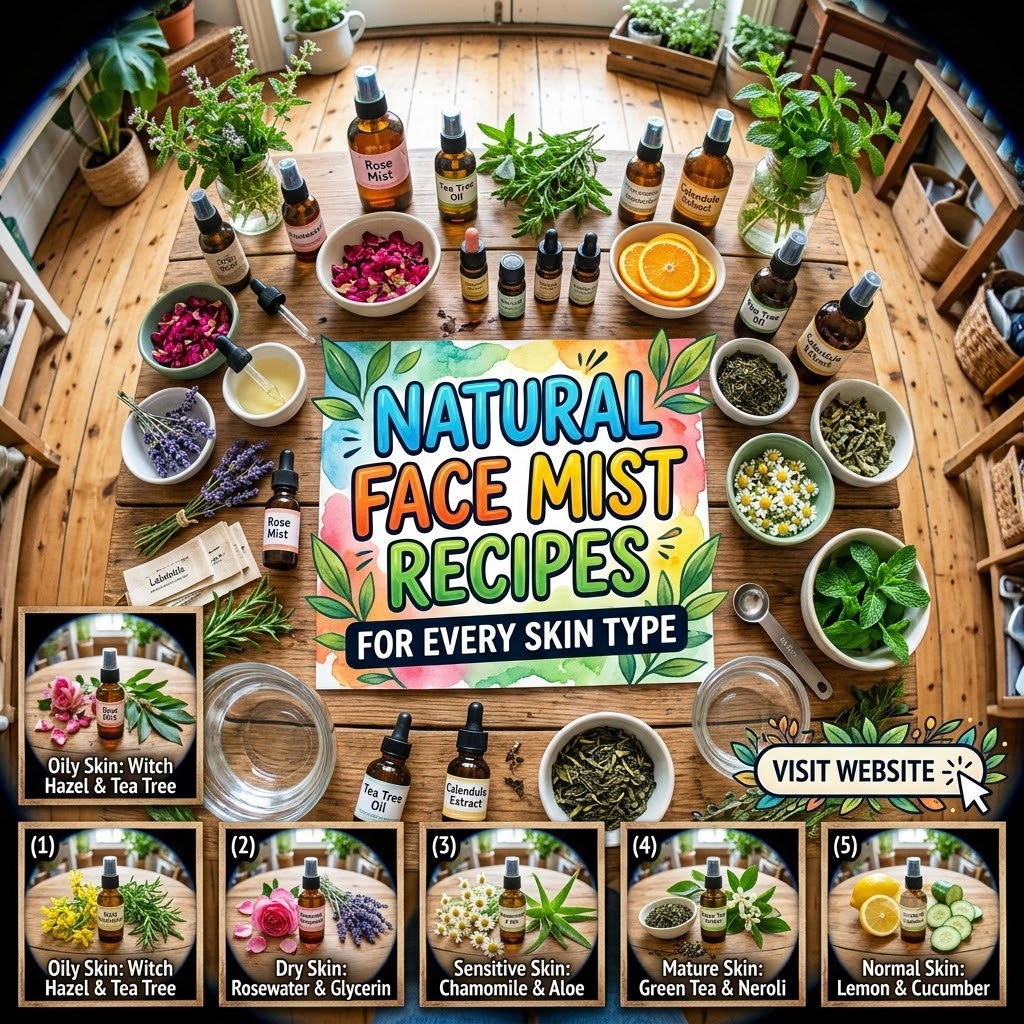
Natural Face Mist Recipes for Every Skin Type
Natural Face Mist Recipes for Every Skin Type: DIY Hydrating Sprays for Glowing Skin
.Whether you’re dealing with dry patches, excess oil, sensitivity, or simply want a daily pick-me-up, there’s a homemade face mist recipe waiting for you. In this comprehensive guide, we’ll explore everything you need to know about making natural face mists—from the best ingredients for each skin type to step-by-step instructions, safety precautions, and answers to your most common questions.
Natural Face Mist Recipes for Every Skin Type
Introduction
Natural face mists are a simple and refreshing way to keep your skin hydrated throughout the day. Made with gentle ingredients like rose water, aloe vera, green tea, and cucumber, these DIY mists can help soothe, refresh, and nourish your skin without harsh chemicals. Whether you have dry, oily, combination, sensitive, or acne-prone skin, there’s a natural face mist recipe to match your skin’s unique needs.
Why Use a Natural Face Mist?
- Provides instant hydration
- Refreshes tired-looking skin
- Helps calm redness and irritation
- Supports a healthy skin barrier
- Adds a natural glow
- Can be used before or after makeup
- Made with simple, affordable ingredients
Ingredients You’ll Need
- Rose water
- Distilled water
- Aloe vera gel or juice
- Cucumber juice
- Green tea
- Chamomile tea
- Witch hazel (alcohol-free)
- Lavender water
- Vitamin E oil (optional)
- Spray bottle
- Small funnel
Recipe 1: Hydrating Rose & Aloe Face Mist (For Dry Skin)
Ingredients
- ½ cup rose water
- 2 tablespoons aloe vera gel
- 1 teaspoon vegetable glycerin (optional)
- 2 drops vitamin E oil
How to Make
- Combine all ingredients in a clean spray bottle.
- Shake well before every use.
How to Use
Spray onto clean skin morning, evening, or anytime your skin feels dry.
Benefits
- Deeply hydrates skin
- Softens rough patches
- Leaves skin smooth and glowing
Recipe 2: Green Tea Face Mist (For Oily Skin)
Ingredients
- ½ cup cooled green tea
- ¼ cup distilled water
- 1 tablespoon alcohol-free witch hazel
How to Make
Mix ingredients in a spray bottle and refrigerate.
How to Use
Mist over the face after cleansing or during the day.
Benefits
- Refreshes oily skin
- Helps reduce excess shine
- Provides antioxidant protection
Recipe 3: Cucumber Cooling Mist (For Sensitive Skin)
Ingredients
- ½ cup cucumber juice
- ¼ cup rose water
- 2 tablespoons aloe vera juice
How to Make
Blend cucumber, strain the juice, and combine with the remaining ingredients.
How to Use
Spray whenever skin feels warm, irritated, or dry.
Benefits
- Soothes sensitive skin
- Cools redness
- Provides lightweight hydration
Recipe 4: Chamomile Calming Mist (For Irritated Skin)
Ingredients
- ½ cup cooled chamomile tea
- ¼ cup distilled water
- 1 tablespoon aloe vera juice
How to Make
Mix well in a sterilized spray bottle.
How to Use
Apply after cleansing or after sun exposure.
Benefits
- Calms irritated skin
- Helps reduce the appearance of redness
- Leaves skin feeling comfortable
Recipe 5: Balancing Lavender Face Mist (For Combination Skin)
Ingredients
- ½ cup lavender water
- ¼ cup rose water
- 1 tablespoon aloe vera juice
How to Make
Combine ingredients and shake well.
How to Use
Mist over the face morning and night.
Benefits
- Balances moisture
- Refreshes both dry and oily areas
- Leaves skin feeling fresh
How to Store Homemade Face Mist
- Store in a clean glass spray bottle.
- Keep refrigerated for maximum freshness.
- Use within 5–7 days if made with fresh juices or tea.
- If using only shelf-stable hydrosols and preservatives, follow the product instructions and shelf-life guidance.
Helpful Tips
- Always perform a patch test before using a new ingredient.
- Use distilled water to reduce contamination.
- Avoid touching the spray nozzle directly.
- Shake before each use if ingredients separate.
- Discard immediately if the mist develops an unusual smell, color, or appearance.
Precautions
- Avoid spraying directly into your eyes.
- Stop use if irritation occurs.
- People with allergies to botanical ingredients should avoid those specific ingredients.
- Homemade face mists are not a replacement for medical treatment for skin conditions.
Frequently Asked Questions
Can I use a face mist every day?
Yes. Most gentle face mists can be used several times a day as needed.
Do homemade face mists need refrigeration?
Fresh recipes made with tea, cucumber, or aloe are best kept refrigerated and used within a week.
Can I wear face mist over makeup?
Yes. A light mist can refresh makeup without disturbing it.
Which face mist is best for oily skin?
The green tea and witch hazel mist is a good choice for many people with oily skin because it provides lightweight hydration while helping reduce excess shine.
Conclusion
Natural face mists are an easy and affordable addition to your skincare routine. By choosing ingredients that match your skin type, you can enjoy refreshing hydration and a healthy-looking complexion throughout the day. Make small batches, store them properly, and use them regularly for the best results.
What Is a Natural Face Mist?
A natural face mist is a lightweight, water-based spray designed to hydrate, refresh, and nourish your skin throughout the day. Unlike heavy moisturizers or serums, a face mist delivers a fine, even layer of moisture that absorbs quickly without feeling greasy or heavy.
Face mists have been used for centuries across various cultures. Rose water, for example, has a long history in Middle Eastern and South Asian beauty traditions, where it was used as a gentle toner and skin soother. Today, natural face mists are experiencing a well-deserved revival as people seek cleaner, more personalized skincare options.
A good natural face mist does more than just wet your skin. It can help balance your skin’s pH, prepare your face to absorb other skincare products more effectively, reduce inflammation, minimize the appearance of pores, and leave you feeling refreshed and revitalized. The best part? When you make your own, you have complete control over every single ingredient that touches your skin.
Why Make Your Own Face Mist?
Creating your own natural face mist recipes offers several distinct advantages over buying commercial products:
-
Complete ingredient control: You know exactly what’s going onto your skin—no hidden chemicals, artificial fragrances, or unnecessary preservatives.
-
Customization for your skin type: You can tailor each recipe to address your specific concerns, whether that’s dryness, oiliness, acne, or sensitivity.
-
Cost-effective: Many ingredients are already in your kitchen, making DIY face mists significantly more affordable than high-end store-bought options.
-
Freshness: Homemade mists are made in small batches, ensuring you’re always using fresh, potent ingredients.
-
Eco-friendly: You can reuse glass spray bottles and reduce plastic waste from commercial skincare packaging.
Essential Ingredients for Natural Face Mists
Before we dive into specific recipes, let’s explore the key ingredients you’ll be working with. Each plays a unique role in nourishing and protecting your skin.
Aloe Vera Gel
What it is: A clear, gel-like substance extracted from the leaves of the aloe vera plant.
Purpose in face mists: Aloe vera is a skincare superstar known for its soothing, hydrating, and healing properties. It instantly calms irritated skin, provides deep hydration without clogging pores, and contains vitamins, minerals, and antioxidants that support skin health. Aloe vera is gentle enough for all skin types and is particularly beneficial for sensitive or sun-exposed skin.
Rose Water
What it is: A floral water created by steam-distilling rose petals.
Purpose in face mists: Rose water is a classic face mist ingredient for good reason. It helps balance your skin’s pH level, has mild astringent properties, and provides a soothing, refreshing sensation. Rose water also has anti-inflammatory properties that can help reduce redness and calm irritated skin. Plus, its delicate floral scent offers a subtle aromatherapy benefit.
Vegetable Glycerin
What it is: A clear, odorless liquid derived from plant oils.
Purpose in face mists: Glycerin is a powerful humectant, meaning it attracts moisture from the air and draws it into your skin. When combined with rose water or other liquids, glycerin helps lock in hydration and leaves your skin feeling soft, smooth, and dewy. A little goes a long way—just a few drops can significantly boost a mist’s hydrating power.
Witch Hazel
What it is: A natural astringent derived from the bark and leaves of the witch hazel shrub.
Purpose in face mists: Witch hazel is excellent for oily and acne-prone skin. It helps tighten pores, control excess oil production, and has natural anti-inflammatory properties. When choosing witch hazel for your face mist, always opt for an alcohol-free version to avoid drying out your skin.
Cucumber Juice
What it is: Fresh juice extracted from cucumbers.
Purpose in face mists: Cucumber is packed with antioxidants and anti-inflammatory compounds that cool, soothe, and refresh the skin. It’s particularly beneficial for sensitive or sun-kissed skin and provides a gentle, cooling sensation that feels wonderful on hot days.
Green Tea
What it is: Brewed tea made from the leaves of the Camellia sinensis plant.
Purpose in face mists: Green tea is rich in antioxidants that help protect the skin from free radical damage. It’s especially beneficial for oily and acne-prone skin, as it can help reduce excess sebum and soothe inflammation.
Essential Oils
What they are: Concentrated plant extracts with potent aromatic and therapeutic properties.
Purpose in face mists: Essential oils can add both fragrance and functional benefits to your face mist. Lavender is calming and soothing, tea tree has antibacterial properties that help with acne, and peppermint offers a refreshing, cooling effect. Always use essential oils sparingly and dilute them properly, as they are highly concentrated.
Natural Face Mist Recipes for Every Skin Type
Now, let’s get to the good part—the recipes! Below you’ll find natural face mist recipes tailored to different skin types and concerns.
1. Hydrating Rose and Glycerin Mist (For Dry Skin)
This simple yet powerful mist is perfect for dry, thirsty skin that needs an extra boost of moisture.
Ingredients:
-
½ cup rose water (pure, without additives)
-
1 teaspoon vegetable glycerin
-
½ cup distilled water
-
Clean glass spray bottle
How to make:
-
Combine the rose water, distilled water, and vegetable glycerin in a clean bowl.
-
Stir gently until the glycerin is fully incorporated.
-
Using a small funnel, pour the mixture into your spray bottle.
-
Shake well before each use.
How to use: Mist over clean skin in the morning and evening, or whenever your skin feels dry throughout the day. The glycerin acts as a humectant, pulling moisture deep into your skin and locking it there.
Storage: Keep in the refrigerator for up to two weeks. A chilled spritz feels especially refreshing and helps extend the shelf life.
2. Soothing Aloe and Cucumber Mist (For Sensitive Skin)
If your skin is prone to redness, irritation, or reactions, this gentle mist is your new best friend. It combines two of the most soothing natural ingredients available.
Ingredients:
-
2 tablespoons fresh cucumber juice (extracted from blended and strained cucumber)
-
1 tablespoon pure aloe vera gel
-
1 tablespoon distilled water
-
½ teaspoon vegetable glycerin (optional, for extra hydration)
How to make:
-
Blend fresh cucumber pieces in a blender, then strain the mixture through a fine-mesh sieve or cheesecloth to extract the juice.
-
In a small bowl, combine the cucumber juice, aloe vera gel, distilled water, and glycerin (if using).
-
Stir or whisk until the mixture is smooth and well combined.
-
Pour into a clean spray bottle using a funnel.
How to use: Spritz onto clean skin whenever you need cooling relief or soothing hydration. This mist is particularly lovely after sun exposure or on hot summer days.
Storage: Refrigerate and use within one week, as the fresh cucumber juice has a shorter shelf life.
3. Clarifying Green Tea and Witch Hazel Mist (For Oily and Acne-Prone Skin)
This refreshing mist helps balance oil production, tighten pores, and keep breakouts at bay.
Ingredients:
-
½ cup brewed green tea (cooled to room temperature)
-
2 tablespoons alcohol-free witch hazel
-
½ teaspoon aloe vera gel (for balanced hydration)
-
2–3 drops tea tree essential oil (optional, for acne-fighting properties)
How to make:
-
Brew a cup of green tea and allow it to cool completely.
-
In a bowl, combine the cooled green tea, witch hazel, and aloe vera gel.
-
If using tea tree oil, add 2–3 drops and stir well. (Tea tree oil is potent, so less is more.)
-
Pour the mixture into a clean spray bottle.
How to use: Mist over clean skin after cleansing, focusing on areas prone to oiliness or breakouts. The green tea provides antioxidants that help protect the skin, while witch hazel helps tighten pores and control excess oil.
Storage: Keep in the refrigerator and use within two weeks.
4. Calming Chamomile and Lavender Mist (For Combination Skin)
Combination skin can be tricky—dry in some areas, oily in others. This balanced mist hydrates without overwhelming any part of your face.
Ingredients:
-
½ cup brewed chamomile tea (cooled)
-
¼ cup rose water
-
1 tablespoon aloe vera gel
-
3–4 drops lavender essential oil
How to make:
-
Brew chamomile tea and allow it to cool completely.
-
Combine the chamomile tea, rose water, and aloe vera gel in a bowl.
-
Add the lavender essential oil and stir well.
-
Pour into a clean spray bottle.
How to use: Use morning and evening after cleansing, or anytime you need a calming moment. Lavender offers soothing aromatherapy benefits while chamomile helps calm any redness or irritation.
Storage: Refrigerate and use within two weeks.
5. Brightening Orange Blossom and Honey Mist (For Dull Skin)
If your skin is looking tired and lackluster, this brightening mist can help revive your complexion.
Ingredients:
-
½ cup orange blossom water
-
½ cup distilled water
-
1 teaspoon raw honey (dissolved in a little warm water)
-
2–3 drops vitamin E oil (optional, for antioxidant boost)
How to make:
-
In a small bowl, dissolve the honey in a tablespoon of warm water until fully liquid.
-
Combine the orange blossom water, distilled water, and honey mixture.
-
Add vitamin E oil if using and stir well.
-
Pour into a clean spray bottle.
How to use: Mist over clean skin in the morning for a brightening, energizing start to your day. Honey is naturally hydrating and helps lock in moisture.
Storage: Refrigerate and use within one week (honey can affect shelf life).
6. Simple Rose Water Mist (For All Skin Types)
Sometimes, simple is best. This basic rose water mist is gentle, refreshing, and suitable for absolutely everyone.
Ingredients:
-
1 cup rose water (pure, preferably homemade or high-quality store-bought)
-
Optional: ½ teaspoon vegetable glycerin for extra hydration
How to make:
-
Pour the rose water directly into a clean spray bottle.
-
Add glycerin if desired and shake well.
-
That’s it—no mixing required!
How to use: Use anytime, anywhere. This mist is perfect for a quick refresh, as a makeup setting spray, or as a gentle toner after cleansing.
Storage: Keep in the refrigerator and use within two to three weeks.
How to Use Natural Face Mists
Using a face mist correctly can make a significant difference in how effective it is. Here’s how to get the most out of your DIY creation:
How much to use: 2–4 spritzes are typically sufficient to lightly cover your face. You want a fine, even mist—not dripping wet skin.
When to use it:
-
Morning and evening after cleansing, before applying moisturizer
-
Throughout the day whenever your skin feels dry, tight, or tired
-
After sun exposure to cool and soothe
-
As a makeup setting spray for a dewy finish
How to apply: Hold the bottle about 8–10 inches away from your face, close your eyes, and spritz. Allow the mist to air dry or gently pat it into your skin with clean hands. Let it absorb for a moment before applying other products.
How long to see results: You’ll notice an immediate refreshing and hydrating effect. With consistent use over several weeks, you may observe improvements in skin texture, hydration levels, and overall radiance.
Potential Benefits of Natural Face Mists
Natural face mists offer a range of potential benefits for your skin:
-
Instant hydration: A quick spritz delivers an immediate boost of moisture, helping to alleviate dryness and tightness.
-
pH balance: Many natural ingredients, particularly rose water, help balance your skin’s natural pH levels.
-
Soothing and calming: Ingredients like aloe vera, chamomile, and cucumber help reduce redness and calm irritated skin.
-
Oil control: Witch hazel and green tea can help regulate excess sebum production.
-
Antioxidant protection: Green tea, rose water, and vitamin E provide antioxidants that help protect your skin from environmental stressors.
-
Aromatherapy benefits: The natural scents of rose, lavender, and other botanicals can help uplift your mood and reduce stress.
-
Makeup setting: A fine mist can help set your makeup and give your complexion a healthy, dewy glow.
Benefits of Each Main Ingredient
Let’s take a closer look at why each ingredient is so beneficial for your skin:
| Ingredient | Key Benefits | Best For |
|---|---|---|
| Aloe Vera | Soothes irritation, deeply hydrates, promotes healing | All skin types, especially sensitive and sun-exposed |
| Rose Water | Balances pH, tones, soothes redness, provides antioxidants | All skin types |
| Glycerin | Humectant that draws moisture into skin, locks in hydration | Dry and dehydrated skin |
| Witch Hazel | Tightens pores, controls oil, anti-inflammatory | Oily and acne-prone skin |
| Cucumber | Cools, soothes, provides antioxidants | Sensitive and sun-exposed skin |
| Green Tea | Antioxidant-rich, reduces oil, fights acne | Oily and acne-prone skin |
| Lavender | Calming, soothing, anti-inflammatory | Sensitive and stressed skin |
| Honey | Hydrating, moisturizing, healing | Dry and dull skin |
Why This Remedy May Work
The effectiveness of natural face mists is rooted in both traditional knowledge and modern scientific understanding.
Traditional knowledge: Cultures around the world have used floral waters and plant extracts for skincare for centuries. Rose water has been a beauty staple in the Middle East and South Asia for generations, valued for its soothing and toning properties. Aloe vera has been used in traditional medicine for its healing and moisturizing effects.
Scientific evidence: Modern research supports many of these traditional uses. Glycerin is scientifically recognized as an effective humectant that attracts moisture to the skin. Green tea is rich in polyphenols—powerful antioxidants that help protect skin cells from damage. Aloe vera contains compounds with anti-inflammatory and wound-healing properties.
The combination of these ingredients in a fine mist allows for quick absorption and immediate relief, making face mists an effective way to deliver hydration and beneficial compounds to your skin throughout the day.
Tips for Getting the Best Results
Follow these tips to make the most of your natural face mists:
-
Use distilled or filtered water: Tap water can contain minerals and impurities that may affect the quality and shelf life of your mist.
-
Choose glass spray bottles: Glass preserves the integrity of your ingredients better than plastic and is more eco-friendly. Dark-colored glass offers additional protection from light.
-
Shake before each use: Natural ingredients can separate over time, so give your bottle a good shake before spritzing.
-
Patch test first: Always test a new mist on a small area of skin (like your inner arm) before using it on your face.
-
Keep it cool: Store your mists in the refrigerator for a refreshing cooling effect and to extend shelf life.
-
Use clean hands and equipment: Sterilize your bottles and tools before making your mist to prevent bacterial contamination.
-
Make small batches: Because homemade mists lack commercial preservatives, make only what you can use within the recommended time frame.
Common Mistakes to Avoid
When making and using natural face mists, watch out for these common pitfalls:
-
Using tap water: Tap water can introduce bacteria and minerals that shorten shelf life and potentially irritate skin. Always use distilled or filtered water.
-
Adding too much glycerin: While glycerin is wonderfully hydrating, too much can leave a sticky residue on your skin. Stick to the recommended amounts (usually ½ to 1 teaspoon per cup of liquid).
-
Overusing essential oils: Essential oils are highly concentrated and can irritate skin if used in excess. A few drops per batch is plenty.
-
Not refrigerating: Homemade mists lack preservatives and should be kept cool to prevent bacterial growth.
-
Using the wrong type of witch hazel: Many witch hazel products contain alcohol, which can dry out and irritate skin. Always choose an alcohol-free version.
-
Making too large a batch: Because homemade mists have a short shelf life, make small amounts that you can use within one to two weeks.
Safety, Side Effects, and Precautions
While natural face mists are generally safe, it’s important to keep the following precautions in mind:
Allergies and sensitivities: Even natural ingredients can cause allergic reactions in some people. Always perform a patch test before using a new mist on your face. Apply a small amount to your inner forearm and wait 24 hours to check for any redness, itching, or irritation.
Pregnancy and breastfeeding: If you are pregnant or breastfeeding, consult your healthcare provider before using products containing essential oils, as some may not be recommended during pregnancy.
Existing skin conditions: If you have eczema, rosacea, or other skin conditions, consult a dermatologist before incorporating new products into your routine.
Children: Face mists are generally safe for older children, but avoid using essential oils on young children without professional guidance.
Medications: If you are using prescription skincare products (like retinoids or acne medications), your skin may be more sensitive. Introduce new products gradually.
Excessive use: While face mists are gentle, overusing them can potentially disrupt your skin’s natural moisture barrier. Stick to 2–4 uses per day as a general guideline.
When to stop use: If you experience any redness, itching, burning, or irritation, discontinue use immediately and consult a healthcare professional if symptoms persist.
How Often Can You Use It?
Natural face mists can be used multiple times throughout the day—that’s part of their beauty! Here’s a general guideline:
-
Daily use: 2–4 times per day is perfectly safe for most people.
-
Morning and evening: Use as part of your regular skincare routine.
-
As needed: Spritz whenever your skin feels dry, tight, or in need of refreshment.
-
After sun exposure: Use as often as needed to cool and soothe sun-exposed skin.
Remember, everyone’s skin is different. Pay attention to how your skin responds and adjust frequency accordingly.
Who Should Avoid This Remedy?
While natural face mists are suitable for most people, certain individuals should exercise caution:
-
Those with known allergies to any of the ingredients (roses, aloe, chamomile, essential oils, etc.)
-
People with highly reactive skin should introduce new products very gradually and always patch test first
-
Individuals using prescription acne medications or retinoids may have increased sensitivity—consult your dermatologist
-
Pregnant or breastfeeding women should avoid essential oils without professional guidance
If you’re unsure whether a natural face mist is right for you, consult a dermatologist or qualified skincare professional.
Frequently Asked Questions
1. How long do homemade natural face mists last?
Homemade face mists typically last 1 to 2 weeks when stored in the refrigerator. Because they don’t contain commercial preservatives, they have a shorter shelf life. Always look for any changes in color, smell, or texture, and discard if you notice anything unusual.
2. Can I use tap water instead of distilled water?
It’s best to use distilled or filtered water for your face mists. Tap water contains minerals and potentially bacteria that can affect the quality of your mist and shorten its shelf life. Distilled water is inexpensive and widely available.
3. Can I add essential oils to any face mist recipe?
Yes, but always use them sparingly. Essential oils are highly concentrated and can irritate skin if used in excess. Start with 1–2 drops per ounce of liquid and never apply undiluted essential oils directly to your skin.
4. Can I use a face mist over makeup?
Absolutely! A fine mist can actually help set your makeup and give your complexion a dewy, fresh finish. Just hold the bottle at a slight distance and spritz lightly. Be careful not to oversaturate, which could cause your makeup to run.
5. Should I apply moisturizer after using a face mist?
Yes, for best results. A face mist provides an initial layer of hydration, but applying moisturizer afterward helps lock that moisture in. Think of the mist as a toner or hydration booster that prepares your skin to absorb subsequent products more effectively.
6. Can natural face mists help with acne?
Certain ingredients can be helpful for acne-prone skin. Green tea, witch hazel, and tea tree oil have properties that may help reduce excess oil, tighten pores, and fight acne-causing bacteria. However, results vary from person to person, and face mists are not a cure for acne.
7. Can I use a face mist if I have sensitive skin?
Yes—in fact, sensitive skin often benefits greatly from gentle, natural face mists. Choose recipes with soothing ingredients like aloe vera, cucumber, chamomile, and rose water. Avoid essential oils and witch hazel if your skin is highly reactive, and always patch test first.
8. Is rose water face mist good for all skin types?
Yes, rose water is suitable for all skin types. It’s gentle enough for sensitive skin, balancing enough for oily skin, and hydrating enough for dry skin. This is why rose water is such a popular base ingredient in natural face mist recipes.
9. Can I make a face mist without glycerin?
Absolutely! Glycerin is optional. Many face mists are made with just floral water or tea and water. If you have oily skin, you might prefer to skip glycerin, as it adds extra moisture. For dry skin, glycerin is a wonderful addition.
10. Why does my homemade face mist need to be refrigerated?
Refrigeration helps prevent bacterial growth and extends the shelf life of your mist. Since homemade mists don’t contain synthetic preservatives, keeping them cool is the best way to maintain their freshness and safety.
Conclusion
Creating your own natural face mist recipes is a simple, rewarding way to take control of your skincare routine. Whether you’re looking to hydrate dry skin, soothe sensitivity, control excess oil, or simply enjoy a refreshing pick-me-up, there’s a DIY face mist recipe perfectly suited to your needs.
The beauty of homemade face mists lies in their simplicity and customization. With just a few natural ingredients—many of which you may already have in your kitchen—you can create a personalized skincare product that’s free from harsh chemicals, tailored to your skin type, and gentle enough for daily use.
Remember to start with quality ingredients, use distilled water, store your mists properly in the refrigerator, and always patch test before regular use. And if you have any concerns about how a natural face mist might interact with your skin or existing skincare routine, don’t hesitate to consult a dermatologist.
So go ahead—gather your ingredients, find your favorite recipe, and give your skin the refreshing, natural hydration it deserves. Your complexion will thank you.
Disclaimer: This article is for informational purposes only and does not constitute medical advice. Always consult a qualified healthcare professional before making changes to your skincare routine, especially if you have pre-existing skin conditions, are pregnant, or are taking medications.