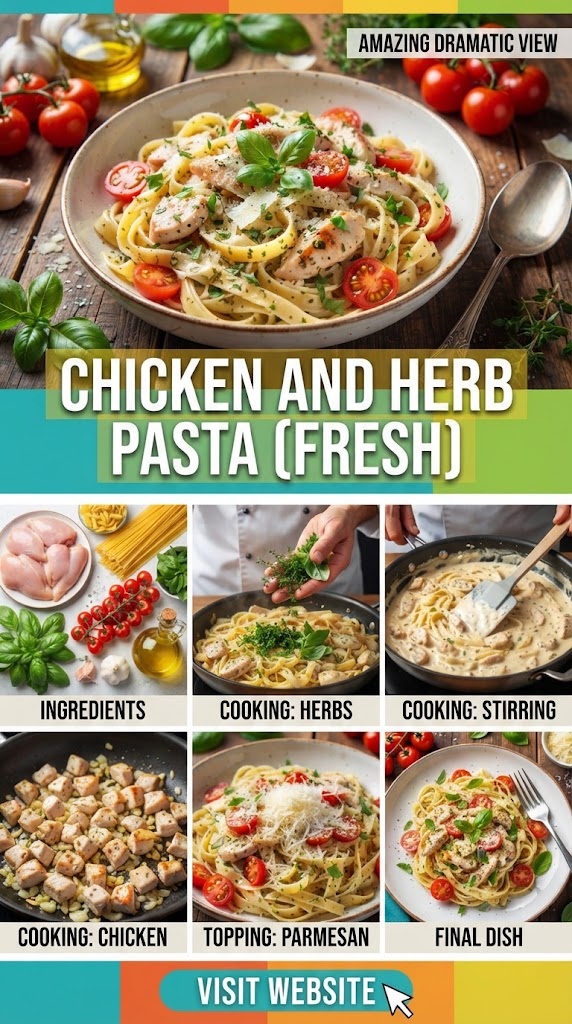
Chicken and Herb Pasta (Fresh)
Chicken and Herb Pasta (Fresh) — A Simple, Flavorful Homemade Dinner
Chicken and Herb Pasta is the kind of comforting meal that feels fresh, homemade, and satisfying without requiring complicated ingredients or hours in the kitchen. Tender pieces of seasoned chicken are combined with perfectly cooked pasta, fresh herbs, garlic, Parmesan cheese, and a light, silky sauce that coats every strand.
This recipe is especially good when you want something flavorful but not overly heavy. Fresh parsley and basil bring brightness, while garlic, Parmesan, olive oil, and a little butter create a rich savory base. The chicken adds plenty of protein, making this pasta suitable for a complete family dinner.
The best part is that the recipe is flexible. You can use spaghetti, linguine, fettuccine, penne, or another favorite pasta shape. You can also add vegetables such as spinach, zucchini, cherry tomatoes, broccoli, or mushrooms.
Why You’ll Love This Chicken and Herb Pasta
There are plenty of reasons to keep this recipe in your regular dinner rotation.
Fresh and flavorful
Fresh herbs make a noticeable difference. Parsley adds a clean, slightly peppery flavor, while basil gives the dish a sweet, aromatic freshness.
Easy ingredients
You don’t need a long list of specialty ingredients. Most of the ingredients are common pantry or refrigerator staples.
Ready in about 30 minutes
The chicken and pasta can be prepared at the same time, making this a practical weeknight dinner.
Family-friendly
The flavors are savory and comforting without being excessively spicy. You can easily adjust the garlic, herbs, Parmesan, or black pepper to suit your family.
Easy to customize
Add vegetables, change the herbs, use cream for a richer sauce, or add red pepper flakes for heat.
Complete Chicken and Herb Pasta Recipe
Recipe Information
Prep Time: 10 minutes
Cook Time: 20 minutes
Total Time: 30 minutes
Servings: 4
Course: Main Course
Cuisine: Italian-inspired
Difficulty: Easy
Ingredients
For the Chicken
- 1 pound boneless, skinless chicken breasts or chicken thighs
- 1 tablespoon olive oil
- 1 teaspoon Italian seasoning
- ½ teaspoon garlic powder
- ½ teaspoon salt
- ¼ teaspoon black pepper
- ¼ teaspoon paprika
For the Pasta
- 12 ounces pasta, such as spaghetti, linguine, fettuccine, or penne
- 1 tablespoon salt for the pasta water
- ½ cup reserved pasta water
For the Herb Sauce
- 2 tablespoons olive oil
- 2 tablespoons unsalted butter
- 4 cloves garlic, finely minced
- ½ cup freshly grated Parmesan cheese
- ¼ cup fresh parsley, finely chopped
- ¼ cup fresh basil, chopped or torn
- 1 teaspoon fresh thyme leaves
- ½ teaspoon dried oregano, optional
- ½ teaspoon black pepper
- ½ teaspoon salt, or to taste
- ½ teaspoon red pepper flakes, optional
- 1 tablespoon fresh lemon juice
- ½ cup chicken broth
- ¼ cup heavy cream, optional
For Serving
- Extra grated Parmesan
- Fresh parsley
- Fresh basil
- Lemon wedges
- Freshly cracked black pepper
- A drizzle of extra-virgin olive oil
Ingredient Notes
Chicken
Chicken breast works beautifully because it cooks quickly and remains lean. Chicken thighs are another excellent choice because they contain more fat and naturally stay juicy.
If using chicken breasts, try to cut them into evenly sized pieces. This helps everything cook at approximately the same rate.
Pasta
Long pasta such as spaghetti, linguine, and fettuccine works particularly well with this sauce because the herb and Parmesan mixture clings to the noodles.
Penne, rigatoni, fusilli, or bow-tie pasta are also excellent choices.
Fresh herbs
Fresh herbs are the main feature of this recipe.
Parsley provides freshness and balance. Basil contributes a sweet, slightly peppery aroma. Thyme adds a subtle earthy note.
You don’t have to use exactly the herbs listed. Fresh oregano, rosemary, chives, or cilantro can be used according to your preference, although cilantro will give the dish a noticeably different flavor.
Garlic
Fresh garlic is strongly recommended. It provides much more aroma and flavor than garlic powder.
Finely mince the garlic so that it distributes throughout the sauce.
Parmesan
Freshly grated Parmesan melts more smoothly than pre-shredded cheese. It also provides a deeper savory flavor.
If possible, grate the Parmesan yourself immediately before preparing the sauce.
Lemon juice
A small amount of lemon juice helps brighten the sauce and prevents the pasta from tasting too rich.
Don’t add too much. The goal is subtle freshness rather than a strongly acidic flavor.
How to Cook Chicken and Herb Pasta
Step 1: Prepare the Chicken
Begin by preparing the chicken.
Pat the chicken dry using paper towels. This removes excess moisture and helps the chicken develop better browning in the pan.
Cut the chicken into bite-sized pieces, approximately 1-inch cubes.
Place the chicken in a bowl and add:
- Italian seasoning
- Garlic powder
- Salt
- Black pepper
- Paprika
Toss well until every piece is evenly coated.
Allow the seasoned chicken to sit for a few minutes while you prepare the pasta water.
Step 2: Boil the Pasta Water
Bring a large pot of water to a rolling boil.
Add approximately 1 tablespoon of salt to the water.
The salted water seasons the pasta from the inside while it cooks.
Add the pasta and stir immediately to prevent the pieces from sticking together.
Cook according to the package directions, but aim for al dente pasta.
Al dente means the pasta is cooked through but still has a slight firmness when bitten.
Before draining the pasta, carefully reserve about ½ cup of pasta water.
This starchy water is extremely useful for creating a smooth sauce.
Drain the pasta but do not rinse it.
Rinsing removes some of the starch that helps the sauce cling to the pasta.
Step 3: Cook the Chicken
While the pasta is cooking, heat 1 tablespoon of olive oil in a large skillet over medium-high heat.
Once the oil is hot, add the seasoned chicken pieces in a single layer.
Try not to overcrowd the pan.
Cook the chicken for approximately 3–4 minutes on the first side, then stir and continue cooking until the pieces are golden brown and cooked through.
The exact cooking time depends on the size of the chicken pieces.
The safest way to determine doneness is to check that the thickest piece reaches 165°F (74°C) internally.
Once cooked, transfer the chicken to a clean plate.
Do not wipe out the skillet.
The browned bits left in the bottom of the pan contain valuable flavor and will become part of the sauce.
Step 4: Build the Herb Sauce
Reduce the heat to medium.
Add 2 tablespoons of olive oil and 2 tablespoons of butter to the same skillet.
Once the butter melts, add the minced garlic.
Cook the garlic for approximately 30–60 seconds.
Be careful not to burn it.
Garlic can become bitter if it gets too dark.
Next, pour in the chicken broth.
Use a wooden spoon or spatula to scrape the browned bits from the bottom of the pan.
This process helps create a flavorful foundation for the sauce.
Allow the broth to simmer for about 2 minutes.
Step 5: Add the Herbs
Add:
- Fresh parsley
- Fresh basil
- Fresh thyme
- Black pepper
- Optional oregano
- Optional red pepper flakes
Stir gently.
At this stage, your kitchen should smell intensely fragrant from the garlic and fresh herbs.
Fresh herbs are delicate, so they don’t need to cook for a long time.
Keeping them in the sauce for only a short period helps preserve their fresh flavor.
Step 6: Add Cream if Desired
If you prefer a slightly richer pasta, add ¼ cup of heavy cream.
Stir well and allow it to simmer gently for 1–2 minutes.
The cream is optional.
For a lighter pasta, simply leave it out and use pasta water to create the silky texture.
Step 7: Add the Parmesan
Reduce the heat to low.
Add the freshly grated Parmesan gradually while stirring continuously.
The cheese should melt into the sauce.
If the sauce becomes too thick, add a small amount of reserved pasta water.
Start with 2 tablespoons and add more as necessary.
The goal is a smooth sauce that coats the pasta rather than a thick cheese paste.
Step 8: Add the Pasta
Add the drained pasta directly to the skillet.
Use tongs to toss the pasta with the sauce.
Continue tossing for 1–2 minutes.
The pasta will absorb some of the sauce while the starch from the noodles helps everything come together.
If the pasta looks dry, add another splash of pasta water.
If it looks too loose, continue tossing over low heat for another minute.
Step 9: Return the Chicken
Add the cooked chicken back to the skillet.
Toss everything together until the chicken is evenly distributed throughout the pasta.
Taste the dish.
Adjust the seasoning with additional:
- Salt
- Black pepper
- Parmesan
- Lemon juice
- Red pepper flakes
depending on your preference.
Step 10: Finish With Fresh Herbs and Lemon
Turn off the heat.
Add the fresh lemon juice.
Then sprinkle additional chopped parsley and basil over the pasta.
Give everything one final toss.
Serve immediately while the sauce is warm and creamy.
How to Get Perfect Chicken Every Time
Chicken can easily become dry if it is overcooked.
A few simple techniques can help.
Cut evenly
Try to cut the chicken pieces to roughly the same size. Small pieces cook quickly and evenly.
Don’t overcrowd the skillet
If the pan is too crowded, the chicken may release moisture and steam instead of browning.
If necessary, cook the chicken in two batches.
Use medium-high heat
You want enough heat to create golden-brown edges without burning the seasoning.
Don’t constantly move the chicken
Allow the chicken to sit undisturbed for a couple of minutes before stirring. This gives it time to develop a flavorful crust.
Check the internal temperature
Chicken should reach 165°F (74°C) internally.
How to Make the Herb Sauce Extra Flavorful
The sauce is simple, but technique matters.
Start with good-quality olive oil and butter.
Cook the garlic gently.
Deglaze the skillet with chicken broth.
Use fresh herbs.
Add freshly grated Parmesan.
Finish with lemon juice.
Finally, use pasta water to adjust the consistency.
These small steps create a sauce that tastes much more developed than the ingredient list suggests.
Best Fresh Herbs for Chicken Pasta
You can use several combinations.
Parsley and basil
This is one of the best combinations for a fresh, classic flavor.
Parsley and thyme
This combination is slightly more earthy and works especially well with chicken thighs.
Basil and oregano
This creates a more distinctly Italian-inspired flavor.
Rosemary and parsley
Use rosemary sparingly because its flavor is powerful. A small amount can provide a wonderful savory aroma.
Chives and parsley
This combination provides a mild onion flavor and works nicely in a lighter sauce.
Variations
Creamy Chicken and Herb Pasta
Add ½ cup heavy cream instead of ¼ cup for a richer version.
You can also add extra Parmesan.
Chicken Herb Pasta With Spinach
Add 2–3 cups fresh baby spinach during the final few minutes of cooking.
Toss until the spinach wilts.
Chicken Herb Pasta With Tomatoes
Add 1 cup halved cherry tomatoes.
You can sauté them briefly with the garlic before adding the broth.
Chicken Herb Pasta With Mushrooms
Slice 8 ounces of mushrooms and sauté them after cooking the chicken.
Remove them temporarily if necessary, then return them with the chicken at the end.
Spicy Chicken Herb Pasta
Add ½–1 teaspoon red pepper flakes.
For even more heat, add a small amount of crushed chili pepper.
Lemon Herb Chicken Pasta
Increase the fresh lemon juice slightly and add some finely grated lemon zest.
This creates a particularly fresh summer-style pasta.
Vegetable Chicken Herb Pasta
Add vegetables such as:
- Zucchini
- Broccoli
- Bell peppers
- Peas
- Spinach
- Asparagus
- Cherry tomatoes
This is an easy way to turn the dish into a more vegetable-packed dinner.
What to Serve With Chicken and Herb Pasta
This pasta can easily stand alone as a complete meal, but side dishes can make dinner feel more substantial.
Garlic bread
Crispy garlic bread is excellent for soaking up the remaining herb sauce.
Green salad
A simple salad with lettuce, cucumber, tomato, and lemon vinaigrette provides a refreshing contrast.
Roasted vegetables
Roasted broccoli, asparagus, zucchini, or carrots work particularly well.
Steamed vegetables
For a lighter meal, serve the pasta with steamed green beans or broccoli.
Tomato salad
Fresh tomatoes with basil, olive oil, and a little salt provide a bright side dish.
Tips for the Best Chicken and Herb Pasta
Use fresh Parmesan
Freshly grated Parmesan melts better and gives the sauce a stronger flavor.
Save pasta water
This is one of the most important steps.
The starchy water helps loosen the sauce while allowing it to cling to the noodles.
Don’t overcook the herbs
Fresh herbs taste best when added toward the end rather than cooked for a long time.
Don’t boil the Parmesan sauce aggressively
High heat can cause cheese-based sauces to become grainy or separate.
Keep the heat low when adding Parmesan.
Taste before serving
Different Parmesan cheeses and chicken broths contain different amounts of salt.
Always taste and adjust.
Serve immediately
This pasta is at its best while warm and freshly tossed.
Common Mistakes to Avoid
Overcooking the chicken
Dry chicken can ruin an otherwise excellent pasta dish.
Cut the chicken into evenly sized pieces and monitor it carefully.
Using too much garlic
Garlic is delicious, but excessive garlic can overpower the herbs.
Four cloves provide a noticeable flavor without dominating the dish.
Adding Parmesan over high heat
High heat can make melted cheese clump or separate.
Lower the heat before adding it.
Forgetting pasta water
Don’t drain all the pasta water before reserving some.
That starchy liquid can transform the sauce.
Adding herbs too early
Long cooking can dull the fresh flavor of parsley and basil.
Add most of the herbs toward the end.
How to Store Leftovers
Allow leftover pasta to cool slightly before transferring it to an airtight container.
Refrigerate within 2 hours.
Stored properly, the pasta can generally be enjoyed within 3–4 days.
The sauce may become thicker after refrigeration.
How to Reheat Chicken Herb Pasta
For best results, reheat the pasta gently.
Place it in a skillet over low to medium-low heat.
Add a splash of chicken broth, milk, or water.
Stir frequently until warmed through.
Avoid very high heat because it can dry out the chicken and cause the Parmesan sauce to separate.
You can also microwave individual portions.
Cover loosely and heat in short intervals, stirring between intervals.
Can You Freeze Chicken and Herb Pasta?
You can freeze it, although the texture of the sauce may change slightly after thawing.
Creamy and cheese-based sauces sometimes separate during freezing and reheating.
If freezing, allow the pasta to cool completely before placing it in a freezer-safe container.
For best quality, use it within approximately 1–2 months.
Thaw overnight in the refrigerator and reheat gently with a small amount of broth or water.
Frequently Asked Questions
Can I use chicken thighs?
Yes. Chicken thighs are excellent in this recipe because they remain juicy and flavorful.
Remove the skin and bones if using bone-in thighs, then cut the meat into bite-sized pieces.
Can I use dried herbs?
Yes, but fresh herbs provide the best flavor for this recipe.
If substituting dried herbs, use smaller amounts because dried herbs are more concentrated.
A useful general guideline is to use approximately one-third as much dried herb as fresh herb.
Can I make this without cream?
Absolutely.
The recipe works very well without cream. Use reserved pasta water and Parmesan to create a smooth, light sauce.
Can I use whole-wheat pasta?
Yes.
Whole-wheat pasta provides a nuttier flavor and more fiber.
Keep in mind that it may have a slightly firmer texture than regular pasta.
Can I use leftover cooked chicken?
Yes.
If you already have cooked chicken, simply slice or shred it and add it near the end of cooking.
This can reduce the overall cooking time considerably.
Can I make this gluten-free?
Yes.
Use your favorite gluten-free pasta and check that the chicken broth and other packaged ingredients are certified gluten-free if necessary.
Can I make this dairy-free?
Yes.
Replace the butter with additional olive oil and use a dairy-free Parmesan alternative or nutritional yeast.
What pasta shape is best?
Spaghetti, linguine, and fettuccine are excellent for a light herb sauce.
Penne and fusilli are also great if you prefer shorter pasta.
Nutrition Notes
The nutritional values will vary depending on the exact ingredients, pasta type, chicken cut, amount of Parmesan, and whether cream is included.
Using moderate amounts of olive oil, butter, Parmesan, and cream can help keep the sauce flavorful without making it excessively heavy.
Chicken provides protein, while pasta supplies carbohydrates for energy. Fresh herbs contribute flavor without requiring large amounts of additional salt or fat.
For a more balanced meal, serve the pasta with a generous side of vegetables or a fresh salad.
Make-Ahead Tips
You can prepare some components ahead of time.
The chicken can be seasoned several hours before cooking and kept refrigerated.
The fresh herbs can also be washed, dried, and chopped shortly before cooking.
However, the pasta itself is best cooked immediately before serving.
If you need to prepare the entire dish ahead of time, slightly undercook the pasta because it will continue softening during reheating.
How to Turn This Into a Dinner Party Dish
Chicken and Herb Pasta can easily be upgraded for guests.
Use high-quality pasta and freshly grated Parmesan.
Cut the chicken into attractive, evenly sized pieces.
Add a combination of basil, parsley, and thyme.
Finish the pasta with fresh lemon zest, freshly cracked black pepper, and a drizzle of extra-virgin olive oil.
Serve it in a large warm serving bowl and garnish with fresh herbs and Parmesan.
For an elegant meal, pair it with a crisp green salad and warm garlic bread.
A Simple Weeknight Version
If you’re short on time, simplify the recipe.
Use:
- Chicken breast
- Pasta
- Olive oil
- Garlic
- Parmesan
- Fresh parsley
- Fresh basil
- Salt
- Black pepper
- Pasta water
- Lemon juice
Cook the chicken, boil the pasta, sauté the garlic, add the herbs and Parmesan, then toss everything together with pasta water.
You can have dinner on the table in around 25–30 minutes.
Final Recipe Summary
This Chicken and Herb Pasta combines juicy seasoned chicken with tender pasta, garlic, Parmesan, fresh basil, parsley, thyme, and a light savory sauce. It is easy enough for a busy weeknight but flavorful enough to serve to guests.
The secret is not complicated ingredients. It is using simple ingredients correctly.
Cook the chicken until golden and juicy. Reserve pasta water. Gently cook the garlic. Add fresh herbs near the end. Melt Parmesan over low heat. Toss the pasta thoroughly with the sauce. Finish with fresh lemon juice and extra herbs.
The result is a comforting bowl of pasta that tastes fresh, fragrant, savory, and homemade.
Quick Recipe Card
Chicken and Herb Pasta
Servings: 4
Prep: 10 minutes
Cook: 20 minutes
Total: 30 minutes
Ingredients
- 1 lb chicken
- 12 oz pasta
- 1 tbsp olive oil
- 2 tbsp butter
- 4 garlic cloves
- ½ cup chicken broth
- ½ cup Parmesan
- ¼ cup fresh parsley
- ¼ cup fresh basil
- 1 tsp fresh thyme
- ½ tsp Italian seasoning
- ½ tsp black pepper
- ½ tsp salt, plus more as needed
- ¼ tsp paprika
- 1 tbsp lemon juice
- ¼ cup heavy cream, optional
- ½ tsp red pepper flakes, optional
- ½ cup reserved pasta water
Directions
- Season bite-sized chicken pieces with Italian seasoning, garlic powder, salt, pepper, and paprika.
- Boil salted water and cook pasta until al dente.
- Reserve ½ cup pasta water, then drain the pasta.
- Heat olive oil in a large skillet and cook chicken until golden and fully cooked.
- Remove chicken and add butter and garlic to the skillet.
- Cook garlic briefly, then add chicken broth and scrape up the browned bits.
- Add parsley, basil, thyme, pepper, and optional red pepper flakes.
- Add cream if using and simmer gently.
- Lower the heat and stir in Parmesan.
- Add pasta and toss with the sauce.
- Add pasta water a little at a time until the desired consistency is reached.
- Return chicken to the skillet and toss everything together.
- Finish with lemon juice and additional fresh herbs.
- Serve immediately with Parmesan and freshly cracked black pepper.
Best result: Use freshly grated Parmesan, fresh herbs, properly seasoned chicken, and reserved pasta water. These four details make the biggest difference in the final dish.