Chicken and Bacon Pasta (Rich)
Chicken and Bacon Pasta (Rich)
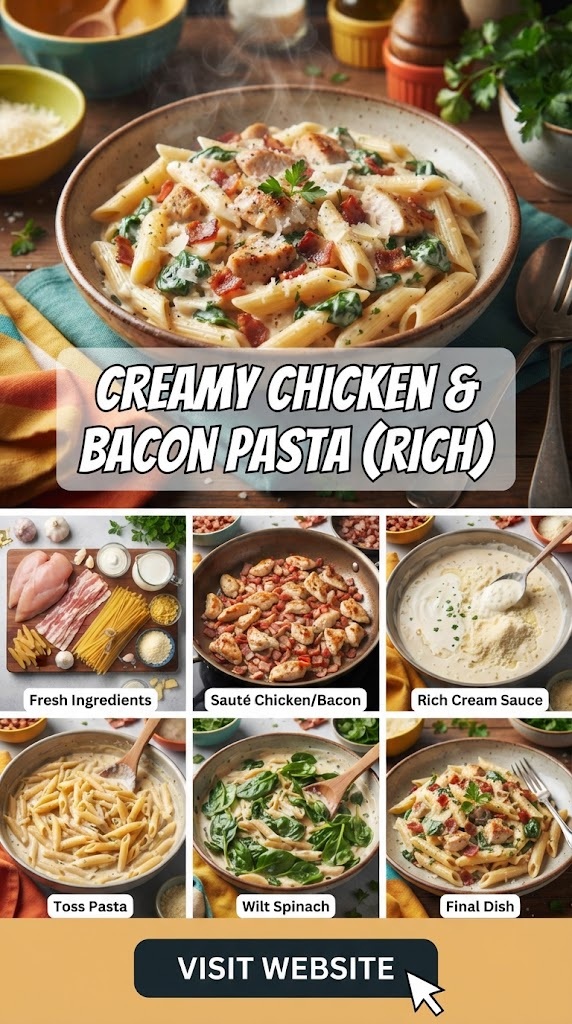
Chicken and Bacon Pasta is the kind of comforting dinner that feels restaurant-worthy while still being simple enough for a weeknight. Tender pieces of seasoned chicken, crispy bacon, perfectly cooked pasta, garlic, Parmesan, and a rich creamy sauce come together in one satisfying dish. The bacon adds smoky, salty flavor, while the chicken makes the meal hearty and filling. Parmesan gives the sauce a savory depth, and a little pasta water helps create a smooth sauce that clings beautifully to every strand or piece of pasta.
This recipe is especially good when you want a cozy dinner without spending hours in the kitchen. The ingredients are familiar, affordable, and easy to find. You can prepare it with penne, fettuccine, linguine, spaghetti, rigatoni, or another favorite pasta shape.
The secret to making excellent Chicken and Bacon Pasta is balancing richness. Bacon and Parmesan are naturally salty, so the sauce should be seasoned carefully. The chicken should be browned rather than simply boiled in the sauce, because browning creates extra flavor. Finally, adding reserved pasta water allows the sauce to become silky instead of overly thick.
Why You’ll Love This Chicken and Bacon Pasta
There are plenty of reasons this recipe can become a family favorite.
Rich and creamy
The creamy Parmesan sauce coats the pasta without becoming watery. Heavy cream provides richness, while Parmesan adds a salty, nutty flavor.
Full of flavor
Garlic, bacon, Parmesan, black pepper, Italian seasoning, and browned chicken create layers of flavor in every bite.
Easy enough for a weeknight
Although the finished dish looks impressive, the cooking process is straightforward. You can have dinner ready in roughly 40 minutes.
Comforting and filling
Chicken provides protein, pasta supplies satisfying carbohydrates, and bacon adds plenty of savory flavor.
Easy to customize
You can add spinach, mushrooms, broccoli, peas, sun-dried tomatoes, or roasted vegetables depending on what you have available.
Great for leftovers
The pasta reheats well when you add a small splash of milk, cream, or water before warming it.
Complete Recipe
Recipe at a Glance
Recipe: Chicken and Bacon Pasta
Cuisine: Italian-American inspired
Course: Dinner
Prep Time: 15 minutes
Cook Time: 25 minutes
Total Time: About 40 minutes
Servings: 4–6
Difficulty: Easy to moderate
Ingredients
For the Chicken
- 1 ½ pounds boneless, skinless chicken breasts or chicken thighs
- 1 tablespoon olive oil
- ½ teaspoon salt
- ½ teaspoon black pepper
- 1 teaspoon Italian seasoning
- ½ teaspoon garlic powder
- ¼ teaspoon paprika
For the Pasta
- 12 ounces pasta
- 1 tablespoon salt for the pasta water
- 1 cup reserved pasta water
For the Bacon
- 6 slices bacon, chopped into small pieces
For the Creamy Sauce
- 2 tablespoons unsalted butter
- 4 cloves garlic, finely minced
- 1 cup heavy cream
- ½ cup whole milk
- 1 cup freshly grated Parmesan cheese
- ½ teaspoon Italian seasoning
- ¼ teaspoon black pepper
- ¼ teaspoon red pepper flakes, optional
- ½ teaspoon salt, or to taste
- 1 tablespoon chopped fresh parsley
Optional Additions
- 1 cup baby spinach
- 1 cup sliced mushrooms
- ½ cup sun-dried tomatoes
- 1 cup broccoli florets
- ½ cup frozen peas
- Extra Parmesan for serving
- Fresh parsley for garnish
- Freshly cracked black pepper
Best Pasta to Use
You can make this recipe with almost any pasta, but some shapes work particularly well with the rich sauce.
Penne
Penne is an excellent choice because the creamy sauce gets inside the tubes. Small pieces of chicken and bacon also fit naturally with the pasta.
Fettuccine
Fettuccine creates a luxurious restaurant-style dish. The broad noodles hold the creamy Parmesan sauce extremely well.
Linguine
Linguine is slightly lighter than fettuccine while still providing plenty of surface area for the sauce.
Rigatoni
Rigatoni is ideal if you want a hearty pasta dish. Its large tubes can hold creamy sauce, chicken, and bacon.
Spaghetti
Spaghetti works perfectly when it is the pasta you already have in your pantry. The sauce will still coat the noodles beautifully.
How to Choose the Chicken
Boneless, skinless chicken breasts are lean and easy to work with. Chicken thighs are another excellent option because they contain more fat and remain particularly juicy.
If using chicken breasts, avoid cutting them into extremely tiny pieces before cooking. Small pieces can become dry quickly. Instead, cut the chicken into bite-sized pieces of roughly equal size so everything cooks at approximately the same rate.
Chicken should reach an internal temperature of 165°F (74°C) at the thickest part.
How to Cook Chicken and Bacon Pasta
Step 1: Prepare the Ingredients
Before turning on the stove, prepare all your ingredients.
Cut the chicken into bite-sized pieces. Chop the bacon. Mince the garlic. Grate the Parmesan cheese and chop the parsley.
Preparing everything first makes the cooking process much easier because several components come together quickly once the pasta is ready.
Season the chicken with salt, black pepper, Italian seasoning, garlic powder, and paprika.
Do not heavily salt the chicken because bacon and Parmesan will add considerable salt later.
Step 2: Cook the Bacon
Place a large skillet or Dutch oven over medium heat.
Add the chopped bacon directly to the cold or moderately warm skillet. Allow it to cook slowly as the fat renders.
Cook for approximately 5–8 minutes, stirring occasionally, until the bacon is browned and crisp around the edges.
Remove the cooked bacon with a slotted spoon and transfer it to a plate lined with paper towels.
Leave approximately 1–2 tablespoons of bacon fat in the skillet.
Why cook the bacon first?
The rendered bacon fat becomes a flavor-packed cooking medium for the chicken. Instead of wasting the bacon drippings, you use them to brown the chicken and build the foundation of the sauce.
If your bacon produces a large amount of fat, remove some before cooking the chicken. Too much bacon fat can make the finished pasta greasy.
Step 3: Brown the Chicken
Increase the heat to medium-high.
Add the seasoned chicken pieces to the skillet. Try to spread them into a single layer.
Cook for approximately 3–5 minutes on the first side, then stir and continue cooking until the chicken is browned and cooked through.
The exact cooking time depends on the size of your chicken pieces.
Avoid constantly stirring the chicken. Letting it sit against the hot pan for a minute or two allows it to develop a golden-brown exterior.
Once cooked, transfer the chicken to a clean plate.
Important tip
Do not overcrowd the pan.
If you put too much chicken into a small skillet, the temperature drops and the chicken begins releasing water. Instead of browning, it can steam.
If necessary, cook the chicken in two batches.
Step 4: Cook the Pasta
Bring a large pot of water to a rolling boil.
Add approximately 1 tablespoon of salt to the water.
Add the pasta and cook according to the package directions until al dente.
Al dente pasta should be tender but still have a slight firmness when bitten.
Before draining, carefully reserve approximately 1 cup of pasta water.
Drain the pasta, but do not rinse it.
Why reserve pasta water?
Pasta water contains starch released from the noodles during cooking. That starch helps emulsify the sauce and allows the creamy mixture to cling to the pasta.
It can also loosen the sauce if it becomes too thick.
Step 5: Make the Garlic Butter Base
Return the skillet to medium heat.
Add the butter to the remaining bacon fat.
Once the butter melts, add the minced garlic.
Cook for approximately 30–60 seconds.
The garlic should become fragrant but should not turn dark brown.
Burned garlic can become bitter and overpower the creamy sauce.
Step 6: Add the Cream and Milk
Pour the heavy cream into the skillet.
Add the whole milk and stir gently.
Reduce the heat to medium-low.
Allow the mixture to warm for approximately 2–3 minutes.
Do not rapidly boil the cream.
A gentle simmer is enough to bring the ingredients together while reducing the risk of the sauce separating.
Add Italian seasoning, black pepper, and optional red pepper flakes.
Step 7: Add Parmesan
Reduce the heat to low.
Gradually add the freshly grated Parmesan cheese while stirring constantly.
Continue stirring until the cheese melts into the cream and produces a smooth sauce.
If the sauce appears too thick, add a few tablespoons of reserved pasta water.
If it is too thin, allow it to gently simmer for another minute or two.
Why freshly grated Parmesan is best
Freshly grated Parmesan melts more smoothly than many pre-shredded varieties.
Some packaged shredded cheeses contain anti-caking ingredients that can interfere with smooth melting.
For the creamiest result, grate Parmesan directly from a block.
Step 8: Return the Chicken and Bacon
Add the cooked chicken back to the skillet.
Add most of the crispy bacon, reserving a small amount for topping.
Stir gently so the chicken becomes coated in the creamy sauce.
Let everything warm together for approximately 1–2 minutes.
This gives the chicken an opportunity to absorb some of the sauce’s flavor.
Step 9: Add the Pasta
Add the drained pasta directly into the skillet.
Use tongs or a large spoon to toss everything together.
If the sauce is too thick, add reserved pasta water a few tablespoons at a time.
Continue tossing until the sauce coats every piece of pasta.
The finished sauce should be creamy and glossy rather than thick like cheese paste.
Step 10: Taste and Adjust
Taste the pasta before serving.
Adjust the seasoning as necessary.
You may want:
- More black pepper for a stronger savory flavor
- More Parmesan for extra cheesiness
- A pinch of red pepper flakes for heat
- A little pasta water for a thinner sauce
- Fresh parsley for brightness
- A small squeeze of lemon juice for balance
Be careful when adding salt because bacon and Parmesan already contribute significant saltiness.
Step 11: Garnish and Serve
Transfer the pasta to warm serving bowls.
Top with:
- Crispy bacon
- Freshly grated Parmesan
- Chopped parsley
- Freshly cracked black pepper
- Optional red pepper flakes
Serve immediately while the sauce is hot and creamy.
How to Make the Sauce Extra Rich
The word “rich” in this recipe refers to the creamy, indulgent character of the dish.
For an especially luxurious sauce, use:
- Heavy cream instead of half-and-half
- Freshly grated Parmesan
- A little butter
- Bacon drippings
- Fresh garlic
- Reserved pasta water
However, richness should not mean excessive heaviness.
The goal is a sauce that feels creamy but still coats the pasta rather than leaving a pool of grease at the bottom of the plate.
How to Prevent a Broken Sauce
Cream sauces can sometimes separate if they are overheated.
Follow these simple rules:
Keep the heat moderate
Once the cream is added, avoid aggressive boiling.
Add Parmesan over low heat
High heat can cause cheese proteins and fats to separate.
Use pasta water
Starchy pasta water helps bring the sauce together.
Stir continuously when adding cheese
Gradually incorporating Parmesan helps it melt evenly.
Don’t add cold cheese in one giant pile
Sprinkle it in gradually while stirring.
Adding Vegetables
This pasta is delicious as written, but vegetables can make it more colorful and balanced.
Spinach
Add 1 cup of baby spinach near the end of cooking.
The residual heat will wilt it quickly.
Mushrooms
Slice mushrooms and sauté them after cooking the bacon but before adding the chicken.
Cook until they release their moisture and become golden.
Broccoli
Steam or blanch broccoli separately, then add it when tossing the pasta with the sauce.
Sun-Dried Tomatoes
Chopped sun-dried tomatoes provide a sweet, tangy contrast to the creamy sauce.
Peas
Frozen peas can be added during the final few minutes of cooking.
Common Mistakes to Avoid
Overcooking the chicken
Dry chicken can ruin an otherwise excellent pasta dish.
Cut the chicken evenly and cook it only until done.
Burning the garlic
Garlic needs less than a minute to become fragrant.
Keep an eye on it.
Overcooking the pasta
Soft pasta can become mushy when tossed with hot sauce.
Cook it al dente.
Making the sauce too thick
Remember that the sauce continues thickening as it cools.
Keep some pasta water available.
Adding too much salt
Bacon and Parmesan are already salty.
Taste before adding additional salt.
Using excessive heat
High heat can make cream sauces separate.
Keep the sauce at a gentle simmer.
How to Make Chicken and Bacon Pasta Ahead
This recipe is best served immediately, but you can prepare parts of it ahead.
Cook the bacon and chicken several hours in advance and refrigerate them separately.
You can also grate the Parmesan and prepare the garlic ahead of time.
For the best texture, cook the pasta and make the sauce shortly before serving.
If you prepare the entire dish ahead, the pasta will absorb some of the sauce as it sits.
How to Store Leftovers
Allow leftover pasta to cool slightly before transferring it to an airtight container.
Refrigerate for up to 3–4 days.
Do not leave cooked chicken or creamy pasta sitting at room temperature for extended periods.
For longer storage, freezing is possible, but the creamy sauce may change texture slightly after thawing.
How to Reheat Chicken and Bacon Pasta
The stovetop is usually the best method.
Place the pasta in a skillet over low to medium-low heat.
Add 1–3 tablespoons of milk, cream, or water.
Stir gently as the pasta warms.
The added liquid helps loosen the sauce.
You can also microwave individual portions.
Cover the bowl loosely and heat in short intervals, stirring between each interval.
Avoid overheating because excessive heat can cause the creamy sauce to separate.
Flavor Variations
Spicy Chicken and Bacon Pasta
Add ½–1 teaspoon crushed red pepper flakes to the sauce.
For extra heat, add a small amount of cayenne pepper.
Garlic Parmesan Chicken Bacon Pasta
Increase the garlic to 5–6 cloves and add extra Parmesan.
This creates a stronger garlic-forward flavor.
Chicken Bacon Alfredo
Use fettuccine and make the sauce slightly more luxurious with additional Parmesan and cream.
Chicken Bacon Ranch Pasta
Add a small amount of ranch seasoning and finish with chopped parsley or chives.
Cajun Chicken and Bacon Pasta
Season the chicken with Cajun seasoning instead of Italian seasoning.
Add sliced bell peppers for extra color.
Tomato Cream Chicken Bacon Pasta
Add 2–3 tablespoons tomato paste to the garlic-butter mixture before adding the cream.
The result is a pink-orange creamy tomato sauce.
Spinach Chicken Bacon Pasta
Add fresh spinach during the final stage of cooking.
The spinach wilts quickly and adds color.
What to Serve With Chicken and Bacon Pasta
Because this is a rich main dish, lighter side dishes work particularly well.
Green Salad
A crisp salad with lettuce, cucumber, tomatoes, and a light vinaigrette provides freshness.
Garlic Bread
Garlic bread is a classic pairing. It is especially useful for soaking up extra sauce.
Roasted Vegetables
Roasted broccoli, asparagus, zucchini, or green beans provide a flavorful vegetable side.
Steamed Vegetables
For a lighter meal, serve the pasta with simply steamed broccoli or green beans.
Lemon Salad
A salad with lemon-based dressing can help balance the richness of the creamy pasta.
Tips for the Best Chicken and Bacon Pasta
Use freshly grated Parmesan
It gives the sauce a smoother texture and stronger flavor.
Brown the chicken
Don’t simply cook the chicken until white. Browning creates additional flavor.
Save pasta water
Always reserve some before draining.
Don’t rinse the pasta
The natural starch on the pasta helps the sauce cling.
Cook bacon until crisp
Crispy bacon provides a delicious textural contrast against the creamy pasta.
Taste before salting
The bacon and cheese can provide enough salt.
Serve immediately
Cream sauces are at their best while hot.
Use a large skillet
A wide pan gives you enough room to toss the pasta properly.
Frequently Asked Questions
Can I use chicken thighs instead of chicken breasts?
Absolutely. Chicken thighs are particularly flavorful and tend to stay juicy. Use boneless, skinless thighs and cut them into bite-sized pieces.
Can I use turkey bacon?
Yes. Turkey bacon can be used, although it generally produces less fat and a slightly different flavor. Add a little olive oil or butter when cooking the chicken if needed.
Can I use half-and-half?
Yes. Half-and-half creates a lighter sauce than heavy cream. You may need slightly less pasta water because the sauce will already have a thinner consistency.
Can I use milk instead of heavy cream?
You can, but the sauce will be substantially lighter. For a creamy result, whole milk is preferable to skim milk.
Can I make this without bacon?
Yes. Simply omit the bacon and cook the chicken in olive oil and butter. You can add smoked paprika if you want some smoky flavor.
Can I use pre-cooked chicken?
Yes. Shredded or chopped cooked chicken can be added near the end. However, freshly browned chicken generally provides better flavor.
Why is my sauce too thick?
Add reserved pasta water one tablespoon at a time and toss until the sauce reaches the desired consistency.
Why is my sauce too thin?
Allow it to simmer gently for another minute or two, or add a little more Parmesan.
Can I freeze this pasta?
You can freeze it, but creamy sauces sometimes change texture after freezing and thawing. For best quality, enjoy it fresh or refrigerate leftovers for several days.
What cheese can replace Parmesan?
Pecorino Romano is an excellent substitute, although it is usually saltier. Grana Padano can also work well.
Nutrition Considerations
The exact nutritional values depend on the ingredients and portion sizes used.
Because this recipe contains bacon, cream, butter, Parmesan, chicken, and pasta, it is naturally a substantial meal.
If you want to make it somewhat lighter, consider these changes:
- Use less bacon
- Replace some heavy cream with whole milk
- Increase the vegetables
- Use a smaller pasta portion
- Use skinless chicken breast
- Reduce the amount of butter
- Serve with a large green salad
These changes can reduce the overall richness while maintaining the basic character of the dish.
A Simple Cooking Timeline
For an organized dinner preparation, follow this timeline:
0–5 minutes: Prepare chicken, bacon, garlic, Parmesan, and parsley.
5–12 minutes: Cook bacon until crisp.
8–18 minutes: Begin cooking pasta while the chicken cooks.
12–20 minutes: Brown chicken and remove it from the skillet.
20–25 minutes: Make garlic cream sauce.
25–30 minutes: Add Parmesan and adjust the sauce.
30–35 minutes: Add chicken, bacon, and pasta.
35–40 minutes: Toss, garnish, and serve.
This overlapping approach makes the entire recipe efficient without rushing.
Chef’s Secret for Restaurant-Style Results
The most important technique is not adding more cream or cheese. It is emulsifying the sauce with pasta water.
When pasta is cooked, some starch moves into the water. When that starchy water is gradually incorporated into the creamy sauce while tossing the pasta, it helps bind the fat and liquid together.
Instead of a sauce that simply sits on the noodles, you get a glossy coating that clings to the pasta.
Start with only a few tablespoons of pasta water. Add more if necessary.
Another important technique is finishing the pasta in the sauce.
Rather than placing plain pasta into bowls and pouring sauce over it, toss the pasta directly in the skillet. This allows every piece to become coated and gives the pasta time to absorb the flavors.
Final Recipe Summary
Chicken and Bacon Pasta is a rich, creamy, satisfying dinner made with tender seasoned chicken, crispy bacon, garlic, Parmesan, cream, and pasta. The combination creates a comforting meal with smoky, savory, cheesy, and garlicky flavors.
For the best results, start by cooking the bacon until crisp. Use some of the rendered bacon fat to brown the chicken, which adds a deeper savory flavor. Cook the pasta separately until al dente, remembering to reserve some starchy pasta water.
Build the sauce gently with butter, garlic, cream, milk, seasonings, and freshly grated Parmesan. Keep the heat low when adding cheese to prevent separation. Return the chicken and bacon to the sauce, then toss everything together with the pasta.
Finish with fresh parsley, Parmesan, black pepper, and extra crispy bacon.
The result is a creamy, comforting pasta dinner that is easy enough for a busy evening but impressive enough to serve to guests.
The key to perfect Chicken and Bacon Pasta is simple: brown the chicken, crisp the bacon, don’t overcook the garlic, use freshly grated Parmesan, save the pasta water, and finish the pasta directly in the sauce.