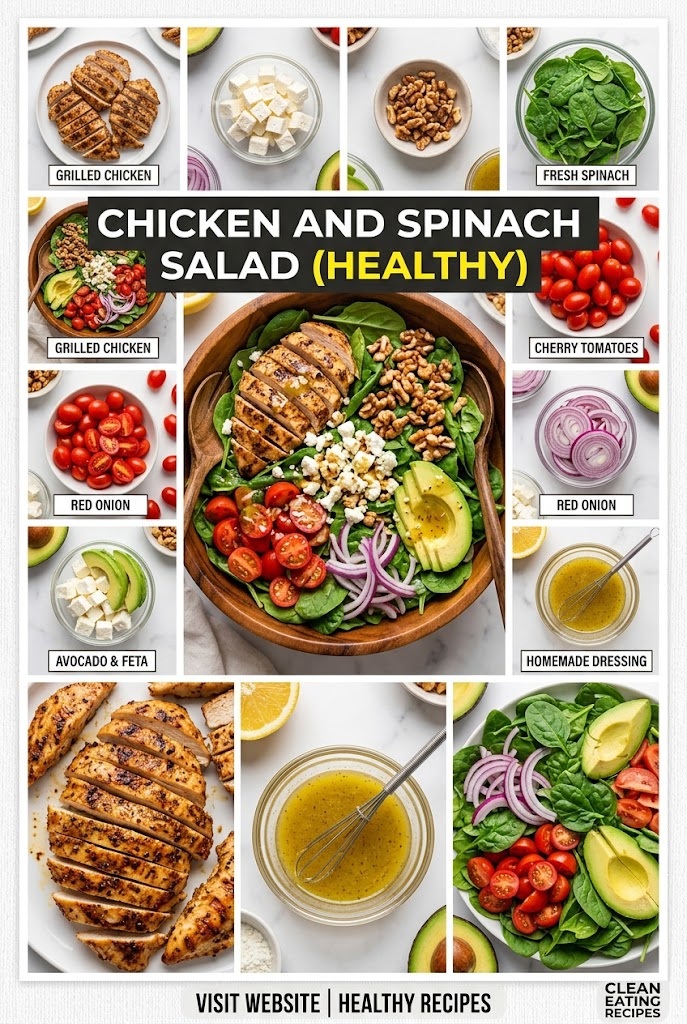
Chicken and Spinach Salad (Healthy)
In the modern world of fast-paced living and processed convenience, the humble chicken and spinach salad stands as a beacon of nutritional integrity. It is more than just a “diet food”; it is a culinary canvas that balances lean protein, leafy greens, and an infinite variety of textures and flavors. Whether you are a fitness enthusiast looking for the perfect post-workout fuel, a busy professional seeking a meal-prep solution, or a home cook wanting to impress with a vibrant, fresh dish, the chicken and spinach salad is your ultimate ally.
In this comprehensive guide, we will dive deep into why this specific combination is a nutritional powerhouse, explore the art of preparing the perfect chicken, dissect the anatomy of a world-class dressing, and provide you with innovative variations that will ensure you never get bored of eating healthy.
The Nutritional Powerhouse: Why Chicken and Spinach?
To understand the popularity of the chicken and spinach salad, we must first look at its biological building blocks. This duo provides a synergistic blend of macronutrients and micronutrients that support almost every bodily function.
The Lean Protein: Chicken Breast
Chicken breast is the gold standard for lean protein. A single 4-ounce serving provides approximately 31 grams of protein with minimal fat. Protein is essential for muscle repair, hormone production, and keeping you satiated. By including chicken in your salad, you are ensuring that your meal isn’t just “roughage,” but a substantial fuel source that prevents blood sugar spikes and mid-afternoon energy crashes.
The Superfood Base: Spinach
Spinach is often referred to as a “superfood” for a reason. Unlike iceberg lettuce, which is primarily water, spinach is packed with:
- Iron: Essential for oxygen transport in the blood.
- Vitamin K: Crucial for bone health and blood clotting.
- Vitamin A and C: Powerful antioxidants that support the immune system and skin health.
- Folate: Important for DNA repair and cell division.
- Fiber: Aids digestion and promotes a healthy gut microbiome.
When these two ingredients meet, you get a meal that is low in calories but exceptionally high in nutrient density.
Mastering the Foundation: How to Prepare the Perfect Chicken
The biggest mistake people make with a chicken and spinach salad is using dry, bland, or overcooked chicken. To elevate your salad to restaurant quality, you must master the preparation of the protein.
1. The Art of the Marinade
A marinade serves two purposes: it adds flavor and tenderizes the meat. For a healthy salad, avoid sugary store-bought marinades. Instead, use a base of acid (lemon juice or apple cider vinegar), healthy fats (extra virgin olive oil), and aromatics (garlic, shallots, or fresh herbs).
- Pro-Tip: Marinate your chicken for at least 30 minutes, but no more than 24 hours, to ensure the acid doesn’t break down the muscle fibers too much, making it mushy.
2. Cooking Methods for Maximum Juiciness
- Grilling: This adds a smoky char that complements the earthiness of the spinach. Ensure your grill is hot to sear in the juices.
- Pan-Searing: Use a cast-iron skillet for a golden-brown crust. Finish it in the oven if the breast is particularly thick.
- Poaching: If you want a clean, soft texture, poaching chicken in a broth with peppercorns and bay leaves is an excellent low-fat option.
- Air-Frying: A modern favorite that yields a “fried” texture without the excess oil.
3. Resting is Non-Negotiable
Always let your chicken rest for 5 to 10 minutes after cooking. This allows the juices to redistribute. If you cut it immediately, the moisture will leak out onto your cutting board, leaving you with dry meat and a soggy salad.
Selecting the Right Spinach
Not all spinach is created equal. Depending on the texture and flavor profile you want, you have choices:
- Baby Spinach: These are the young leaves of the spinach plant. They are tender, mild, and have a slightly sweet finish. This is the preferred choice for most salads.
- Mature Spinach: These leaves are larger, thicker, and often have crinkled edges (Savoy spinach). They have a deeper, slightly bitter flavor and a more robust texture. If using mature spinach, it is best to remove the tough stems and perhaps chop the leaves into smaller pieces.
- Organic vs. Conventional: Spinach consistently appears on the “Dirty Dozen” list of produce with high pesticide residues. If your budget allows, opting for organic spinach is a wise choice for long-term health.
The Anatomy of a Healthy Dressing
A dressing can make or break the health benefits of your salad. Many bottled dressings are “hidden calorie bombs,” filled with soybean oil, high fructose corn syrup, and artificial preservatives. Making your own at home is simple and far superior in taste.
The Golden Ratio
The standard formula for a vinaigrette is 3 parts oil to 1 part acid.
- The Oil: Extra virgin olive oil (EVOO) is the king of salad oils due to its heart-healthy monounsaturated fats. For a different profile, try avocado oil or toasted sesame oil.
- The Acid: Lemon juice, lime juice, balsamic vinegar, red wine vinegar, or apple cider vinegar.
- The Emulsifier: A teaspoon of Dijon mustard or a small amount of honey/maple syrup helps bind the oil and acid together so they don’t separate.
- Seasoning: Never forget sea salt and freshly cracked black pepper.
Dressing Variations
- The Zesty Lemon-Garlic: EVOO, fresh lemon juice, minced garlic, and dried oregano.
- The Creamy (But Healthy) Avocado: Blend half an avocado with Greek yogurt, lime juice, and cilantro.
- The Balsamic Glaze: Simmer balsamic vinegar until it reduces into a thick syrup for a punch of sweet and tangy flavor without the oil.
Elevating the Flavor: Mix-ins and Toppings
A salad consisting of only chicken and spinach is a bit one-note. To create a multi-dimensional eating experience, you need to add elements of crunch, sweetness, and creaminess.
1. The Crunch Factor
Texture is vital. Without crunch, a salad feels monotonous.
- Nuts and Seeds: Toasted walnuts, slivered almonds, pumpkin seeds (pepitas), or sunflower seeds. These add healthy fats and minerals.
- Raw Vegetables: Sliced radishes, cucumbers, bell peppers, or shredded carrots.
- Legumes: Roasted chickpeas add a satisfying “pop” and extra fiber.
2. A Touch of Sweetness
Sweetness balances the bitterness of the spinach and the saltiness of the chicken.
- Fresh Fruit: Sliced strawberries, blueberries, or crisp apple slices.
- Dried Fruit: A few dried cranberries or cherries (ensure they are unsweetened).
3. Creamy Elements
- Cheese: A small amount of high-quality cheese goes a long way. Feta, goat cheese, or shaved Parmesan add a savory depth.
- Avocado: Sliced or diced avocado provides a buttery texture that coats the leaves beautifully.
4. Complex Carbohydrates (Optional)
If you need a more filling meal, add a half-cup of cooked grains:
- Quinoa: Adds a nutty flavor and complete protein.
- Farro: Provides a chewy, satisfying texture.
- Sweet Potato: Roasted cubes of sweet potato add warmth and Vitamin A.
5 Creative Recipes for Chicken and Spinach Salad
To keep your palate excited, here are five distinct ways to prepare your chicken and spinach salad, inspired by global cuisines.
1. The Mediterranean Masterpiece
- The Base: Baby spinach.
- The Protein: Lemon and oregano grilled chicken breast.
- The Add-ins: Cherry tomatoes, cucumber, Kalamata olives, red onion, and crumbled feta cheese.
- The Dressing: Lemon-tahini dressing (tahini, lemon juice, water, and garlic).
2. The Berry Blast (Antioxidant Rich)
- The Base: Baby spinach.
- The Protein: Sliced rotisserie chicken.
- The Add-ins: Fresh strawberries, blueberries, toasted pecans, and goat cheese.
- The Dressing: Raspberry vinaigrette or a simple balsamic reduction.
3. The Asian-Inspired Sesame Salad
- The Base: Spinach and shredded red cabbage.
- The Protein: Soy-ginger glazed chicken.
- The Add-ins: Edamame, sliced almonds, Mandarin oranges, and cilantro.
- The Dressing: Sesame-ginger vinaigrette (toasted sesame oil, rice vinegar, soy sauce, and grated ginger).
4. The Southwest Power Bowl
- The Base: Spinach and romaine mix.
- The Protein: Cumin and chili powder rubbed chicken.
- The Add-ins: Black beans, corn, avocado, and pico de gallo.
- The Dressing: Lime-cilantro vinaigrette with a dash of hot sauce.
5. The Harvest Fall Salad
- The Base: Mature spinach (de-stemmed and chopped).
- The Protein: Roasted chicken thighs (skinless).
- The Add-ins: Roasted butternut squash, dried cranberries, and pumpkin seeds.
- The Dressing: Apple cider vinaigrette with a hint of cinnamon and maple syrup.
Meal Prepping Your Salad: Stay Fresh for Days
One of the biggest hurdles to healthy eating is time. The chicken and spinach salad is an excellent candidate for meal prep, provided you follow the “Salad Jar” method or the “Deconstructed” method.
The Salad Jar Method
To prevent sogginess, layer your ingredients in a glass Mason jar in this specific order:
- Bottom Layer: Dressing.
- Second Layer: Hardy vegetables (cucumbers, carrots, chickpeas).
- Third Layer: The Protein (chicken).
- Fourth Layer: Soft fruits or cheeses.
- Top Layer: Spinach (keep it as far from the dressing as possible).
When you’re ready to eat, simply shake the jar and pour it into a bowl.
The Deconstructed Method
Keep your spinach in its original container with a paper towel tucked inside to absorb moisture. Prep your chicken and store it in a separate airtight container. Chop your veggies and keep them in a third container. Assemble your salad fresh every morning or right before eating. This ensures the spinach remains crisp and the chicken stays flavorful.
The Science of Satiety: Why This Salad Works
Have you ever eaten a salad only to feel hungry 30 minutes later? That usually happens because the salad lacked protein, fat, or volume. The healthy chicken and spinach salad solves this through “The Satiety Trifecta”:
- Protein (The Chicken): Protein triggers the release of satiety hormones like PYY and GLP-1, telling your brain you are full.
- Fiber (The Spinach & Veggies): Fiber slows down gastric emptying. It physically takes up space in your stomach, promoting a feeling of fullness.
- Healthy Fats (The Dressing & Nuts): Fat is digested slowly and provides a long-term energy source, preventing the “crash” associated with high-carb meals.
By combining these three elements, you create a meal that satisfies your hunger for hours, making it much easier to stick to your health and weight loss goals.
Common Mistakes to Avoid
Even with the best intentions, it’s easy to turn a healthy salad into an unhealthy one.
- Overdoing the Toppings: While nuts and cheese are healthy, they are calorie-dense. A handful of nuts can add 200 calories quickly. Measure your portions.
- The “Crouton Trap”: Most croutons are made from refined white bread and fried in low-quality oils. Swap them for roasted chickpeas or nuts for a healthier crunch.
- Store-Bought Dressings: As mentioned, many contain refined sugars. Always check the label or, better yet, make your own.
- Not Drying the Spinach: If your spinach is wet from washing, the dressing won’t stick to the leaves. It will slide off to the bottom of the bowl, leaving you with a bland salad and a pool of liquid. Use a salad spinner!
Beyond the Plate: The Environmental and Ethical Impact
When we talk about “healthy,” we should also consider the health of our planet and the quality of the animals involved.
Choosing Better Chicken
If possible, look for chicken labeled as:
- Pasture-Raised: The birds had access to the outdoors and a natural diet.
- No Antibiotics Ever: Ensures you aren’t consuming trace amounts of medications used in industrial farming.
- Organic: The feed was non-GMO and free of synthetic pesticides.
Supporting Local
Buying your spinach from a local farmers’ market often means the greens were harvested within 24–48 hours, ensuring maximum nutrient retention. Spinach begins to lose its Vitamin C and folate content the moment it is picked; the shorter the distance from farm to table, the better for your health.
Frequently Asked Questions (FAQ)
Can I eat chicken and spinach salad every day?
Yes! Because it is so customizable, you can change the flavor profile daily. However, ensure you vary your other meals to get a full spectrum of nutrients from different food groups.
Is spinach better raw or cooked?
Raw spinach is higher in Vitamin C and potassium. However, cooking spinach (lightly steaming or sautéing) makes the iron and calcium more “bioavailable” because the heat breaks down oxalates. For a salad, raw is traditional, but you can always top your salad with a bit of warm, wilted spinach for variety.
How do I stop my chicken from being rubbery?
Rubbery chicken is usually a result of overcooking. Use a meat thermometer and cook the chicken breast to an internal temperature of 165°F (74°C). Take it off the heat at 160°F, as “carry-over cooking” will bring it to the safe zone while it rests.
Can I use frozen spinach for a salad?
No. Frozen spinach is blanched before freezing, which ruins the crisp texture needed for a salad. Save frozen spinach for smoothies, soups, or stews.
Conclusion: A Lifestyle, Not Just a Meal
The healthy chicken and spinach salad is a testament to the fact that eating for wellness does not require sacrificing flavor or satisfaction. It is a versatile, nutrient-dense, and delicious option that fits into almost any dietary framework—be it Keto, Paleo, Mediterranean, or simply “clean eating.”
By focusing on high-quality ingredients, mastering the art of the protein, and getting creative with your dressings and toppings, you transform a simple bowl of greens into a gourmet experience. Start with the basics, experiment with the recipes provided, and soon you’ll find that this salad becomes a staple in your journey toward a healthier, more vibrant life.
Enjoy the crunch, savor the protein, and let the nutrients fuel your best self. Your body—and your taste buds—will thank you.