
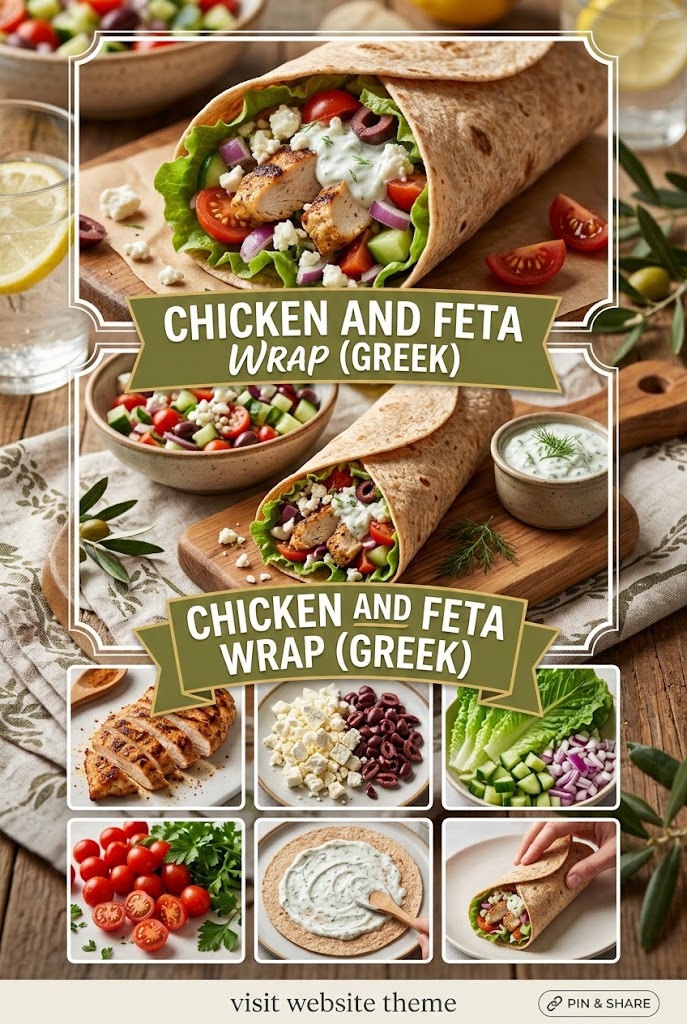
Chicken and Feta Wrap (Greek)
The Mediterranean diet has long been hailed as the gold standard of healthy eating, but it is the vibrant, bold flavors of Greece that truly capture the imagination of food lovers across the United States. Among the pantheon of Greek culinary exports, few dishes are as versatile, satisfying, and iconic as the Greek Chicken and Feta Wrap. Whether you call it a “wrap,” a “gyro-style pita,” or a “souvlaki roll,” this dish represents the perfect harmony of lean protein, tangy dairy, crisp vegetables, and aromatic herbs.
In this comprehensive guide, we will dive deep into the world of the Chicken and Feta Wrap. We will explore its cultural roots, the science behind the perfect marinade, the secrets to the creamiest tzatziki, and how you can recreate this restaurant-quality meal in your own kitchen.
The Anatomy of the Perfect Greek Chicken and Feta Wrap
To understand why this wrap is a staple in both high-end Mediterranean bistros and bustling street carts from New York to Los Angeles, we must look at its components. A truly great Greek wrap is more than just ingredients thrown into a flatbread; it is a calculated balance of textures and temperatures.
1. The Protein: Lemon-Herb Marinated Chicken
The soul of the wrap lies in the chicken. Traditionally, Greek street food utilizes “Souvlaki” (skewered meat) or “Gyro” (meat cooked on a vertical rotisserie). For the home cook, the goal is to replicate that succulent, charred, and deeply flavorful profile.
- The Cut: While chicken breast is the popular “healthy” choice, many chefs prefer chicken thighs for their higher fat content, which prevents the meat from drying out during high-heat searing.
- The Marinade: This is where the magic happens. A traditional Greek marinade consists of extra virgin olive oil, fresh lemon juice, minced garlic, and a heavy hand of dried oregano. The acid in the lemon juice tenderizes the meat, while the oil carries the aromatics deep into the muscle fibers.
2. The Tang: Premium Feta Cheese
Feta is the crowning jewel of Greek cuisine. Unlike the mild, rubbery feta often found in pre-crumbled containers, authentic Greek feta is a “protected designation of origin” (PDO) product made from sheep’s milk or a blend of sheep and goat’s milk.
In a wrap, feta provides a salty, acidic punch that cuts through the richness of the meat. Its creamy yet crumbly texture adds a unique mouthfeel that contrasts with the crunch of the vegetables.
3. The Sauce: Authentic Tzatziki
A Greek wrap without tzatziki is simply incomplete. This yogurt-based sauce is cooling and refreshing. High-quality tzatziki requires:
- Strained Greek Yogurt: It must be thick—almost the consistency of soft cheese.
- Grated Cucumber: The water must be squeezed out of the cucumber to prevent the sauce from becoming runny.
- Garlic and Dill: These provide the signature sharp and herbaceous notes.
4. The Vessel: Soft, Warm Pita Bread
The bread is the foundation. A traditional Greek pita is thicker and fluffier than the “pocket” pitas often found in grocery stores. It should be oiled and lightly toasted until it is pliable and charred in spots, acting as a warm embrace for the fillings.
The Art of the Marinade: Flavor Chemistry
To achieve a “Google-ranked” flavor profile that rivals the best Greek restaurants in America, you must master the marinade. Marination is not just about soaking; it’s about a chemical reaction that transforms the chicken.
The Role of Acid and Fat
The lemon juice provides the acidity necessary to break down tough proteins, but if left too long (over 24 hours), it can actually make the chicken mushy. The olive oil acts as a barrier, ensuring the chicken stays moist.
The Power of Oregano
Greek oregano (Origanum vulgare) is distinct from the Mexican variety. It has a more savory, earthy, and slightly bitter profile. When combined with garlic, it creates that “classic Greek” scent that fills the kitchen.
Cooking Techniques for Maximum Flavor
- The Cast Iron Skillet: For those without a grill, a cast iron skillet is the best tool. It retains heat exceptionally well, allowing you to get a “crust” on the chicken that mimics a professional rotisserie.
- The Grill: Charcoal grilling adds a smoky dimension that complements the lemon and feta perfectly.
Choosing Your Feta: Not All Crumbles are Created Equal
If you are shopping in the United States, you will likely encounter several types of feta. Choosing the right one can elevate your wrap from “good” to “extraordinary.”
- Greek Feta (The Gold Standard): Made from at least 70% sheep’s milk. It is tangy, rich, and has a sharp finish.
- Bulgarian Feta: Usually the saltiest and creamiest. It’s excellent if you want a very bold flavor.
- French Feta: Typically made from 100% sheep’s milk but is much milder and creamier than Greek feta. Good for those who find traditional feta too “funky.”
- Domestic (US) Feta: Usually made from cow’s milk. It tends to be drier and milder. If using this, look for “Feta in Brine” to ensure it hasn’t dried out.
Step-by-Step Recipe: The Ultimate Greek Chicken and Feta Wrap
This recipe is designed for maximum flavor and ease of assembly.
Ingredients
For the Chicken:
- 1.5 lbs Chicken Thighs (boneless, skinless, cut into bite-sized pieces)
- 1/4 cup Extra Virgin Olive Oil
- Juice of 1 large Lemon
- 4 cloves Garlic (minced)
- 2 tsp Dried Greek Oregano
- 1 tsp Smoked Paprika (for color and depth)
- Salt and Black Pepper to taste
For the Tzatziki:
- 1 cup Plain Greek Yogurt (Full fat preferred)
- 1/2 English Cucumber (grated and squeezed dry)
- 2 cloves Garlic (pressed)
- 1 tbsp Fresh Dill (chopped)
- 1 tsp Lemon Juice
- A pinch of salt
For Assembly:
- 4-6 Greek-style Pitas
- 1 cup Feta Cheese (crumbled)
- 1 cup Cherry Tomatoes (halved)
- 1/2 Red Onion (thinly sliced)
- 1 English Cucumber (sliced into half-moons)
- 1/2 cup Kalamata Olives (pitted and sliced)
- Fresh Parsley for garnish
Instructions
Step 1: Marinate the Chicken
In a large bowl or a gallon-sized zip-top bag, combine the olive oil, lemon juice, garlic, oregano, paprika, salt, and pepper. Add the chicken pieces and toss to coat thoroughly. Let this marinate in the refrigerator for at least 30 minutes, or up to 4 hours.
Step 2: Prepare the Tzatziki
While the chicken marinates, grate your cucumber. Place the grated cucumber in a clean kitchen towel and squeeze out as much liquid as possible. In a small bowl, mix the yogurt, dried cucumber, garlic, dill, and lemon juice. Set aside in the fridge to allow the flavors to meld.
Step 3: Cook the Chicken
Heat a large skillet (preferably cast iron) over medium-high heat. Add a tablespoon of oil if the pan isn’t non-stick. Add the chicken in a single layer (work in batches if necessary). Let the chicken sear undisturbed for 3-4 minutes to get a nice brown crust. Flip and cook for another 3-4 minutes until cooked through.
Step 4: Warm the Pitas
In a separate pan or directly over a low flame on a gas stove, warm each pita for about 30 seconds per side until they are soft and slightly charred.
Step 5: The Assembly
Lay a warm pita on a piece of parchment paper or foil. Spread a generous tablespoon of tzatziki down the center. Layer on the cooked chicken, followed by tomatoes, cucumbers, red onions, and olives. Top with a heavy sprinkling of crumbled feta and fresh parsley.
Step 6: The Wrap
Fold the sides of the pita toward the center, then roll it tightly. If using parchment paper, use it to help hold the wrap together, tucking the bottom in to prevent the juices from leaking.
Nutritional Profile: Is the Greek Chicken Wrap Healthy?
One of the reasons this dish is so popular in the US health and fitness community is its excellent macronutrient profile.
- High Protein: The chicken provides a dense source of lean protein, essential for muscle repair and satiety.
- Healthy Fats: Olive oil and olives provide monounsaturated fats, which are heart-healthy.
- Probiotics: Real Greek yogurt in the tzatziki offers beneficial bacteria for gut health.
- Low Glycemic Vegetables: Cucumbers, onions, and tomatoes add fiber and vitamins without a significant spike in blood sugar.
Pro-Tip for Weight Management: To reduce calories, you can serve the ingredients as a “Greek Chicken Bowl” over a bed of spinach or cauliflower rice instead of using the pita bread.
Variations: Customizing Your Wrap
While the traditional version is a classic for a reason, the beauty of the Greek wrap is its adaptability.
The “Spicy Greek”
Add sliced pickled pepperoncini or a dollop of Tirokafteri (spicy Greek feta dip) inside the wrap for a heat kick that complements the lemon and garlic.
The Vegetarian/Vegan Option
Substitute the chicken with roasted chickpeas or grilled halloumi cheese. For a vegan version, use a cashew-based “tzatziki” and almond-based “feta,” and swap the chicken for marinated grilled eggplant or tofu.
The “California” Twist
In the US, it is common to see avocado added to Greek wraps. While not traditional, the creaminess of the avocado pairs beautifully with the salty feta.
The Breakfast Wrap
Wrap the chicken and feta with scrambled eggs and sautéed spinach for a Mediterranean-inspired start to your day.
The Secret to the “Best Ever” Chicken Wrap: Expert Tips
To truly master this dish, consider these “chef secrets” that separate the amateurs from the pros.
1. The “Squeeze” Factor
When making tzatziki, the biggest mistake is excess water. If you think you’ve squeezed the cucumber enough, squeeze it one more time. A watery tzatziki will make your pita soggy and the wrap will fall apart.
2. The Onion Soak
Raw red onions can be overpowering. To take the “bite” out of them while keeping the crunch, soak the sliced onions in a bowl of ice water for 10 minutes before serving. This makes them sweeter and easier on the palate.
3. Double the Oregano
In Greek cooking, oregano is rarely used sparingly. Don’t be afraid to season both the marinade and the final assembled wrap with an extra pinch of this herb.
4. Toast the Feta
If you want to take the flavor to the next level, try lightly pan-searing your feta cubes before adding them to the wrap. The exterior will caramelize, and the interior will soften, creating a gourmet experience.
Pairing Suggestions: Completing the Meal
A Greek Chicken and Feta Wrap is a meal in itself, but if you’re hosting a dinner party or want a full spread, consider these pairings:
- Side Dish: Lemon Oregano Potatoes (Patates Lemonates). These are slow-roasted in lemon juice and chicken broth until they are meltingly tender.
- Salad: A simple Horiatiki (Village Salad) with no lettuce, just chunks of tomato, cucumber, onion, and a slab of feta.
- Drink: A crisp, dry white wine like Assyrtiko from Santorini, or a light pilsner. For a non-alcoholic option, a sparkling water with a squeeze of fresh lemon and a sprig of mint is perfect.
- Dessert: Baklava or a simple bowl of Greek yogurt topped with honey and crushed walnuts.
Meal Prepping the Greek Chicken Wrap
In the fast-paced American lifestyle, meal prepping is essential. The Greek Chicken and Feta Wrap is one of the best “prep-ahead” meals because many of its components actually improve with time.
- The Chicken: You can cook a large batch of the marinated chicken and store it in the fridge for up to 4 days. It tastes great cold or reheated.
- The Veggies: Pre-slice your cucumbers and onions. Store them in airtight containers. Keep the tomatoes whole until you’re ready to eat to prevent them from becoming mealy.
- The Assembly: Do not assemble the wraps more than an hour before eating, or the pita will become soggy from the tzatziki and vegetable juices. Instead, pack the components in a “bento box” style container and assemble right before lunch.
The Cultural Significance: From Athens to America
The Greek Chicken and Feta Wrap is a descendant of the ancient “Souvlaki,” which dates back to the Bronze Age. Archeologists have found stone “barbecue” sets in Greece used by ancient civilizations to grill meat on skewers.
When Greek immigrants arrived in the United States, particularly in cities like Chicago, New York, and Detroit, they brought these culinary traditions with them. They adapted the traditional recipes to American palates, often increasing the portion sizes and introducing the “wrap” format, which was more convenient for the American “on-the-go” culture.
Today, the Chicken and Feta Wrap represents the “melting pot” of Mediterranean cuisine—a dish that is fundamentally Greek but has been embraced and evolved by global food culture. It is a testament to the fact that fresh, simple ingredients, when treated with respect, create the most enduring flavors.
Common Questions (FAQs)
Can I use a flour tortilla instead of pita?
Yes, you can use a large flour tortilla if pita is unavailable. While the texture will be different (thinner and more chewy), the flavor profile remains excellent. Just ensure you toast the tortilla slightly to make it more pliable.
Is feta cheese pasteurized?
In the United States, most feta cheese sold in grocery stores is made from pasteurized milk, making it safe for pregnant women. However, always check the label, especially if buying imported “raw milk” feta from a specialty deli.
How do I stop the wrap from leaking?
The trick is in the layering. Place your “dry” ingredients (like the chicken) at the bottom and use the vegetables as a barrier between the sauce and the bread. Also, wrapping the bottom half of the pita in foil or parchment paper provides a structural base that catches any stray drips.
Can I air-fry the chicken?
Absolutely! Air-frying the marinated chicken at 400°F (200°C) for 10-12 minutes results in incredibly juicy meat with a crispy exterior. It’s a great way to reduce the amount of oil used.
Conclusion: Why the Greek Chicken and Feta Wrap Wins Every Time
In the world of quick lunches and easy dinners, the Greek Chicken and Feta Wrap stands alone. It hits every flavor note: salty, sour, savory, and fresh. It satisfies the need for a “comfort food” meal while adhering to the principles of clean eating.
By focusing on high-quality ingredients—real Greek feta, extra virgin olive oil, and fresh herbs—you can transform a simple wrap into a culinary destination. Whether you are cooking for your family on a Tuesday night or preparing a spread for a weekend gathering, this Mediterranean classic is guaranteed to be a crowd-pleaser.
Embrace the flavors of the Aegean, master the art of the tzatziki, and enjoy a meal that is as nutritious as it is delicious. The Greek Chicken and Feta Wrap isn’t just a sandwich; it’s a lifestyle choice that celebrates the joy of eating well.