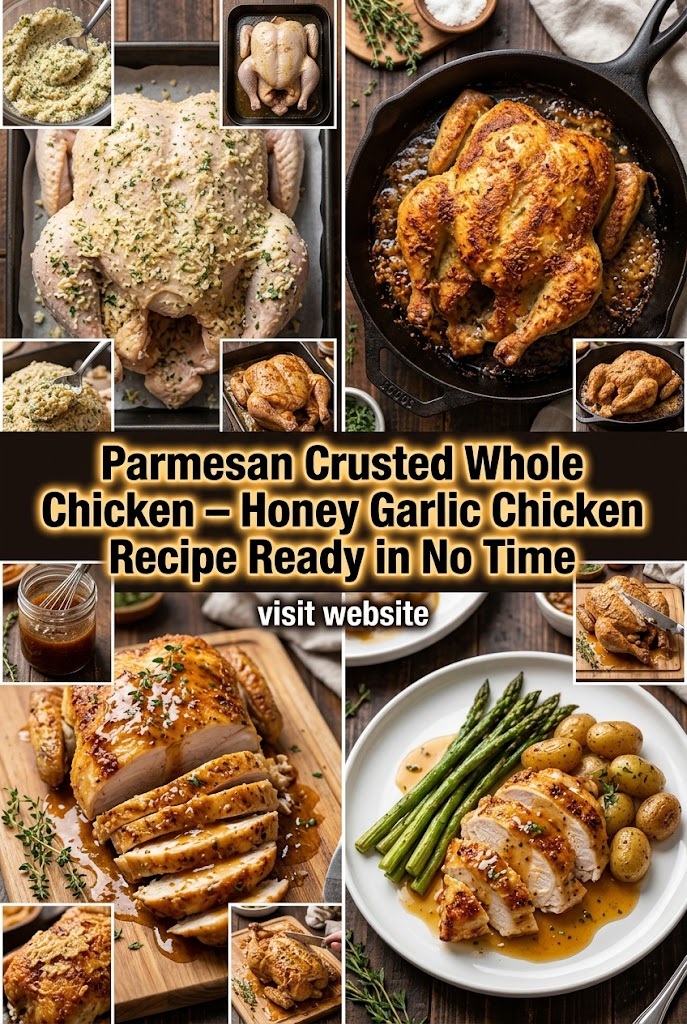
Parmesan Crusted Whole Chicken – Honey Garlic Chicken Recipe Ready in No Time
A Honey Garlic Masterpiece Ready in No Time
There is something inherently primal and deeply satisfying about a whole roasted chicken sitting at the center of the dinner table. It is the universal symbol of a home-cooked meal, a beacon of comfort that transcends cultures. But let’s be honest: the standard roast chicken can sometimes feel a bit… ordinary. If you are looking to elevate your Sunday roast from “good” to “legendary,” you need a recipe that plays with textures and contrasting flavors.
Enter the Parmesan Crusted Whole Chicken with a Honey Garlic Glaze. This dish is a culinary paradox—it is incredibly sophisticated in flavor yet surprisingly simple to execute. Imagine a chicken with a golden-brown, shatteringly crisp crust made of nutty Parmesan cheese, infused with the aromatic punch of garlic, and finished with a sticky, sweet honey glaze that cuts through the richness.
In this comprehensive guide, we are going to break down every element of this recipe. From selecting the right bird to the science of the Maillard reaction, we will ensure that your next chicken dinner is a gourmet experience that rivals the best rotisseries in the world.
Why This Recipe Works: The Science of Flavor and Texture
Before we dive into the ingredients, it is important to understand why the combination of Parmesan, honey, and garlic is so successful. This recipe utilizes the “Golden Trio” of taste: salt, fat, and acid (with a heavy lean toward sweetness).
- The Umami Bomb (Parmesan): Parmesan cheese is packed with glutamate, the compound responsible for umami. When roasted, the cheese doesn’t just melt; it undergoes a transformation, forming a savory, salty crust that protects the meat from drying out while providing a crunch that mimics deep-frying without the excess oil.
- The Sweet Component (Honey): Honey provides more than just sweetness. It acts as a glaze that traps moisture. Because honey contains natural sugars, it caramelizes at a lower temperature, giving the chicken that beautiful mahogany color.
- The Aromatic Base (Garlic): Garlic is the bridge between the salty cheese and the sweet honey. When roasted whole with the chicken, it mellows out, losing its sharp bite and turning into a buttery, sweet paste that seasons the meat from the outside in.
Choosing Your Ingredients: Quality is Key
To achieve a 5-star result, you must start with high-quality components. Because this recipe relies on a few key flavors, there is nowhere for subpar ingredients to hide.
1. The Chicken
Look for a fresh, organic, or pasture-raised whole chicken weighing between 3.5 to 4.5 pounds. Smaller birds tend to be more tender and cook more evenly. If possible, avoid “enhanced” chickens that have been injected with a sodium solution; these can result in a rubbery texture and overly salty meat.
2. The Parmesan
Step away from the green shaker bottle. For this recipe, you need real Parmigiano-Reggiano or a high-quality domestic Parmesan. Grate it yourself using the fine side of a box grater or a microplane. Freshly grated cheese contains more moisture and natural oils, which helps it adhere to the chicken and form a superior crust.
3. The Honey
Use raw, unfiltered honey if available. It has a deeper flavor profile with floral notes that complement the garlic beautifully. If your honey has crystallized, simply warm it slightly until it is liquid again.
4. The Garlic
Fresh cloves are non-negotiable. Jarred minced garlic often has a metallic aftertaste that can ruin the delicate balance of the honey glaze. You will want at least one full head of garlic for this recipe—some to be minced for the crust, and the rest to be roasted in the cavity.
5. The Fat
A mixture of unsalted butter and extra-virgin olive oil provides the best of both worlds: the flavor and browning capabilities of butter, and the higher smoke point of olive oil.
The Essential Equipment
You don’t need a professional kitchen to make a professional roast chicken, but a few tools will make the process seamless:
- A Heavy Roasting Pan or Cast-Iron Skillet: A 12-inch cast-iron skillet is actually one of the best vessels for roasting a whole chicken because it retains heat exceptionally well, ensuring the bottom of the bird cooks as efficiently as the top.
- A Meat Thermometer: This is the most important tool in your drawer. Overcooked chicken is dry; undercooked chicken is dangerous. An instant-read thermometer takes the guesswork out of the equation.
- Kitchen Twine: Trussing the chicken helps it cook evenly by keeping the wings and legs tucked close to the body.
- A Small Saucepan: For melting the butter and simmering the honey garlic glaze.
Step-by-Step Instructions: The Roadmap to Perfection
Prep Time: 20 minutes | Cook Time: 1 hour 15 minutes | Total Time: ~1 hour 35 minutes
Ingredients List
- 1 Whole Chicken (approx. 4 lbs)
- 1/2 cup Grated Parmesan Cheese
- 1/4 cup Panko Breadcrumbs (optional, for extra crunch)
- 1/2 cup Honey
- 6 cloves Garlic, minced
- 4 tbsp Unsalted Butter, melted
- 2 tbsp Extra Virgin Olive Oil
- 1 tsp Smoked Paprika
- 1 tsp Dried Oregano or Thyme
- Salt and Freshly Ground Black Pepper
- 1 Lemon, halved
- Fresh Parsley for garnish
Step 1: Preparing the Bird
The secret to a crispy crust is dry skin. Remove the chicken from its packaging and pat it thoroughly dry with paper towels. Don’t forget the nooks and crannies under the wings and legs. If you have time, let the chicken sit uncovered in the refrigerator for an hour before cooking; this air-dries the skin further.
Season the inside of the cavity generously with salt and pepper. Stuff the lemon halves and a few smashed garlic cloves inside. This creates an “aromatherapy” session for the meat from the inside out.
Step 2: The Parmesan Herb Rub
In a medium bowl, combine the melted butter, olive oil, minced garlic, smoked paprika, and dried herbs. In a separate small bowl, mix the grated Parmesan and panko breadcrumbs.
Brush the butter-garlic mixture all over the chicken, ensuring every inch is coated. Now, take the Parmesan mixture and press it firmly onto the breast, legs, and wings. The butter acts as the “glue” that holds the cheese in place.
Step 3: The Initial Roast
Preheat your oven to 400°F (200°C). Place the chicken in your roasting pan or skillet.
Pro Tip: If using a roasting pan, place the chicken on a bed of thick-cut onions and carrots. This elevates the bird, allowing hot air to circulate underneath, and gives you built-in side dishes that soak up all the delicious drippings.
Slide the chicken into the oven and roast for about 45 minutes. At this stage, we are looking to set the crust and start the rendering of the fat.
Step 4: The Honey Garlic Glaze
While the chicken is in its first phase of roasting, prepare the glaze. In a small saucepan over low heat, combine the honey with a splash of water (or apple cider vinegar for a bit of tang). Stir until the honey is thin and bubbling slightly.
Step 5: Glazing and Finishing
After 45 minutes, remove the chicken briefly. Using a pastry brush, gently dab the honey glaze over the Parmesan crust. Be careful not to “scrub” the crust off; use a light touch.
Return the chicken to the oven and lower the temperature to 375°F (190°C). Roast for another 20–30 minutes. The honey will begin to caramelize, turning the Parmesan crust into a deep, crispy amber.
Step 6: The Temperature Check
Insert your meat thermometer into the thickest part of the thigh, making sure not to hit the bone. You are looking for a reading of 165°F (74°C). Once it hits this mark, remove it immediately.
Step 7: The Most Important Step—Resting
Do not cut into the chicken right away! If you do, all the juices will run out onto the cutting board, leaving you with dry meat. Let the chicken rest for at least 15 to 20 minutes. This allows the muscle fibers to relax and reabsorb the juices.
Mastering the “Crispy Skin” Technique
The biggest complaint with roast chicken is soggy skin. When you add honey and cheese, the risk of sogginess increases if not handled correctly. Here is how to ensure a crunch every time:
- Salt Early: Salting the chicken (even without the crust) hours in advance draws moisture to the surface where it can evaporate.
- Avoid Crowding: If you put too many vegetables in the pan, they will release steam. Steam is the enemy of crispiness. Use a large enough pan so the chicken isn’t “swimming” in liquid.
- The High-Low Heat Method: Starting at 400°F blasts the skin with heat to crisp the Parmesan, while finishing at 375°F ensures the honey doesn’t burn before the dark meat is fully cooked.
Variations to Suit Your Palate
While the Honey Garlic Parmesan version is a classic, you can easily tweak this recipe to fit different flavor profiles:
- Spicy Honey Garlic: Add a teaspoon of red chili flakes or a tablespoon of Sriracha to the honey glaze for a “hot honey” effect.
- Lemon Herb Parmesan: Increase the lemon zest in the crust and swap the honey for a lemon-butter reduction for a brighter, more acidic finish.
- Truffle Parmesan: For a truly decadent meal, mix a teaspoon of truffle oil into the butter rub before applying the cheese.
What to Serve with Parmesan Crusted Chicken
A dish this rich and flavorful needs side dishes that can hold their own without clashing.
1. Garlic Mashed Potatoes
Since you already have the oven going, you can roast a few extra cloves of garlic to mash into your potatoes. The creamy texture of the mash is the perfect foil for the crunchy chicken crust.
2. Charred Asparagus or Broccolini
A green vegetable with a bit of “snap” provides a necessary freshness. Toss them in olive oil and lemon juice and roast them on a separate tray during the last 15 minutes of the chicken’s cooking time.
3. A Crisp Arugula Salad
A simple salad of arugula, shaved fennel, and a light vinaigrette helps cleanse the palate between bites of the savory, honey-glazed chicken.
4. Risotto
If you are feeling ambitious, a Parmesan and pea risotto echoes the flavors of the chicken’s crust and makes the meal feel like a high-end Italian dinner.
Wine and Beverage Pairings
Choosing the right drink can elevate the honey-garlic notes of the dish.
- White Wine: A buttery Chardonnay or a dry Chenin Blanc works beautifully. The acidity cuts through the fat of the chicken, while the oaky notes of a Chardonnay complement the toasted Parmesan.
- Red Wine: If you prefer red, go for something light and fruity like a Pinot Noir or a Beaujolais. Avoid heavy tannins, as they can clash with the sweetness of the honey.
- Non-Alcoholic: A sparkling apple cider or a ginger-infused sparkling water provides a refreshing zing that balances the garlic.
Troubleshooting Common Issues
The crust is burning but the chicken isn’t done: This usually happens if the honey was applied too early or the oven rack is too high. Simply tent the chicken loosely with aluminum foil. This will stop the browning while allowing the heat to continue cooking the interior.
The Parmesan fell off the chicken: This happens if the skin was too wet or there wasn’t enough “glue” (butter/oil). Ensure the bird is bone-dry before starting and press the cheese firmly into the fat layer.
The meat is dry: You likely overcooked it. Every oven is different. Start checking the temperature 10 minutes before the recipe says it should be done. Remember that “carry-over cooking” will raise the internal temperature by about 5 degrees while the bird rests.
Meal Prepping and Using Leftovers
One of the best things about a whole chicken is the leftovers. If you have any remaining Parmesan crusted chicken, don’t let it go to waste.
- The Ultimate Chicken Sandwich: Slice the cold chicken and place it on a toasted brioche bun with pesto mayo, arugula, and a slice of provolone.
- Parmesan Chicken Salad: Chop the meat (and the crust!) and toss it with romaine lettuce, Caesar dressing, and extra Parmesan for a gourmet twist on a Caesar salad.
- Honey Garlic Chicken Tacos: Shred the meat and reheat it quickly in a pan with a little extra honey and lime juice. Serve in flour tortillas with a cabbage slaw.
- Don’t Throw Away the Carcass: The bones of a Parmesan-crusted chicken make an incredible stock. The roasted cheese and garlic remnants add a deep, savory dimension to any soup or stew.
Nutritional Benefits of Roast Chicken
While the Parmesan and butter add some calories, a whole roast chicken is a fantastic source of high-quality protein.
- Protein Powerhouse: Chicken is rich in essential amino acids necessary for muscle repair and growth.
- Selenium and Phosphorus: These minerals support bone health and kidney function.
- Vitamin B3 (Niacin): Helps convert carbohydrates into fuel and maintains a healthy nervous system.
- Garlic Benefits: Garlic is known for its immune-boosting properties and ability to help regulate blood pressure.
By roasting the chicken yourself, you also avoid the excessive sodium and preservatives found in store-bought rotisserie chickens.
Frequently Asked Questions (FAQs)
Can I use chicken breasts instead of a whole chicken?
Yes, but you will need to adjust the cooking time significantly. Chicken breasts cook much faster (usually 20–25 minutes). You should still use the same butter-cheese rub and honey glaze, but apply the glaze about 10 minutes into the cooking process.
Can I make this in an Air Fryer?
Absolutely! An air fryer is essentially a high-powered convection oven. For a whole chicken, cook at 350°F (175°C) for about 50–60 minutes, flipping halfway through (be careful not to knock off the crust). Apply the honey glaze during the last 5–10 minutes of cooking.
Is this recipe gluten-free?
To make this recipe gluten-free, simply omit the panko breadcrumbs or use a gluten-free breadcrumb substitute. The Parmesan cheese itself provides plenty of crunch.
How long does the chicken stay fresh in the fridge?
Leftover roast chicken can be stored in an airtight container for up to 3 to 4 days. To maintain the crispness of the crust when reheating, use an oven or air fryer rather than a microwave.
The Cultural Heritage of the Roast Chicken
Roasting a whole bird is a tradition that spans the globe. In France, the Poulet Rôti is a Sunday staple, often served with potatoes that have been roasted in the chicken’s drippings. In China, honey-glazed chickens are a symbol of prosperity and are often served during the New Year.
This Parmesan Crusted Honey Garlic version is a modern, Western fusion. It takes the Italian love for hard cheeses and combines it with the classic American “Honey-Garlic” flavor profile that has become a favorite in gastropubs across the United States. It represents the modern kitchen’s ability to take the best of various traditions to create something entirely new and exciting.
Final Tips for Success
As you prepare to make this dish, remember that cooking is an art, not just a set of instructions.
- Trust your nose: If the garlic smells incredibly fragrant and the honey is starting to smell like caramel, you are on the right track.
- Listen to the sizzle: A roasting chicken should make a gentle sizzling sound. If it’s popping loudly, the heat might be too high; if it’s silent, it might be too low.
- Presentation matters: Before serving, garnish the platter with fresh herbs like parsley or rosemary and maybe some charred lemon halves. We eat with our eyes first, and a beautifully presented whole chicken is guaranteed to impress.
The Parmesan Crusted Whole Chicken with Honey Garlic Glaze is more than just a recipe; it’s a centerpiece for memories. Whether you are hosting a formal dinner party or just want to make Tuesday night feel special, this dish delivers on every front. It’s crispy, juicy, sweet, and savory—a true symphony of flavors that proves you don’t need hours of prep work to create a masterpiece.
Now, preheat that oven, grab your Parmesan, and get ready to taste the best chicken of your