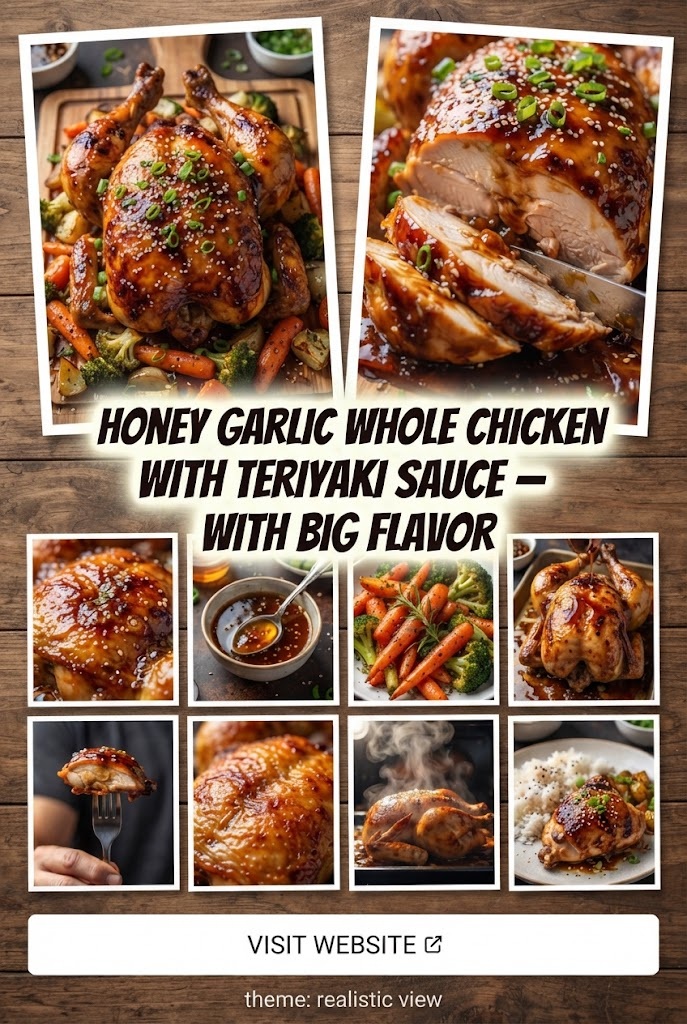
Honey Garlic Whole Chicken with Teriyaki Sauce – With Big Flavor
When it comes to the pantheon of comfort food, few things hold a candle to a perfectly roasted whole chicken. It is the centerpiece of Sunday dinners, the hero of holiday spreads, and the ultimate achievement for any home cook. But what happens when you take that classic roast and infuse it with the bold, sweet, and savory profiles of East Asian cuisine? You get the Honey Garlic Whole Chicken with Teriyaki Sauce.
This isn’t just another chicken recipe; it is a masterclass in balance. It marries the floral sweetness of honey with the pungent, earthy depth of garlic, all tied together by the umami-rich embrace of a thick, glossy teriyaki glaze. The result is a bird with mahogany-crisp skin, succulent meat that falls off the bone, and a flavor profile that dances between salt, sugar, and spice.
In this comprehensive guide, we will dive deep into why this combination works, the science behind the perfect roast, and the step-by-step process to ensure your kitchen smells like a five-star bistro.
The Flavor Profile: Why Honey, Garlic, and Teriyaki?
Before we preheat the oven, it is essential to understand the “Trinity of Umami” we are building here.
The Sweetness of Honey
Honey does more than just sweeten the dish. During the roasting process, the natural sugars in honey undergo caramelization and the Maillard reaction. This creates that deep, dark crust that enthusiasts crave. Honey also acts as a natural humectant, helping to lock moisture into the breast meat, which is notoriously prone to drying out.
The Pungency of Garlic
Garlic provides the aromatic backbone. When roasted whole inside the cavity or infused into the glaze, garlic mellows from its sharp, biting raw state into a buttery, nutty flavor. It cuts through the sweetness of the honey and the saltiness of the soy base, providing a necessary counterpoint.
The Complexity of Teriyaki
Teriyaki is more than just a sauce; it’s a technique. Traditionally consisting of soy sauce, mirin (or sake), and sugar, it provides the “glaze” (teri) and the “grill” (yaki) essence. By introducing teriyaki into a whole roast chicken context, we bring in fermented depth, a hint of acidity, and a glossy finish that makes the bird look like a work of art.
Choosing Your Bird: The Foundation of Excellence
You cannot build a skyscraper on a weak foundation, and you cannot make a world-class Honey Garlic Whole Chicken with a poor-quality bird.
Size Matters
For this recipe, aim for a chicken between 4 to 5 pounds. A bird of this size is large enough to feed a family of four with leftovers but small enough that the legs and thighs will cook through by the time the breast reaches its ideal temperature.
Quality and Source
If possible, opt for an organic, free-range, or pasture-raised chicken. These birds tend to have a higher fat content in the skin and a more robust flavor in the dark meat. More importantly, they haven’t been “plumped” with saline solution, which can lead to a rubbery texture and steamed (rather than roasted) skin.
Tempering the Meat
Never take a chicken straight from the fridge to the oven. Let your chicken sit on the counter for 30 to 45 minutes to take the chill off. This ensures even cooking and prevents the “outer-done, inner-raw” syndrome.
The Master Ingredients List
To achieve “Big Flavor,” you need high-quality ingredients. Here is what you’ll need to gather:
The Chicken
- 1 Whole Chicken: (4-5 lbs), giblets removed.
- Kosher Salt and Cracked Black Pepper: For the initial dry rub.
- Unsalted Butter: 4 tablespoons, softened (for under-the-skin richness).
The Honey Garlic Teriyaki Glaze
- 1/2 cup Soy Sauce: Use low-sodium if you want more control over the salt.
- 1/2 cup High-Quality Honey: Clover or Wildflower works best.
- 1/4 cup Mirin or Rice Vinegar: For that essential acidic tang.
- 6-8 Cloves of Garlic: Freshly minced (avoid the pre-minced jars for this).
- 1 tablespoon Fresh Ginger: Grated into a paste.
- 1 teaspoon Toasted Sesame Oil: For an earthy aroma.
- 1 tablespoon Cornstarch: Mixed with 1 tablespoon of cold water (optional, for thickening).
The Aromatics (For the Cavity)
- 1 Lemon: Halved.
- 1 Small Onion: Quartered.
- 1 Head of Garlic: Sliced crosswise.
- Fresh Herbs: Sprigs of thyme, rosemary, or even Thai basil for a twist.
Step-by-Step Preparation: The Road to Perfection
Step 1: The Dry Brine (The Secret to Crispy Skin)
The biggest enemy of crispy skin is moisture. After patting your chicken bone-dry with paper towels, rub the skin generously with Kosher salt. If you have time, let the chicken sit uncovered in the refrigerator for 4 to 24 hours. This “dry brine” draws moisture out of the skin, allowing it to crisp up beautifully in the oven while seasoning the meat deeply.
Step 2: Preparing the Glaze
In a small saucepan, combine the soy sauce, honey, mirin, minced garlic, and ginger. Simmer over medium-low heat for about 5-8 minutes until the mixture reduces slightly and becomes fragrant.
- Pro Tip: Take half of this sauce and set it aside in a separate bowl for serving. Use the other half for basting to avoid cross-contamination with raw chicken juices.
Step 3: Stuffing and Trussing
Stuff the cavity with the lemon, onion, halved garlic head, and herbs. These aromatics will steam from the inside out, flavoring the meat and keeping it moist. Trussing (tying the legs together with kitchen twine) is optional but recommended. It keeps the bird in a compact shape, ensuring the breast doesn’t cook significantly faster than the thighs.
Step 4: The Butter Rub
Gently lift the skin over the breast and thighs. Slide a tablespoon of softened butter under the skin of each side. This provides a fat barrier that bastes the meat as it roasts, ensuring succulent results.
Step 5: The Initial Roast
Preheat your oven to 425°F (218°C). Place the chicken on a rack in a roasting pan. The rack is crucial; it allows hot air to circulate under the bird, preventing a soggy bottom. Roast the chicken plain for the first 20-30 minutes. We don’t apply the glaze yet because the high sugar content in honey and teriyaki will burn if left in the oven for the entire cooking duration.
Step 6: The Basting Phase
Once the chicken begins to turn a light golden brown, reduce the oven temperature to 375°F (190°C). Using a pastry brush, generously coat the entire bird with your prepared Honey Garlic Teriyaki glaze. Baste every 15 minutes. As the glaze layers up, it will create a thick, sticky, and deeply flavorful “lacquer” on the skin.
Step 7: Checking for Doneness
The only way to be 100% sure your chicken is done is with a meat thermometer. You are looking for:
- 165°F (74°C) in the thickest part of the breast.
- 175°F (80°C) in the inner thigh (dark meat benefits from a slightly higher temp to break down connective tissue).
The Science of Resting: Don’t Skip This!
Once the chicken comes out of the oven, the juices are bubbling and concentrated near the surface. If you cut into it immediately, all those delicious juices will run out onto the cutting board, leaving you with dry meat. Transfer the chicken to a warm plate and tent it loosely with foil. Let it rest for at least 20 minutes. During this time, the muscle fibers relax and reabsorb the juices, ensuring every bite is moist.
Advanced Techniques for Extra Flavor
If you want to take your Honey Garlic Whole Chicken to the next level, consider these “chef-mode” adjustments:
1. Spatchcocking
If you’re short on time, try “spatchcocking” (butterflying) the chicken. Use kitchen shears to remove the backbone and flatten the bird. This allows the chicken to cook in about 45 minutes and ensures every square inch of skin is exposed to the heat, resulting in maximum crispiness.
2. The Cast Iron Method
Instead of a roasting pan, use a preheated cast-iron skillet. The heavy metal retains immense heat, searing the bottom of the chicken and creating an incredible crust on the underside.
3. Smoked Honey
Swap regular honey for smoked honey. This adds a “wood-fired” dimension to the dish that mimics a professional rotisserie or BBQ pit.
Perfect Pairings: What to Serve Alongside
A bold chicken needs sides that can either stand up to the flavor or provide a refreshing contrast.
Grains
- Jasmine Rice: The classic choice. It soaks up the extra teriyaki sauce perfectly.
- Coconut Rice: For a tropical, creamy counterpoint to the garlic.
- Quinoa with Scallions: A healthier, nuttier option.
Vegetables
- Garlic Butter Bok Choy: Lightly sautéed to keep a crunch.
- Roasted Carrots: Toss them in the same roasting pan during the last 30 minutes of cooking so they caramelize in the chicken drippings.
- Smashed Cucumber Salad: A cold, vinegary salad with chili oil to cut through the richness of the honey glaze.
Drinks
- White Wine: A dry Riesling or a Gewürztraminer has the acidity and slight sweetness to match the glaze.
- Beer: A crisp Japanese Lager (like Asahi or Sapporo) cleanses the palate.
- Non-Alcoholic: Sparkling water with a squeeze of lime and a dash of ginger syrup.
Troubleshooting Common Issues
Why is my skin burnt but the meat raw?
This usually happens if the oven is too hot or if the glaze was applied too early. Honey and sugar burn quickly. If you notice the skin darkening too fast, tent the bird with aluminum foil and lower the oven temperature.
Why is the skin soggy?
Soggy skin is usually caused by overcrowding the pan or not drying the bird properly. Ensure there is plenty of space for air to circulate and that you’ve patted the skin bone-dry before seasoning.
The sauce is too thin!
If your reserved sauce is too runny, bring it to a boil in a small pan. Whisk in a cornstarch slurry (1 tsp cornstarch + 1 tsp water) and cook for 1 minute until it coats the back of a spoon.
The Nutritional Breakdown: A Balanced Indulgence
While the glaze contains sugar, a whole roasted chicken is an excellent source of high-quality protein.
- Protein: Essential for muscle repair and metabolic function.
- Garlic: Known for its immune-boosting properties and sulfur compounds.
- Ginger: Great for digestion and anti-inflammatory benefits.
- Honey: A natural antioxidant source, though it should be consumed in moderation due to its glycemic index.
By roasting the bird yourself, you avoid the excessive sodium and preservatives found in store-bought rotisserie chickens or takeout teriyaki.
Meal Prep and Leftover Magic
One of the best things about a whole chicken is the leftovers. The flavors of honey, garlic, and teriyaki actually deepen overnight.
- Teriyaki Chicken Tacos: Shred the leftover meat and serve in corn tortillas with a slaw of cabbage and lime.
- Asian-Style Chicken Salad: Mix cold shredded chicken with sesame dressing, almonds, and mandarin oranges.
- The Ultimate Fried Rice: Use the carcass to make a quick stock, and use the meat bits in a vegetable-heavy fried rice.
- Bone Broth: Don’t throw away the bones! Simmer them with ginger, garlic, and scallions to create a “healing” bone broth that can be used as a base for Ramen or Pho.
Cultural Context: The Fusion Revolution
The combination of honey garlic and teriyaki represents a beautiful fusion of culinary traditions. Teriyaki is deeply rooted in Japanese history, dating back to the Edo period. Honey garlic, while popular in American-Chinese cuisine and Canadian “pub food” (like honey garlic wings), brings a Western sweetness that appeals to a global palate.
Combining these into a traditional European-style “roast chicken” format is a testament to the modern kitchen’s ability to blend the best of all worlds. It’s a dish that feels familiar yet exciting, making it perfect for impressing guests without requiring obscure ingredients.
Frequently Asked Questions (FAQs)
Can I make this in a slow cooker?
Yes, but you will miss out on the crispy skin. If using a slow cooker, cook on low for 6 hours, then place the chicken under a broiler for 5 minutes at the end to crisp up the glaze.
Can I use chicken pieces (thighs/breasts) instead of a whole bird?
Absolutely. Just adjust the cooking time. Thighs usually take 25-30 minutes, while breasts take 20-25 minutes at 400°F.
Is mirin necessary?
Mirin adds a unique sweetness and shine, but you can substitute it with dry sherry or rice vinegar mixed with a teaspoon of sugar.
How do I store leftovers?
Store in an airtight container for up to 4 days in the refrigerator. To reheat, use the oven or an air fryer to maintain the skin’s texture.
Final Thoughts: The Joy of the Roast
Cooking a Honey Garlic Whole Chicken with Teriyaki Sauce is an act of love. It requires patience—the patience to dry-brine, the patience to baste, and the patience to let the meat rest. But when you pull that glistening, dark-amber bird out of the oven, and the aroma of roasted garlic and sweet soy fills your home, you’ll realize it was worth every second.
This recipe is designed to be a “Big Flavor” experience. It’s bold, it’s sticky, and it’s undeniably delicious. Whether you are a seasoned chef or a weekend warrior in the kitchen, this chicken will become a staple in your repertoire. It is more than just a meal; it is a celebration of how simple ingredients, when treated with care and technique, can transform into something truly extraordinary.
Get your roasting pan ready—your new favorite dinner awaits.