
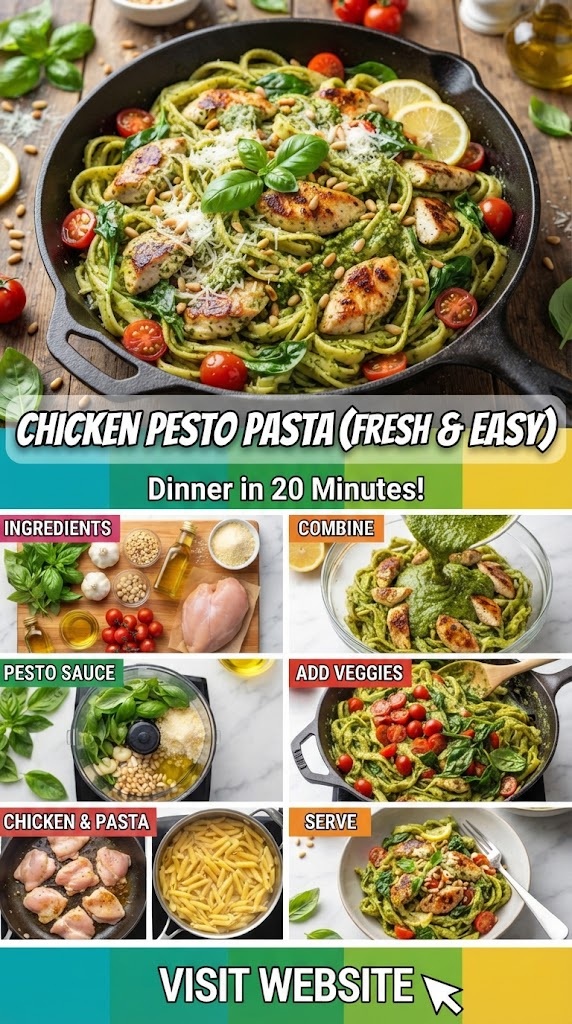
Chicken Pesto Pasta (Fresh & Easy)
Chicken Pesto Pasta (Fresh & Easy)
Chicken Pesto Pasta is the kind of dinner that tastes like you spent far more time in the kitchen than you actually did. Tender pieces of golden chicken are tossed with perfectly cooked pasta, vibrant basil pesto, garlic, Parmesan cheese, and a silky sauce that coats every bite. It is fresh, creamy without being overly heavy, and incredibly easy to customize.
This recipe is perfect for busy weeknights, casual family dinners, meal prep, or whenever you want a comforting pasta dish with bright Italian-inspired flavors. The combination of juicy chicken, fragrant pesto, salty Parmesan, and pasta creates a balanced meal that feels both satisfying and fresh.
Why You’ll Love This Chicken Pesto Pasta
There are plenty of reasons this recipe deserves a regular place in your dinner rotation.
It is quick. Most of the cooking happens in one skillet while the pasta boils, making this an excellent 30-minute meal.
It uses simple ingredients. Chicken, pasta, pesto, Parmesan, garlic, and a few pantry staples are all you need.
The flavor is fresh and vibrant. Basil pesto brings garlic, herbs, olive oil, nuts, and cheese together in one convenient ingredient.
It is family-friendly. The creamy pesto sauce and tender chicken make it appealing to both kids and adults.
It is easy to customize. Add spinach, tomatoes, broccoli, mushrooms, or your favorite vegetables.
It works well for leftovers. Store it properly and you can enjoy it for lunch the next day.
Complete Recipe at a Glance
Recipe: Chicken Pesto Pasta
Cuisine: Italian-inspired
Course: Dinner / Main Course
Prep Time: 10 minutes
Cook Time: 20 minutes
Total Time: 30 minutes
Servings: 4–6
Difficulty: Easy
Ingredients
- 12 ounces penne, fusilli, rotini, or your favorite pasta
- 1 ½ pounds boneless, skinless chicken breasts
- 2 tablespoons olive oil
- 3 cloves garlic, minced
- ¾ teaspoon salt, divided
- ½ teaspoon black pepper
- ½ teaspoon Italian seasoning
- 1 cup basil pesto
- ½ cup heavy cream
- ½ cup freshly grated Parmesan cheese
- ½ cup reserved pasta water, as needed
- 1 tablespoon fresh lemon juice
- 1 cup cherry tomatoes, halved
- 2 cups fresh baby spinach
- 2 tablespoons chopped fresh basil, optional
- Extra Parmesan for serving
- Freshly ground black pepper for serving
Ingredients Explained
1. Pasta
Penne is an excellent choice because its hollow center and ridges hold onto the pesto sauce. Fusilli and rotini are also fantastic because their spirals trap the creamy sauce.
You can also use spaghetti, linguine, bow-tie pasta, rigatoni, or whole-wheat pasta.
The most important thing is to cook the pasta until it is al dente. Overcooked pasta can become soft and break apart when tossed with the sauce.
2. Chicken
Boneless, skinless chicken breasts are lean, convenient, and easy to cook.
Chicken thighs can also be used if you prefer darker meat. They contain more fat, which makes them particularly juicy and flavorful.
The key is to cut the chicken into similarly sized pieces so everything cooks evenly.
3. Basil Pesto
Pesto is the star ingredient.
Traditional basil pesto is made with basil, garlic, pine nuts, Parmesan cheese, and olive oil. Store-bought pesto works beautifully in this recipe and makes the dish extremely convenient.
If you have homemade pesto available, even better.
4. Heavy Cream
Heavy cream creates a smooth, luxurious sauce and softens the intensity of the pesto.
You do not need a huge amount. Just enough cream combined with pesto and pasta water creates a sauce that coats the noodles without becoming excessively heavy.
5. Parmesan Cheese
Freshly grated Parmesan melts more smoothly than pre-shredded cheese and gives the sauce a rich, salty flavor.
For the best texture, grate the Parmesan yourself immediately before cooking.
6. Garlic
Fresh garlic gives the chicken and sauce an aromatic flavor that complements the basil pesto.
Avoid burning the garlic. It only needs a short time in the skillet.
7. Cherry Tomatoes
Tomatoes add sweetness, acidity, color, and freshness.
They are optional, but highly recommended.
8. Baby Spinach
Spinach is an easy way to add vegetables without changing the character of the dish. It wilts directly into the warm pasta and sauce.
How to Make Chicken Pesto Pasta
Step 1: Prepare the Chicken
Start by trimming any excess fat from the chicken breasts.
Pat the chicken dry with paper towels. This is an important step because removing surface moisture helps the chicken brown instead of steaming.
Cut the chicken into bite-sized pieces.
Place the chicken in a bowl and season with:
- Salt
- Black pepper
- Italian seasoning
Toss everything together until the chicken is evenly coated.
Let the seasoned chicken sit for a few minutes while you prepare the pasta water.
Step 2: Boil the Pasta
Bring a large pot of water to a rolling boil.
Add a generous amount of salt.
Add the pasta and cook according to the package directions, but begin checking it about 1–2 minutes before the recommended cooking time.
You want the pasta to be al dente—cooked through but still slightly firm when you bite into it.
Before draining, carefully reserve about ½ cup of pasta water.
This liquid is extremely useful for making the sauce.
Drain the pasta and set it aside.
Do not rinse the pasta.
The starch remaining on the noodles helps the pesto sauce cling to them.
Step 3: Cook the Chicken
While the pasta cooks, heat a large skillet over medium-high heat.
Add the olive oil.
Once the oil is hot, add the seasoned chicken pieces in a single layer.
Avoid overcrowding the skillet. If necessary, cook the chicken in two batches.
Cook the chicken for approximately 3–5 minutes per side, depending on the size of the pieces.
The chicken should develop a golden-brown exterior.
Stir occasionally so the pieces brown on multiple sides.
Chicken should reach a safe internal temperature of 165°F (74°C) at the thickest part.
Once cooked, transfer the chicken to a clean plate.
Step 4: Cook the Garlic
Reduce the heat to medium.
Add the minced garlic to the same skillet.
Cook for approximately 30 seconds to 1 minute.
Stir constantly.
The garlic should become fragrant but should not turn dark brown.
Burnt garlic can make the entire sauce taste bitter.
Step 5: Make the Creamy Pesto Sauce
Add the heavy cream to the skillet.
Stir gently, scraping the bottom of the pan with a wooden spoon or spatula.
Those browned chicken bits contain a lot of flavor.
Allow the cream to warm for about 1–2 minutes.
Do not boil it aggressively.
Next, add the basil pesto.
Stir until the pesto and cream are completely combined.
The sauce should become smooth and fragrant.
Step 6: Add Parmesan
Lower the heat.
Add the freshly grated Parmesan cheese.
Stir continuously until the cheese melts into the sauce.
At this point, the sauce may appear slightly thick.
That is where your reserved pasta water becomes important.
Step 7: Add Pasta Water
Add the reserved pasta water a few tablespoons at a time.
Stir after each addition.
The starchy water loosens the sauce while helping the pesto and cream emulsify into a silky coating.
You may not need the entire ½ cup.
Stop adding water when the sauce reaches your preferred consistency.
The finished sauce should be creamy enough to coat the pasta but loose enough that it does not become clumpy.
Step 8: Add the Pasta
Add the drained pasta directly to the skillet.
Toss gently until every piece is coated with the pesto sauce.
If the sauce looks too thick, add another splash of pasta water.
If it looks too thin, continue tossing over low heat for another minute.
Avoid cooking the pasta for too long after adding the sauce.
Step 9: Return the Chicken
Add the cooked chicken back to the skillet.
Toss everything together.
Make sure the chicken is evenly distributed throughout the pasta.
Step 10: Add Tomatoes and Spinach
Add the halved cherry tomatoes and fresh spinach.
Toss gently.
The residual heat from the pasta and sauce will soften the spinach.
Cook for about 1–2 minutes, just until the spinach wilts.
The tomatoes should remain relatively fresh rather than becoming completely soft.
Step 11: Add Lemon Juice
Turn off the heat.
Add the fresh lemon juice.
This small amount of acidity makes a big difference.
Cream, pesto, chicken, and Parmesan are rich flavors. Lemon juice brightens everything and keeps the finished pasta from tasting too heavy.
Taste the dish.
Add additional salt or black pepper if needed.
Step 12: Serve
Transfer the Chicken Pesto Pasta to serving bowls.
Top with:
- Freshly grated Parmesan
- Fresh basil
- Freshly cracked black pepper
- A small drizzle of pesto, if desired
Serve immediately while the sauce is warm and creamy.
What Makes the Sauce So Good?
The secret to this recipe is the combination of pesto, cream, Parmesan, and pasta water.
Each ingredient performs a different job.
Pesto provides basil, garlic, herbs, cheese, nuts, and olive oil.
Cream creates richness.
Parmesan adds saltiness and umami.
Pasta water supplies starch.
When combined properly, these ingredients create a sauce that is smooth and cohesive rather than oily or separated.
The pasta water is especially important.
Many people drain their pasta and throw away all the cooking water, but pasta water can be extremely useful for finishing sauces.
The starch helps the sauce cling to the pasta instead of sliding off.
Tips for Perfect Chicken Pesto Pasta
Use Freshly Grated Parmesan
Pre-shredded Parmesan can contain anti-caking ingredients that prevent it from melting as smoothly.
Freshly grated Parmesan creates a silkier sauce.
Do Not Overcook the Chicken
Chicken breast can become dry if cooked too long.
Cutting it into evenly sized pieces helps it cook quickly.
Use a thermometer if you are unsure.
The chicken should reach 165°F (74°C).
Do Not Burn the Garlic
Garlic cooks very quickly.
Thirty seconds to one minute is usually enough.
Save Pasta Water
This is one of the most useful techniques in the entire recipe.
Always reserve some before draining the pasta.
Don’t Rinse the Pasta
Rinsing removes surface starch that helps the sauce cling to the noodles.
Add Lemon at the End
Lemon juice is best added after the heat is turned off.
This keeps its bright, fresh flavor.
Taste Before Adding More Salt
Pesto and Parmesan can both contain considerable salt.
Taste the finished sauce before adding additional seasoning.
Easy Variations
Chicken Pesto Pasta with Sun-Dried Tomatoes
Replace the cherry tomatoes with chopped sun-dried tomatoes.
Their concentrated sweet and tangy flavor pairs beautifully with pesto.
Creamy Chicken Pesto Pasta with Mushrooms
Slice 8 ounces of mushrooms and sauté them after cooking the chicken.
Continue with the recipe as written.
Chicken Pesto Pasta with Broccoli
Add small broccoli florets to the pasta pot during the final 3–4 minutes of cooking.
Drain everything together and continue with the recipe.
Spicy Chicken Pesto Pasta
Add ¼–½ teaspoon red pepper flakes to the sauce.
You can also drizzle chili oil over individual servings.
Chicken Pesto Pasta with Mozzarella
Add small mozzarella pearls just before serving.
The warm pasta will soften the mozzarella without completely melting it.
Pesto Pasta with Rotisserie Chicken
For an even faster dinner, use shredded cooked rotisserie chicken.
Skip the chicken-cooking step and add the shredded chicken when you combine the pasta with the sauce.
Dairy-Free Version
Use a dairy-free pesto and replace the Parmesan with a dairy-free alternative or nutritional yeast.
Use a dairy-free cream substitute if desired.
What Pasta Shape Is Best?
Almost any pasta works, but some shapes hold the sauce better than others.
Penne
Excellent for creamy sauces and easy to serve.
Fusilli
The spirals capture pesto beautifully.
Rotini
Another excellent option for thick sauces.
Farfalle
The bow-tie shape makes the dish look attractive and works well with pesto.
Rigatoni
Large tubes create hearty bites with plenty of chicken and sauce.
Spaghetti
Works perfectly but provides less surface area for thick pesto sauce.
Can You Use Store-Bought Pesto?
Absolutely.
A good-quality refrigerated pesto is convenient and works very well.
When buying pesto, look for one with a strong basil aroma and a balanced flavor.
Some jarred pestos are extremely salty, so adjust the salt in the recipe accordingly.
You can also make homemade pesto using:
- Fresh basil
- Garlic
- Parmesan
- Pine nuts
- Olive oil
- Salt
- Lemon juice
Blend everything until smooth or slightly textured, depending on your preference.
How to Make This Recipe Ahead
Chicken Pesto Pasta is best when served immediately, but you can prepare several components ahead of time.
Cook the chicken earlier in the day and refrigerate it.
You can also wash and prepare the vegetables ahead of time.
When you’re ready to eat, cook the pasta fresh and make the sauce.
For the best texture, avoid completely assembling the pasta several hours before serving because the noodles will continue absorbing the sauce.
How to Store Leftovers
Allow leftovers to cool slightly before transferring them to an airtight container.
Refrigerate for up to 3–4 days.
Keep the pasta refrigerated at 40°F (4°C) or below.
When reheating, add a splash of water, milk, or cream to loosen the sauce.
Reheat gently in a skillet over medium-low heat, stirring frequently.
You can also microwave it in short intervals, stirring between each interval.
Avoid overheating because the cream and Parmesan sauce can become thick or separate.
Can You Freeze Chicken Pesto Pasta?
You can freeze it, although the texture may not be quite as creamy after thawing.
For best results, slightly undercook the pasta if you know you plan to freeze the dish.
Allow it to cool completely before placing it in a freezer-safe container.
Freeze for up to about 2 months for best quality.
Thaw overnight in the refrigerator.
Reheat gently with a splash of cream, milk, or water.
Fresh pesto can also be frozen separately in small portions.
What to Serve with Chicken Pesto Pasta
This pasta is filling enough to serve as a complete meal, but a few side dishes can make dinner even better.
Garlic Bread
Crispy garlic bread is perfect for soaking up leftover pesto sauce.
Green Salad
A simple salad with lettuce, cucumber, tomatoes, and a light lemon vinaigrette adds freshness.
Roasted Vegetables
Try roasted broccoli, zucchini, asparagus, or bell peppers.
Caprese Salad
Tomatoes, mozzarella, basil, olive oil, and balsamic glaze complement the flavors of pesto pasta beautifully.
Steamed Green Beans
A simple vegetable side keeps the meal balanced.
Common Mistakes to Avoid
Mistake 1: Using Cold Chicken Straight from the Refrigerator
Extremely cold chicken can cook unevenly.
Letting it sit briefly while you prepare the other ingredients can help it cook more evenly.
Do not leave raw chicken at room temperature for extended periods.
Mistake 2: Overcrowding the Pan
Too much chicken in the skillet causes steaming rather than browning.
Cook in batches if necessary.
Mistake 3: Cooking the Pasta Until Completely Soft
Remember that the pasta continues cooking slightly when added to the hot sauce.
Aim for al dente.
Mistake 4: Adding Parmesan Over High Heat
Very high heat can cause cheese-based sauces to become grainy.
Lower the heat before adding Parmesan.
Mistake 5: Forgetting Pasta Water
Without pasta water, the sauce can become too thick.
Always save some.
Mistake 6: Adding Too Much Pesto
More pesto does not necessarily mean better flavor.
Pesto can be salty and intense.
Start with the recommended amount and adjust after tasting.
How to Make It More Flavorful
For an even more flavorful version, season the chicken generously but appropriately.
You can also add a small amount of:
- Smoked paprika
- Red pepper flakes
- Onion powder
- Italian seasoning
- Lemon zest
- Fresh basil
A little lemon zest added at the end is especially good because it provides citrus aroma without making the sauce overly acidic.
How to Make It Healthier
If you want to lighten the recipe, there are several easy options.
Use whole-wheat pasta for additional fiber.
Use half the amount of cream and increase the pasta water.
Add more spinach, broccoli, zucchini, or tomatoes.
Use skinless chicken breast.
Measure the Parmesan and pesto rather than adding them freely.
You can also use Greek yogurt in a modified sauce, although it should be added off the heat to reduce the risk of curdling.
Meal Prep Instructions
Chicken Pesto Pasta works well as a meal-prep lunch.
Divide the finished pasta into four airtight containers.
Allow the food to cool before sealing and refrigerating.
When reheating, add approximately 1 tablespoon of water or milk to each portion.
Microwave until heated through, stirring halfway.
For better texture, reheat gently rather than using extremely high heat.
You can also keep the chicken, pasta, and sauce separate when preparing meals several days ahead.
Frequently Asked Questions
Can I use chicken thighs?
Yes. Boneless, skinless chicken thighs are delicious in pesto pasta and tend to remain especially juicy.
Can I use frozen chicken?
You can use previously frozen chicken as long as it has been safely thawed before cooking.
Can I make this without cream?
Yes. Increase the amount of pasta water and use additional Parmesan and pesto for a lighter sauce.
Can I use milk instead of heavy cream?
Yes, although the sauce will be less rich. Whole milk works better than skim milk.
Can I add vegetables?
Absolutely. Spinach, broccoli, mushrooms, zucchini, peas, bell peppers, and tomatoes all work well.
Is pesto gluten-free?
Not necessarily. Check the package ingredients if you need a gluten-free meal. Some pesto products may contain ingredients or be processed in facilities that require consideration for dietary restrictions.
Use certified gluten-free pasta if needed.
Can I use homemade pesto?
Yes. Homemade pesto can make this dish especially fresh and flavorful.
Why is my pesto sauce oily?
Pesto naturally contains olive oil. If the sauce separates, reduce the heat and toss vigorously with a little reserved pasta water.
Why did my sauce become too thick?
Add reserved pasta water a few tablespoons at a time and toss until the desired consistency returns.
Why did my Parmesan become clumpy?
The heat may have been too high, or the cheese may have been added too quickly. Reduce the heat and incorporate freshly grated Parmesan gradually.
Nutrition Information
Approximate nutrition per serving will vary depending on the exact brands and quantities used.
A typical serving provides approximately:
- Calories: 650–750
- Protein: 40–50 g
- Carbohydrates: 55–65 g
- Fat: 28–35 g
- Fiber: 3–5 g
- Sodium: Variable depending on pesto and Parmesan
For more precise nutritional information, calculate the recipe using the exact products and quantities you use.
The Best Way to Serve Chicken Pesto Pasta
For the most appealing presentation, place the pasta in a shallow bowl rather than a deep plate.
Arrange several pieces of chicken on top.
Add a few halved cherry tomatoes.
Sprinkle generously with freshly grated Parmesan.
Finish with fresh basil and freshly cracked black pepper.
A tiny drizzle of olive oil or pesto can add an attractive finishing touch.
Serve while hot.
Final Recipe Summary
This Chicken Pesto Pasta combines tender golden chicken, al dente pasta, aromatic garlic, fresh-tasting basil pesto, creamy sauce, Parmesan, tomatoes, and spinach in one satisfying dinner.
The recipe is straightforward enough for a busy weeknight but flavorful enough for guests.
The most important techniques are simple:
- Cut the chicken evenly.
- Brown it rather than steaming it.
- Cook pasta al dente.
- Save pasta water.
- Add pesto and cream over moderate heat.
- Melt Parmesan gently.
- Use pasta water to create a silky sauce.
- Finish with lemon juice for brightness.
- Taste before adding additional salt.
- Serve immediately for the creamiest texture.
Whether you’re looking for an easy family dinner, a comforting pasta meal, or a fresh way to use basil pesto, this Chicken Pesto Pasta delivers plenty of flavor without requiring complicated cooking techniques.
The result is creamy, fresh, savory, colorful, and ready in about 30 minutes—exactly the kind of dinner worth keeping in your weekly recipe rotation.