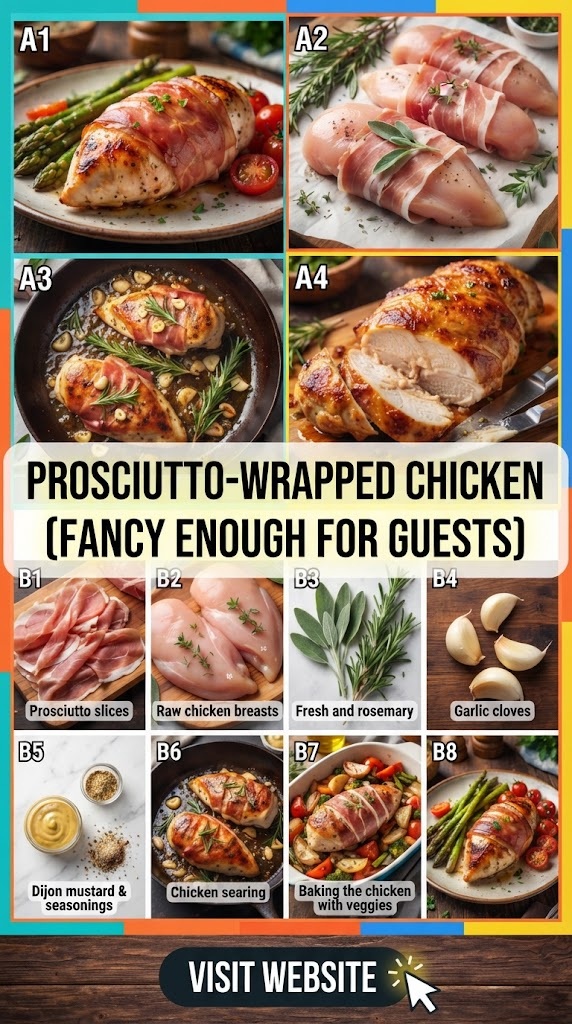
Prosciutto-Wrapped Chicken (Fancy Enough for Guests)
When it comes to entertaining, the modern host faces a perennial dilemma: how to serve a meal that looks and tastes like a five-star restaurant creation without spending the entire evening trapped in the kitchen. Enter the Prosciutto-Wrapped Chicken. This dish is the holy grail of dinner party recipes. It is visually stunning, aromatically intoxicating, and possesses a flavor profile that balances the lean, mild nature of poultry with the salty, cured intensity of Italian ham.
In this comprehensive guide, we will explore everything you need to know to master this dish—from selecting the finest ingredients to the technical nuances of wrapping and searing. Whether you are a seasoned home cook or a novice looking to impress, this article will elevate your culinary repertoire.
Why Prosciutto-Wrapped Chicken is the Perfect “Guest” Dish
The appeal of this dish lies in its contrast. You have the crunch of the crisped prosciutto, the tenderness of the chicken, and usually, a creamy, flavorful center. It checks several boxes for a high-end dining experience:
- Visual Impact: The golden-brown, marbled texture of the prosciutto looks professional and artisanal.
- Moisture Control: Prosciutto acts as a protective barrier, essentially “basting” the chicken in its own juices and rendered fat, preventing the dreaded dry chicken breast.
- Efficiency: Much of the preparation can be done in advance, allowing you to simply slide the pan into the oven when your guests arrive.
- Dietary Versatility: Naturally low-carb and gluten-free (depending on the stuffing), it fits many modern dietary needs without feeling like a “compromise” meal.
The Core Components: Understanding Your Ingredients
To create a world-class dish, you must start with world-class ingredients. Let’s break down the three pillars of this recipe.
1. The Prosciutto: The Star of the Show
Not all prosciutto is created equal. Prosciutto is an Italian dry-cured ham that is usually thinly sliced and served raw (prosciutto crudo). When cooked, it transforms into a crispy, salty delight.
- Prosciutto di Parma: The gold standard. It has a nutty flavor due to the whey from Parmigiano-Reggiano cheese often fed to the pigs.
- Prosciutto di San Daniele: Usually sweeter and darker than Parma.
- Domestic Prosciutto: Often less expensive and more readily available in US supermarkets, it works perfectly well for wrapping chicken, though it may be slightly saltier.
Pro-Tip: Ask your butcher to slice it “paper-thin but not shredded.” You need the slices to be structural enough to wrap but thin enough to crisp up quickly.
2. The Chicken: Breast vs. Thigh
While chicken breasts are the traditional choice for “fancy” presentations because they provide a clean, uniform canvas, chicken thighs offer more flavor and are much harder to overcook.
- Breasts: Ideal for stuffing. You can create a “pocket” or butterfly them to hold cheeses and herbs.
- Thighs (Boneless/Skinless): These provide a richer, more succulent bite. They are smaller, making them perfect for individual portions or tapas-style servings.
3. The Filling: Adding Depth
While you can wrap plain chicken, adding a filling elevates the dish to “gourmet” status. Popular combinations include:
- Goat Cheese and Spinach: Tangy and earthy.
- Boursin or Garlic-Herb Cream Cheese: Simple and decadently creamy.
- Sun-Dried Tomatoes and Basil: A classic Mediterranean profile.
- Fontina and Sage: A nod to the classic Italian Saltimbocca.
The Master Recipe: Prosciutto-Wrapped Stuffed Chicken Breast
This recipe serves four and is designed to be the centerpiece of an elegant evening.
Ingredients
- 4 Large Boneless, Skinless Chicken Breasts (approx. 6-8 oz each)
- 8-12 Slices of Prosciutto (2-3 per breast)
- 4 oz Goat Cheese or Cream Cheese (softened)
- 1 Cup Fresh Baby Spinach (chopped)
- 2 Cloves Garlic (minced)
- 1 Tablespoon Fresh Thyme or Sage (finely chopped)
- Kosher Salt and Freshly Cracked Black Pepper
- 2 Tablespoons Olive Oil
- 1 Tablespoon Butter
- Optional: Kitchen twine for securing (though usually not necessary if wrapped tightly).
Step-By-Step Instructions
Phase 1: Preparing the Chicken
- Pat Dry: Use paper towels to dry the chicken thoroughly. Moisture is the enemy of a good sear.
- The Cut: Use a sharp paring knife to cut a pocket into the thickest part of the breast. Be careful not to cut all the way through to the other side.
- Seasoning: Lightly season the inside of the pocket with salt and pepper. Go easy on the salt for the exterior, as the prosciutto will provide plenty of sodium.
Phase 2: The Stuffing
- In a small bowl, mix your cheese, minced garlic, chopped spinach, and herbs.
- Spoon approximately 1-2 tablespoons of the mixture into each chicken pocket.
- Press the edges of the chicken together to seal the pocket as much as possible.
Phase 3: The Wrap (The Technical Part)
- Lay out 2 to 3 slices of prosciutto on a clean cutting board, slightly overlapping them to create a “sheet.”
- Place the stuffed chicken breast at one end of the prosciutto sheet.
- Roll the chicken tightly, ensuring the prosciutto covers the seam of the chicken pocket. The natural tackiness of the ham will help it adhere to the meat.
- Tuck the ends under to create a neat parcel.
Phase 4: Searing for Success
- Preheat your oven to 400°F (200°C).
- In a large, oven-safe skillet (cast iron is best), heat the olive oil and butter over medium-high heat.
- Once the butter is foaming, place the chicken breasts in the pan, seam-side down. This “glues” the wrap together.
- Sear for 3-4 minutes until the prosciutto is golden and crispy. Gently flip and sear the other side for another 2-3 minutes.
Phase 5: The Roast
- Transfer the entire skillet into the preheated oven.
- Bake for 12-15 minutes, or until the internal temperature reaches 165°F (74°C) when measured with a meat thermometer.
- Resting: This is the most ignored but vital step. Remove the chicken from the pan and let it rest on a warm plate for at least 5-7 minutes. This allows the juices to redistribute and the cheese to set.
Mastering the Science: Why This Dish Works
To truly master a dish, one must understand the culinary science behind it. Prosciutto-wrapped chicken is a masterclass in moisture retention and flavor layering.
The Basting Effect
Chicken breast is notoriously lean. When exposed to the high dry heat of an oven, the exterior proteins contract and squeeze out moisture. The prosciutto acts as a “fatty jacket.” As the fat in the prosciutto renders, it seeps into the chicken, providing a continuous baste. Furthermore, the ham creates a physical barrier that prevents steam from escaping the chicken too quickly.
The Maillard Reaction
By searing the prosciutto first, you trigger the Maillard reaction—a chemical reaction between amino acids and reducing sugars that gives browned food its distinctive flavor. Because prosciutto is cured and contains concentrated proteins and sugars, it browns more intensely and complexly than plain chicken skin ever could.
Balancing the Palate
The saltiness of the ham cuts through the richness of a cheese filling, while the poultry provides a neutral base that anchors the two. If you add an acid (like a lemon butter sauce or a balsamic glaze), you complete the flavor profile: Salt, Fat, Acid, and Heat.
Creative Variations to Suit Every Season
One of the reasons Prosciutto-Wrapped Chicken remains a staple in high-end catering is its adaptability. You can change the “mood” of the dish simply by swapping the filling or the sauce.
1. The Autumnal Harvest
- Filling: Roasted butternut squash purée, sage, and Gruyère cheese.
- Sauce: A cider reduction with browned butter.
- Vibe: Cozy, warm, and sophisticated.
2. The Mediterranean Summer
- Filling: Feta cheese, chopped Kalamata olives, and roasted red peppers.
- Sauce: A light drizzle of extra virgin olive oil and a squeeze of fresh lemon.
- Vibe: Bright, salty, and refreshing.
3. The French Bistro
- Filling: Brie cheese and thinly sliced Granny Smith apples.
- Sauce: A honey-mustard cream sauce.
- Vibe: Elegant, sweet-and-savory, and decadent.
4. The Italian Classic (Saltimbocca Style)
- Method: Instead of stuffing, place a large sage leaf directly on the chicken breast, then wrap it in prosciutto.
- Sauce: A white wine and lemon pan sauce (Marsala or Pinot Grigio).
- Vibe: Traditional, herbal, and sharp.
Perfect Pairings: What to Serve Alongside
A “fancy enough for guests” entree deserves sides that share the same pedigree. You want sides that won’t overshadow the chicken but will complement its textures.
Starchy Accompaniments
- Saffron Risotto: The creamy texture of risotto is the perfect foil for the crispy prosciutto. The golden hue of saffron adds a regal touch to the plate.
- Garlic Mashed Cauliflower: For a low-carb option, a silky cauliflower purée offers a light, airy base.
- Lemon-Herb Orzo: A bright, citrusy pasta helps cut through the richness of the cheese filling.
Vegetable Sides
- Balsamic Roasted Brussels Sprouts: The charred edges of the sprouts mimic the crispiness of the ham.
- Honey-Glazed Carrots: The sweetness of the carrots balances the saltiness of the prosciutto.
- Asparagus with Hollandaise: If you want to go full “fine dining,” a classic Hollandaise sauce over blanched asparagus is unbeatable.
Wine Pairing
- White: A buttery Chardonnay from California or a crisp Vermentino from Italy. The acidity in the wine cuts through the fat of the prosciutto and cheese.
- Red: If you prefer red, go for something light and fruity like a Pinot Noir or a Gamay. Avoid heavy tannins (like Cabernet Sauvignon), which can overwhelm the delicate chicken.
Troubleshooting Common Issues
Even the best cooks encounter hurdles. Here is how to fix (or prevent) common problems with this dish.
Issue 1: The Prosciutto is Soggy
- Cause: Too much moisture in the chicken or not enough heat in the pan.
- Fix: Ensure the chicken is bone-dry before wrapping. Make sure your pan is “whispering” hot before the chicken touches it. If the oven finish doesn’t crisp it enough, a quick 1-minute broil at the end can do wonders.
Issue 2: The Cheese Leaked Out
- Cause: The pocket was cut too wide or not sealed properly.
- Fix: Use the prosciutto as a bandage. Wrap it specifically over the opening of the pocket. Also, don’t overstuff; less is often more when it comes to structural integrity.
Issue 3: The Chicken is Dry
- Cause: Overcooking.
- Fix: Use a meat thermometer. Carry-over cooking is real; pull the chicken out at 160°F, and it will reach 165°F while resting.
Hosting Tips: How to Make This Ahead
The key to a stress-free dinner party is prep.
- Morning Of: You can stuff and wrap the chicken in the morning. Place the wrapped breasts on a tray, cover tightly with plastic wrap, and refrigerate. This actually helps the prosciutto “set” and stick to the chicken better.
- Room Temp: Take the chicken out of the fridge 20 minutes before cooking. Putting ice-cold meat into a hot pan can cause the proteins to seize and the prosciutto to shrink too quickly.
- The Sauce: If you are making a pan sauce, have your liquids (wine, stock) measured and ready next to the stove.
The Nutritional Perspective
While “fancy” often implies “unhealthy,” Prosciutto-Wrapped Chicken is surprisingly balanced.
- High Protein: Chicken is an excellent source of lean protein, essential for muscle repair and satiety.
- Controlled Fats: By using prosciutto, you get a massive flavor hit with a relatively small amount of fat compared to deep-frying or heavy cream sauces.
- Keto and Paleo Friendly: This dish is naturally low in carbohydrates, making it a favorite for guests following specific metabolic diets.
Elevating the Presentation: Plating Like a Pro
We eat with our eyes first. To give your guests the full restaurant experience, consider these plating tips:
- The Slice: Don’t serve the breast whole. Instead, slice it on a slight bias (diagonal). This reveals the beautiful spiral of the stuffing and the contrast between the white meat and the dark prosciutto.
- The “Schmear”: Place a spoonful of your side purée (like parsnip or cauliflower) on the plate and use the back of the spoon to drag it across in a swoosh.
- Height: Lean the sliced chicken pieces against each other to create height on the plate.
- Garnish: A micro-green salad or a few sprigs of the fresh herbs used in the stuffing (thyme, sage) adds a pop of color that signals “freshness.”
Frequently Asked Questions
Can I use Bacon instead of Prosciutto?
Yes, but the result will be different. Bacon is thicker and smokier. It takes longer to render and will result in a much heavier, “country-style” dish. If you use bacon, you must partially cook it before wrapping, or the chicken will be overcooked by the time the bacon is crispy.
Is it safe to eat if the prosciutto looks pink?
Prosciutto is naturally pink because it is cured. As long as the chicken reaches an internal temperature of 165°F, the dish is completely safe to eat, even if the ham retains its reddish-pink hue.
What if I don’t have an oven-safe skillet?
No problem. Sear the chicken in a regular frying pan, then transfer the pieces to a preheated baking sheet or casserole dish to finish in the oven.
Final Thoughts: The Art of the Simple Elegant Meal
The Prosciutto-Wrapped Chicken breast is a testament to the idea that sophisticated cooking doesn’t have to be complicated. It relies on the harmony of a few high-quality components: the salt of the earth (prosciutto), the versatility of the land (chicken), and the creativity of the cook (the filling).
By following this guide, you aren’t just making dinner; you are crafting an experience. The next time you host, skip the stressful multi-step French recipes and opt for this Italian-inspired classic. Your guests will leave the table impressed, and you will leave the kitchen with your sanity intact.
Happy Cooking!