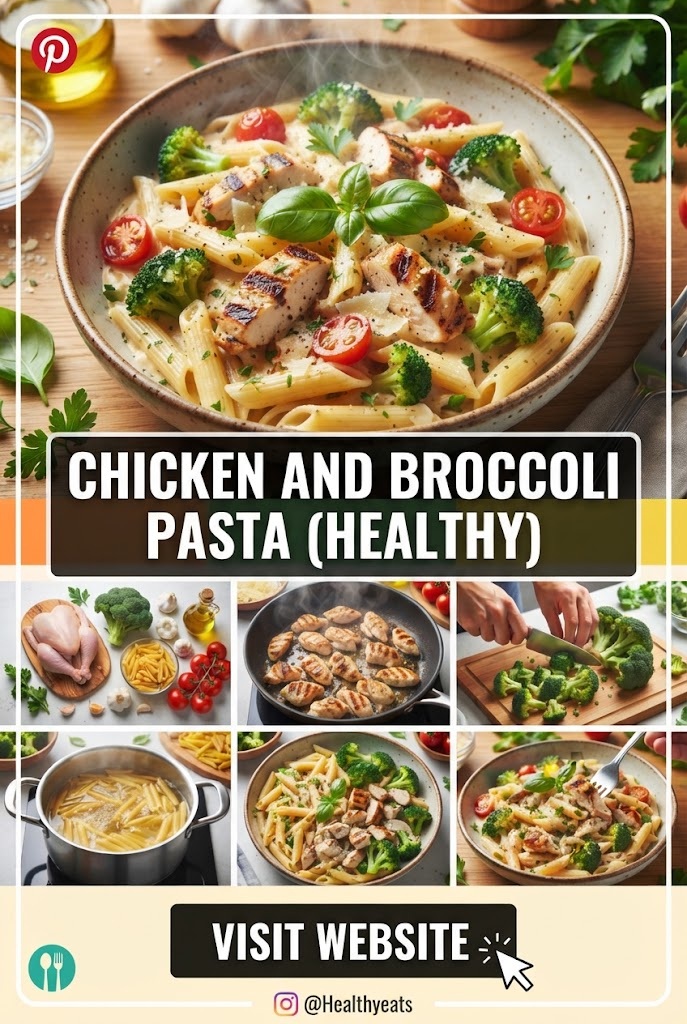
Chicken and Broccoli Pasta (Healthy)
Chicken and Broccoli Pasta (Healthy): A Fresh, Flavorful, Easy Weeknight Dinner
Chicken and Broccoli Pasta is one of those meals that proves healthy food does not have to be boring, complicated, or lacking in flavor. Tender pieces of seasoned chicken, bright broccoli, perfectly cooked pasta, garlic, Parmesan cheese, and a light creamy sauce come together in one satisfying dish. It is filling enough for dinner, easy enough for a busy weeknight, and flexible enough to customize with the ingredients you already have in your kitchen.
This healthy chicken and broccoli pasta recipe focuses on balance. Instead of using a heavy cream-based sauce, the pasta is coated in a lighter sauce made with pasta water, low-fat milk, Parmesan, garlic, olive oil, and a few simple seasonings. The result is creamy and flavorful without making the dish unnecessarily heavy.
Broccoli adds color, texture, fiber, vitamins, and a mild sweetness that pairs beautifully with savory chicken. Whole-wheat pasta can be used for additional fiber, while lean chicken breast provides satisfying protein.
Whether you are preparing dinner for your family, meal-prepping lunches, or simply looking for a healthier alternative to restaurant-style creamy pasta, this recipe is a great choice.
Why You’ll Love This Chicken and Broccoli Pasta
There are plenty of reasons to keep this recipe in your regular dinner rotation.
It is quick and practical
Most of the cooking happens in one pot and one skillet. While the pasta cooks, you can prepare the chicken and sauce, making the entire meal possible in roughly 30–35 minutes.
It is packed with protein
Chicken breast makes this pasta especially satisfying. The protein helps turn a simple pasta dish into a complete meal.
Broccoli adds freshness
Broccoli brings a slightly crisp texture and fresh flavor that balances the richness of Parmesan and olive oil.
The sauce is lighter
You do not need a large amount of heavy cream to create a delicious pasta sauce. Reserved pasta water, milk, Parmesan, and olive oil can create a silky coating with plenty of flavor.
It is family-friendly
The flavors are familiar and mild enough for most families. You can also adjust the seasonings or add extra cheese according to your preferences.
It is easy to customize
Use whole-wheat pasta, chickpea pasta, gluten-free pasta, different vegetables, or additional herbs. The basic technique remains the same.
Complete Recipe
Chicken and Broccoli Pasta
Prep Time: 15 minutes
Cook Time: 20 minutes
Total Time: 35 minutes
Servings: 4
Cuisine: Italian-inspired
Course: Dinner
Difficulty: Easy
Ingredients
For the Pasta
- 12 ounces whole-wheat pasta or regular pasta
- 4 cups broccoli florets
- 1 teaspoon salt for the pasta water
- 1 cup reserved pasta water
For the Chicken
- 1 pound boneless, skinless chicken breasts
- 1 tablespoon olive oil
- 1 teaspoon Italian seasoning
- ½ teaspoon garlic powder
- ½ teaspoon paprika
- ½ teaspoon salt
- ¼ teaspoon black pepper
For the Light Garlic Sauce
- 1 tablespoon olive oil
- 4 cloves garlic, finely minced
- 1 cup low-fat milk
- ½ cup finely grated Parmesan cheese
- ½ teaspoon Italian seasoning
- ¼ teaspoon black pepper
- ¼ teaspoon red pepper flakes, optional
- ½ cup reserved pasta water, plus more if needed
- 1 teaspoon lemon juice
- 1 tablespoon chopped fresh parsley
Optional Garnishes
- Extra Parmesan cheese
- Fresh parsley
- Freshly ground black pepper
- Lemon zest
- A small pinch of red pepper flakes
Ingredient Notes
Chicken
Boneless, skinless chicken breasts work especially well because they are lean and cook quickly. Chicken thighs can also be used if you prefer darker meat with a richer flavor.
For even cooking, try to cut the chicken into similar-sized bite-size pieces.
Broccoli
Fresh broccoli gives the best texture, but frozen broccoli can also work. If using frozen broccoli, avoid overcooking it because it can become soft quickly.
Cut large broccoli florets into smaller pieces so that they are easy to eat with the pasta.
Pasta
Whole-wheat pasta is a great choice when you want additional fiber and a heartier texture. Penne, rotini, fusilli, spaghetti, linguine, and farfalle can all work.
Penne and rotini are particularly useful because their shapes hold onto the sauce.
Parmesan
Freshly grated Parmesan melts more smoothly than many pre-shredded varieties. It also provides a salty, nutty flavor that helps build the sauce.
Milk
Low-fat milk keeps the sauce lighter. You can use whole milk if you prefer a richer result.
Garlic
Fresh garlic makes a noticeable difference. Four cloves provide a strong but balanced garlic flavor.
If you love garlic, you can increase the amount.
Lemon Juice
A small amount of lemon juice brightens the entire dish. It cuts through the richness of the Parmesan and gives the pasta a fresher finish.
How to Make Chicken and Broccoli Pasta
Step 1: Prepare the Chicken
Begin by preparing the chicken breasts.
Pat the chicken dry with paper towels. This removes excess moisture and helps the chicken brown instead of steaming.
Cut the chicken into bite-size pieces.
Place the chicken in a bowl and add:
- Italian seasoning
- Garlic powder
- Paprika
- Salt
- Black pepper
Toss everything together until the chicken is evenly coated.
Seasoning the chicken before cooking allows the spices to form a flavorful exterior.
Step 2: Heat the Skillet
Place a large skillet over medium-high heat.
Add 1 tablespoon of olive oil.
Allow the oil to heat for about 30 seconds.
Add the seasoned chicken pieces in a single layer.
Try not to overcrowd the skillet. If the chicken pieces are packed tightly together, they may release moisture and steam rather than brown.
Cook the chicken for approximately 4–6 minutes, stirring occasionally.
The outside should become lightly golden.
Continue cooking until the chicken is fully cooked.
Chicken should reach an internal temperature of 165°F (74°C) at the thickest part.
Once cooked, transfer the chicken to a clean plate.
Do not wash the skillet because the browned bits left on the bottom will add flavor to the sauce.
Step 3: Cook the Pasta
While the chicken cooks, bring a large pot of water to a boil.
Add salt to the water.
Add the pasta and cook according to the package directions.
For the best texture, cook the pasta until al dente. It should be tender but still have a slight firmness when bitten.
Before draining the pasta, carefully reserve about 1 cup of the cooking water.
This step is extremely important.
Pasta water contains starch released from the pasta during cooking. That starchy water helps emulsify the sauce and gives it a smoother texture.
Drain the pasta.
Do not rinse it.
Rinsing removes surface starch that can help the sauce cling to the noodles.
Step 4: Cook the Broccoli
You have several options for cooking the broccoli.
The easiest method is to add the broccoli to the pasta pot during the final 2–3 minutes of cooking.
This saves time and eliminates the need for another pan.
The broccoli should become bright green and tender while retaining some bite.
If you prefer firmer broccoli, add it during the final 1–2 minutes.
If you like very soft broccoli, cook it for approximately 4 minutes.
Drain the pasta and broccoli together, remembering to reserve the pasta water first.
Step 5: Make the Garlic Sauce
Return the large skillet to medium heat.
Add 1 tablespoon olive oil.
Add the minced garlic.
Cook for approximately 30–45 seconds.
Stir constantly.
Do not let the garlic turn dark brown because burnt garlic can taste bitter.
Once the garlic becomes fragrant, add the milk.
Stir gently.
Add:
- Italian seasoning
- Black pepper
- Red pepper flakes, if using
Allow the mixture to warm for about 1–2 minutes.
Do not bring it to a vigorous boil.
Step 6: Add Parmesan
Reduce the heat to low.
Gradually add the grated Parmesan cheese.
Stir continuously.
The cheese should begin melting into the warm milk.
Add approximately ½ cup reserved pasta water.
Stir until the sauce becomes smooth and lightly creamy.
If the sauce appears too thick, add another tablespoon or two of pasta water.
If it seems too thin, allow it to cook gently for another minute or two while stirring.
Remember that Parmesan will continue thickening the sauce as it cools.
Step 7: Add the Pasta and Broccoli
Add the drained pasta and broccoli to the skillet.
Toss everything together gently.
Make sure the sauce coats the pasta evenly.
Add the cooked chicken.
Continue tossing for another 1–2 minutes.
The ingredients should become evenly distributed throughout the dish.
If the pasta looks dry, add a small amount of reserved pasta water.
Add it gradually rather than all at once.
Step 8: Finish with Lemon
Turn off the heat.
Add 1 teaspoon lemon juice.
Stir gently.
Taste the pasta.
Adjust the seasoning if necessary.
You may want:
- More black pepper
- More Parmesan
- A little extra lemon juice
- Additional red pepper flakes
- A small pinch of salt
Finish with chopped fresh parsley.
Step 9: Serve Immediately
Transfer the chicken and broccoli pasta to serving bowls.
Top with a small amount of freshly grated Parmesan.
Add fresh parsley and freshly ground black pepper.
For extra brightness, add a little lemon zest.
Serve while warm.
The sauce is at its best immediately after cooking because the pasta continues absorbing moisture as it sits.
How to Get Perfect Chicken Every Time
Chicken breast is lean, which means it can become dry if overcooked.
The first important step is cutting the chicken into evenly sized pieces.
Uneven pieces cook at different rates, meaning some may become dry while others are still undercooked.
Another important step is avoiding excessive heat.
Medium-high heat is enough to create browning without burning the seasoning.
Do not constantly stir the chicken. Let it sit in the skillet for a minute or two before turning the pieces.
This allows the exterior to develop a golden crust.
Most importantly, use an instant-read thermometer when possible.
The thickest piece should reach 165°F (74°C).
Once it reaches that temperature, remove the chicken from the heat.
How to Keep Broccoli Bright Green
Overcooked broccoli can become dull, mushy, and watery.
For this recipe, the broccoli should remain slightly firm.
Adding it to the pasta during the final few minutes of cooking is an easy way to control the texture.
If you want particularly crisp broccoli, steam it separately and add it to the pasta at the end.
You can also roast the broccoli.
Toss broccoli florets with a small amount of olive oil and roast at 425°F (220°C) until the edges become lightly browned.
Roasted broccoli creates a deeper, slightly caramelized flavor that works beautifully with the chicken and Parmesan.
How to Make the Sauce Creamy Without Heavy Cream
The secret is pasta water.
When pasta cooks, starch moves into the water.
That starchy liquid can help create a smooth sauce when combined with fat and cheese.
For this recipe, olive oil provides fat while Parmesan supplies richness and flavor.
Milk adds creaminess without requiring a large amount of heavy cream.
The result is a sauce that feels creamy while remaining relatively light.
The key is to add the pasta water gradually.
Do not dump all of it into the skillet at once.
Start with a small amount and add more until you reach your preferred consistency.
Healthy Ingredient Swaps
Use Whole-Wheat Pasta
Whole-wheat pasta provides more fiber and has a nutty, hearty flavor.
It works particularly well with broccoli and garlic.
Use Chickpea Pasta
Chickpea pasta can increase the protein and fiber content of the meal.
Keep in mind that alternative pastas can have different cooking times and textures, so follow the package instructions.
Add More Vegetables
You can easily increase the vegetable content.
Good options include:
- Spinach
- Zucchini
- Bell peppers
- Mushrooms
- Peas
- Cherry tomatoes
- Asparagus
Adding extra vegetables makes the meal more colorful and can increase its overall volume.
Use More Herbs
Fresh basil, parsley, oregano, or thyme can add extra flavor without requiring much additional fat or salt.
Delicious Variations
Lemon Chicken Broccoli Pasta
For a stronger lemon flavor, increase the lemon juice slightly and add fresh lemon zest.
The citrus flavor makes this version especially fresh.
Spicy Chicken Broccoli Pasta
Add extra red pepper flakes.
You can also add a small amount of crushed chili pepper.
Creamy Chicken Broccoli Pasta
For a richer version, replace part of the milk with half-and-half.
This produces a creamier sauce while keeping the dish lighter than many traditional cream sauces.
Chicken Broccoli Alfredo-Style Pasta
Add more Parmesan and a little extra milk to create a richer Alfredo-inspired version.
Mediterranean Chicken Broccoli Pasta
Add:
- Cherry tomatoes
- Kalamata olives
- Fresh parsley
- Lemon zest
You can also add a small amount of feta cheese.
Mushroom Chicken Broccoli Pasta
Sauté sliced mushrooms with the garlic.
The mushrooms add a savory, meaty flavor and pair particularly well with chicken.
What Pasta Shape Works Best?
Almost any pasta shape can work.
Penne
Penne is excellent because the sauce gets inside the tubes.
Rotini
Rotini’s spirals hold onto the sauce and seasonings.
Fusilli
Fusilli provides plenty of surface area for Parmesan sauce.
Spaghetti
Spaghetti gives the dish a classic pasta appearance.
Linguine
Linguine is slightly wider than spaghetti and works well with light creamy sauces.
Farfalle
Bow-tie pasta is attractive and particularly good for family dinners.
Meal Prep Instructions
Chicken and broccoli pasta is a useful meal-prep option.
Allow the cooked pasta to cool slightly before dividing it into airtight containers.
Store the pasta in the refrigerator.
For the best texture, use it within approximately 3–4 days.
When reheating, add a small splash of milk or water.
Heat gently in the microwave or on the stovetop.
Stir halfway through reheating.
The added liquid helps loosen the sauce because pasta tends to absorb moisture while refrigerated.
Can You Freeze Chicken and Broccoli Pasta?
Yes, although the texture may change slightly after freezing.
Creamy sauces can sometimes separate when frozen and reheated.
If freezing, allow the pasta to cool completely before placing it into freezer-safe containers.
Freeze in individual portions when possible.
Thaw overnight in the refrigerator.
Reheat gently and add a small amount of milk or water to loosen the sauce.
For the freshest texture, however, refrigerator storage is preferable to freezing.
Common Mistakes to Avoid
Overcooking the Pasta
Soft pasta can become even softer when mixed with hot sauce.
Cook it al dente.
Overcooking the Chicken
Chicken breast can dry out quickly.
Use a thermometer when possible and remove it from the heat once it reaches 165°F (74°C).
Burning the Garlic
Garlic cooks quickly.
Keep the heat moderate and stir constantly.
Adding Parmesan Over High Heat
Very high heat can cause cheese-based sauces to become grainy.
Lower the heat before adding Parmesan.
Using Too Much Pasta Water
Pasta water is useful, but too much can make the sauce watery.
Add it gradually.
Forgetting to Reserve Pasta Water
Once the pasta is drained, the starchy cooking water is gone.
Always reserve some before draining.
Serving Suggestions
Chicken and broccoli pasta is already a complete meal, but you can serve it with a few simple sides.
Green Salad
A fresh salad with lettuce, cucumber, tomato, and a light vinaigrette provides a crisp contrast to the warm pasta.
Garlic Bread
If you are not specifically trying to keep the meal lighter, a small portion of garlic bread is delicious with the sauce.
Roasted Vegetables
Roasted carrots, zucchini, asparagus, or bell peppers complement the pasta.
Fresh Fruit
A bowl of berries, melon, or citrus fruit provides a refreshing finish.
How to Make This Recipe More Budget-Friendly
Chicken and broccoli pasta can be very economical.
Buy chicken breasts in larger packages when they are on sale and freeze portions for later.
Frozen broccoli can also be less expensive than fresh broccoli and works perfectly in this recipe.
Use Parmesan economically because a little goes a long way.
Instead of purchasing specialty pasta, use whichever pasta is already available in your pantry.
You can also stretch the recipe by adding more broccoli, spinach, mushrooms, or peas.
Frequently Asked Questions
Can I use frozen broccoli?
Yes. Frozen broccoli is convenient and works well.
Add it near the end of the pasta cooking time so that it does not become excessively soft.
Can I use chicken thighs?
Absolutely.
Chicken thighs have more fat than chicken breast and provide a richer flavor.
Cook them until they reach a safe internal temperature of 165°F (74°C).
Can I make this without Parmesan?
Yes.
You can omit Parmesan, although the sauce will lose some of its salty, nutty flavor.
Nutritional yeast can provide a different but useful savory alternative.
Can I use dairy-free milk?
Yes.
Choose an unsweetened dairy-free milk with a relatively neutral flavor.
Unsweetened oat milk or another suitable cooking milk can work, although the final texture and flavor will vary.
Can I make this gluten-free?
Yes.
Use your favorite gluten-free pasta.
Check all packaged ingredients, including seasonings and Parmesan, if strict gluten avoidance is required.
How do I make the sauce thicker?
Allow the sauce to simmer gently for a short time, or add a little more Parmesan.
You can also use slightly less pasta water.
How do I fix a sauce that is too thick?
Add reserved pasta water one tablespoon at a time while tossing the pasta.
A little milk can also help.
Can I add spinach?
Definitely.
Add fresh spinach near the end of cooking and stir until wilted.
Can I make it spicy?
Yes.
Red pepper flakes are the easiest option.
Nutrition-Friendly Tips
If your goal is to make this dish especially balanced, there are several simple strategies.
Choose whole-wheat pasta for additional fiber.
Use skinless chicken breast for a lean protein source.
Increase the broccoli portion if you want more vegetables.
Keep Parmesan controlled rather than eliminating it completely. Its strong flavor means a relatively small quantity can contribute plenty of taste.
Use olive oil rather than large amounts of butter.
For additional freshness, finish with lemon juice, parsley, or basil.
Remember that “healthy” does not have to mean flavorless. The goal is to create a meal that is satisfying enough that you actually enjoy eating it.
Storage and Reheating
Place leftovers in an airtight container.
Refrigerate promptly after the meal has cooled appropriately.
For best quality, consume within approximately 3–4 days.
When reheating, add a tablespoon or two of water or milk.
Microwave in short intervals, stirring between intervals.
Alternatively, reheat gently in a skillet over low to medium heat.
Avoid extremely high heat because it can cause the sauce to separate and make the chicken tough.
Expert Tips for the Best Chicken and Broccoli Pasta
1. Salt the pasta water.
Properly seasoned pasta water gives the noodles flavor from the inside.
2. Reserve pasta water.
This is one of the most useful techniques for making a smooth pasta sauce.
3. Brown the chicken.
A little browning adds much more flavor than simply boiling or steaming the chicken.
4. Do not burn the garlic.
Fresh garlic should become fragrant and lightly cooked, not dark brown.
5. Add cheese over low heat.
This helps create a smoother sauce.
6. Keep the broccoli slightly crisp.
A little texture makes the dish much more enjoyable.
7. Finish with lemon.
Acidity helps balance the richness of Parmesan.
8. Taste before serving.
Seasoning preferences vary, so always taste the finished dish and adjust it.
9. Serve immediately.
The sauce becomes thicker as the pasta sits.
10. Do not overcomplicate it.
The combination of chicken, broccoli, garlic, Parmesan, lemon, and pasta is already delicious.
Complete Quick Recipe Card
Chicken and Broccoli Pasta
Serves: 4
Prep: 15 minutes
Cook: 20 minutes
Total: 35 minutes
Ingredients
- 12 oz pasta
- 1 lb boneless, skinless chicken breast
- 4 cups broccoli florets
- 2 tbsp olive oil, divided
- 4 garlic cloves
- 1 cup low-fat milk
- ½ cup Parmesan
- 1 tsp Italian seasoning
- ½ tsp garlic powder
- ½ tsp paprika
- ½ tsp salt
- ¼ tsp black pepper
- ¼ tsp red pepper flakes, optional
- 1 tsp lemon juice
- 1 tbsp fresh parsley
- 1 cup reserved pasta water
Directions
- Cut chicken into bite-size pieces.
- Season chicken with Italian seasoning, garlic powder, paprika, salt, and pepper.
- Heat 1 tablespoon olive oil in a large skillet.
- Cook chicken until golden and fully cooked, reaching 165°F (74°C).
- Remove chicken from the skillet.
- Cook pasta in salted boiling water according to package directions.
- Add broccoli during the final 2–3 minutes of pasta cooking.
- Reserve 1 cup pasta water and drain the pasta and broccoli.
- Heat the remaining olive oil in the skillet.
- Sauté garlic for 30–45 seconds.
- Add milk and seasonings.
- Reduce heat and gradually stir in Parmesan.
- Add reserved pasta water until the sauce becomes smooth and lightly creamy.
- Add pasta, broccoli, and chicken.
- Toss until everything is coated.
- Add lemon juice and parsley.
- Taste and adjust seasoning.
- Serve immediately with extra Parmesan if desired.
Final Thoughts
Healthy meals are easiest to maintain when they are enjoyable, satisfying, and simple enough to prepare regularly. This Chicken and Broccoli Pasta checks all three boxes.
You get lean chicken for protein, broccoli for vegetables and texture, pasta for satisfying carbohydrates, and a light garlic-Parmesan sauce that brings everything together. The lemon adds brightness, while Italian seasoning and fresh parsley keep the flavor fresh and aromatic.
The recipe is also extremely flexible. You can switch the pasta, add extra vegetables, change the herbs, increase the spice, or use chicken thighs instead of breast. It can be prepared as a quick family dinner or divided into containers for several lunches.
The most important techniques are simple: cook the chicken carefully, keep the broccoli slightly crisp, save the pasta water, add Parmesan over low heat, and finish the dish with a little lemon.
The result is a comforting pasta dinner that feels indulgent while still fitting easily into a balanced meal plan.
Chicken and Broccoli Pasta is proof that healthy cooking can be simple, colorful, flavorful, and genuinely satisfying.