Chicken and Lemon Pasta (Bright)
Chicken and Lemon Pasta (Bright)
Introduction
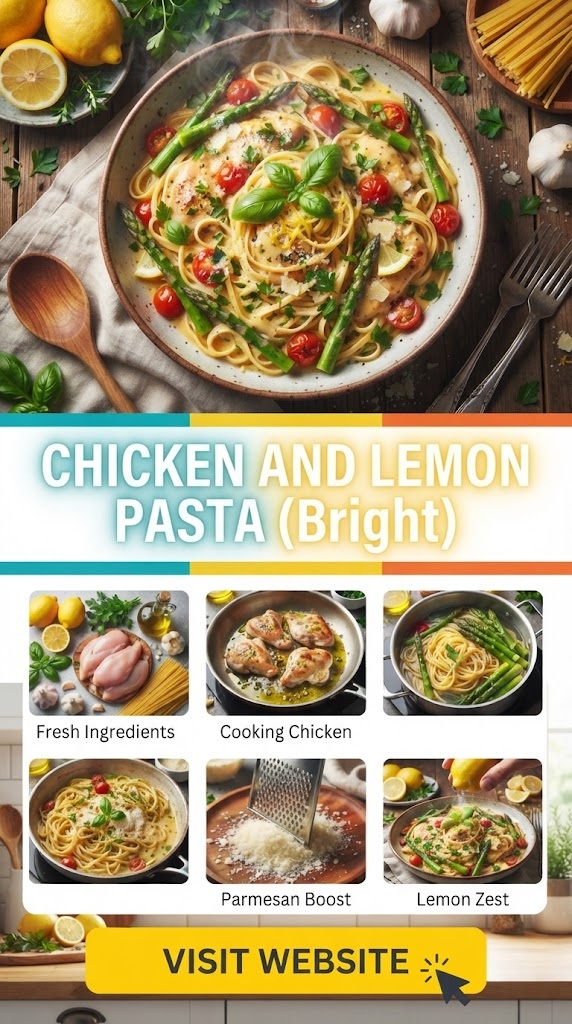
Chicken and Lemon Pasta is a bright, fresh, creamy pasta dish that brings together tender chicken, silky pasta, fragrant garlic, fresh lemon juice, lemon zest, Parmesan cheese, and a light buttery sauce. It is an easy dinner that tastes elegant without requiring complicated cooking techniques or hard-to-find ingredients.
The combination of chicken and lemon works especially well because the rich, savory chicken is balanced by the sharp, refreshing flavor of citrus. Parmesan adds saltiness and depth, while pasta water helps create a smooth sauce that clings beautifully to every strand of pasta.
This recipe is perfect for a quick family dinner, a weekend meal, or a simple dish when you want something comforting but not overly heavy. The entire meal can be prepared in roughly 30–40 minutes, making it practical for busy evenings.
Why You’ll Love This Chicken and Lemon Pasta
There are plenty of reasons to add this recipe to your regular dinner rotation.
Bright and fresh flavor: Lemon juice and zest give the pasta a refreshing citrus flavor that keeps the dish from tasting too rich.
Easy ingredients: Most of the ingredients are everyday kitchen staples.
Quick preparation: The chicken and pasta can be cooked while the sauce is prepared, saving time.
Creamy without being overly heavy: Parmesan, butter, and reserved pasta water create a silky sauce without requiring a large amount of cream.
Family friendly: The lemon flavor can easily be adjusted according to taste.
Easy to customize: You can add vegetables, herbs, chili flakes, spinach, or extra Parmesan.
Complete Recipe
Recipe Name
Chicken and Lemon Pasta (Bright)
Preparation Time
15 minutes
Cooking Time
20–25 minutes
Total Time
Approximately 35–40 minutes
Servings
4
Difficulty
Easy
Cuisine
Italian-inspired
Course
Main Course / Dinner
Ingredients
For the Chicken
- 1 ½ pounds boneless, skinless chicken breasts
- 1 teaspoon salt
- ½ teaspoon black pepper
- 1 teaspoon garlic powder
- ½ teaspoon paprika
- 1 tablespoon olive oil
- 1 tablespoon butter
For the Pasta
- 12 ounces spaghetti, linguine, or fettuccine
- 1 tablespoon salt for the pasta water
- 1 cup reserved pasta water
For the Lemon Sauce
- 3 tablespoons butter
- 4 cloves garlic, finely minced
- 1 cup chicken broth
- ½ cup freshly grated Parmesan cheese
- ½ cup heavy cream, optional
- 2 tablespoons fresh lemon juice
- 1 tablespoon finely grated lemon zest
- ½ teaspoon black pepper
- ¼ teaspoon salt, or to taste
- ¼ teaspoon red pepper flakes, optional
- 2 tablespoons chopped fresh parsley
For Garnishing
- Extra Parmesan cheese
- Fresh lemon slices
- Fresh parsley
- Freshly cracked black pepper
- A small drizzle of olive oil, optional
Ingredient Details
Chicken
Boneless, skinless chicken breasts are convenient and lean. Chicken thighs can also be used if you prefer darker meat with a richer flavor.
If the chicken breasts are particularly thick, slice them horizontally into thinner cutlets. This allows them to cook more evenly and quickly.
The goal is tender, juicy chicken rather than dry, overcooked pieces.
Pasta
Spaghetti is an excellent choice because its long strands hold the lemon-Parmesan sauce beautifully.
You can also use:
- Linguine
- Fettuccine
- Angel hair
- Penne
- Rotini
- Rigatoni
- Bow-tie pasta
Long pasta creates a more traditional presentation, while short pasta makes the meal especially easy to serve to children.
Lemons
Fresh lemons are strongly recommended.
You need both lemon zest and lemon juice. The zest provides concentrated citrus aroma, while the juice provides the bright acidity that balances the butter and Parmesan.
Avoid using bottled lemon juice if possible because fresh lemon juice has a cleaner, more vibrant flavor.
Parmesan
Freshly grated Parmesan melts much more smoothly than many pre-shredded varieties.
For the best sauce, grate the Parmesan yourself using a fine grater.
Parmigiano-Reggiano can also be used for a deeper, nuttier flavor.
Garlic
Fresh garlic gives the sauce a strong savory foundation.
Four cloves provide a noticeable garlic flavor without overpowering the lemon. If you love garlic, you can increase the amount.
How to Make Chicken and Lemon Pasta
Step 1: Prepare the Chicken
Begin by preparing the chicken breasts.
If they are thick, place each breast on a cutting board and carefully slice horizontally to create thinner pieces.
Pat the chicken dry with paper towels. Removing excess moisture helps the chicken develop a better golden-brown exterior during cooking.
Season both sides with:
- Salt
- Black pepper
- Garlic powder
- Paprika
Rub the seasoning gently into the chicken.
Set the chicken aside while you heat the skillet.
Step 2: Cook the Chicken
Place a large skillet over medium-high heat.
Add the olive oil and butter.
Once the butter melts and begins to foam, carefully place the seasoned chicken into the skillet.
Do not overcrowd the pan. If necessary, cook the chicken in batches.
Cook the chicken for approximately 4–6 minutes per side, depending on thickness.
The outside should become golden brown, while the inside should be completely cooked.
For food safety, chicken should reach an internal temperature of 165°F (74°C) at the thickest part.
Once cooked, transfer the chicken to a clean plate.
Allow it to rest for approximately 5 minutes before slicing.
Step 3: Cook the Pasta
While the chicken is cooking, bring a large pot of water to a rolling boil.
Add approximately 1 tablespoon of salt.
Add the pasta and cook according to the package instructions until al dente.
Al dente pasta should be tender but still have a slight firmness when bitten.
Before draining the pasta, carefully reserve about 1 cup of pasta water.
This step is extremely important.
The starchy pasta water helps emulsify the sauce and allows you to control its consistency.
Drain the pasta and set it aside.
Do not rinse the pasta.
Step 4: Make the Garlic Lemon Sauce
Return the skillet used for the chicken to medium heat.
Add 3 tablespoons of butter.
Once melted, add the minced garlic.
Cook for approximately 30–60 seconds, stirring constantly.
Do not allow the garlic to become dark brown. Burned garlic can make the entire sauce taste bitter.
Add the chicken broth.
Use a wooden spoon or spatula to scrape the flavorful browned bits from the bottom of the skillet.
Those browned bits add wonderful flavor to the sauce.
Allow the broth to simmer for approximately 2–3 minutes.
Step 5: Add the Lemon
Reduce the heat to medium-low.
Add the fresh lemon zest and lemon juice.
Stir well.
The lemon should immediately brighten the sauce.
If you prefer a mild lemon flavor, begin with less juice and add more later.
If you love a strong citrus flavor, you can add another teaspoon or two of fresh lemon juice near the end.
Step 6: Add Cream and Parmesan
If using heavy cream, slowly pour it into the skillet while stirring.
Allow the mixture to gently simmer for approximately 1–2 minutes.
Do not boil the sauce aggressively.
Add the freshly grated Parmesan gradually.
Stir continuously until the cheese melts into the sauce.
At this stage, the sauce should become smooth, creamy, and slightly thick.
Step 7: Add Pasta Water
Add approximately ¼ cup of reserved pasta water.
Stir well.
If the sauce seems too thick, add another tablespoon or two of pasta water.
The final sauce should be silky enough to coat the pasta without becoming watery.
This is one of the most important techniques in the recipe.
Instead of simply making the sauce thinner, pasta water helps create a smooth, cohesive sauce because its starch helps bind the ingredients together.
Step 8: Add the Pasta
Add the drained pasta directly into the skillet.
Use tongs to toss the pasta through the sauce.
Continue tossing for approximately 1–2 minutes.
Make sure every strand is coated.
If the sauce looks dry, add a little more pasta water.
If the sauce looks too loose, continue tossing gently over low heat for another minute.
Step 9: Slice the Chicken
While the pasta is being coated with sauce, slice the rested chicken into strips.
Cut the chicken against the grain whenever possible.
This produces more tender pieces.
You can either mix the chicken directly into the pasta or arrange it over the top when serving.
Step 10: Combine Everything
Add the sliced chicken to the skillet.
Gently toss everything together.
Taste the pasta.
Adjust the seasoning as necessary.
You may want to add:
- More lemon juice
- More Parmesan
- More black pepper
- A pinch of salt
- Red pepper flakes
- Fresh parsley
Do not add a large amount of salt before tasting because Parmesan and salted pasta water already contribute considerable saltiness.
Step 11: Garnish and Serve
Transfer the Chicken and Lemon Pasta to serving bowls or plates.
Top with freshly grated Parmesan.
Add chopped fresh parsley.
Finish with freshly cracked black pepper and a little lemon zest.
For an attractive presentation, place a thin lemon slice beside each serving.
Serve immediately while the pasta is hot and the sauce is silky.
Detailed Cooking Tips
Use Fresh Lemon
Fresh lemon makes a noticeable difference.
The zest contains aromatic citrus oils that provide a much stronger lemon fragrance than juice alone.
When zesting the lemon, only remove the bright yellow outer layer.
Avoid grating deeply into the white pith because it can taste bitter.
Don’t Overcook the Chicken
Dry chicken can ruin an otherwise excellent pasta dish.
Thinner chicken cutlets cook quickly, so keep a close eye on them.
Using a kitchen thermometer is the easiest way to determine when the chicken is finished.
Save Pasta Water
Never drain all of your pasta water before reserving some.
The water contains starch released from the pasta during cooking.
That starch helps the butter, cheese, broth, and lemon combine into a smooth sauce.
Don’t Burn the Garlic
Garlic needs only a short cooking time.
Once it becomes fragrant, move quickly to the next step.
Dark brown or black garlic can create an unpleasant bitterness.
Add Parmesan Gradually
Adding all of the Parmesan at once can sometimes result in clumps.
Add it slowly while stirring.
Lower heat is also helpful when incorporating cheese.
How to Make It Extra Creamy
For a richer version, use the optional ½ cup of heavy cream.
You can also increase the Parmesan slightly.
Another method is to use additional pasta water while tossing the pasta.
The combination of starch, butter, and Parmesan creates a naturally glossy sauce.
Avoid adding too much cream because it can overwhelm the fresh lemon flavor.
The goal is balance.
How to Make It Less Creamy
If you prefer a lighter pasta, simply omit the heavy cream.
Use:
- Chicken broth
- Butter
- Lemon juice
- Lemon zest
- Parmesan
- Pasta water
This produces a lighter, bright lemon sauce while maintaining plenty of flavor.
Optional Additions
Spinach
Add 2–3 cups of fresh baby spinach near the end of cooking.
The heat from the pasta and sauce will wilt the spinach quickly.
Broccoli
Steam or roast broccoli separately and add it to the finished pasta.
Broccoli pairs especially well with lemon and Parmesan.
Asparagus
Fresh asparagus makes a wonderful spring-inspired addition.
Cut it into small pieces and sauté it before preparing the sauce.
Mushrooms
Sauté sliced mushrooms until golden brown and mix them into the pasta.
Their earthy flavor provides a nice contrast to the bright lemon.
Sun-Dried Tomatoes
Chopped sun-dried tomatoes provide sweetness and concentrated savory flavor.
They also add attractive color.
Red Pepper Flakes
For a spicy version, add ¼–½ teaspoon of red pepper flakes.
The gentle heat works particularly well with lemon.
Recipe Variations
Creamy Chicken Lemon Pasta
Use the full amount of heavy cream and increase the Parmesan slightly.
This version is rich, smooth, and comforting.
Garlic Lemon Chicken Pasta
Increase the garlic to 5–6 cloves.
This creates a stronger savory flavor while keeping the lemon prominent.
Spicy Lemon Chicken Pasta
Add red pepper flakes and freshly cracked black pepper.
You can also add a small amount of chili powder.
Lemon Herb Chicken Pasta
Add fresh herbs such as:
- Parsley
- Basil
- Thyme
- Oregano
Use fresh herbs toward the end of cooking to preserve their flavor.
What to Serve With Chicken and Lemon Pasta
This pasta is satisfying on its own, but several side dishes pair beautifully with it.
Garlic Bread
Warm garlic bread is perfect for soaking up the lemon-Parmesan sauce.
Green Salad
A simple salad with lettuce, cucumber, tomatoes, and a light vinaigrette keeps the meal fresh.
Roasted Vegetables
Roasted broccoli, asparagus, zucchini, or bell peppers make excellent sides.
Steamed Green Beans
Green beans provide a crisp contrast to the creamy pasta.
Crusty Bread
A loaf of crusty bread is another simple option for enjoying every drop of sauce.
How to Store Leftovers
Allow leftover pasta to cool slightly before transferring it to an airtight container.
Store it in the refrigerator and use it within approximately 3–4 days.
The pasta will absorb some of the sauce as it sits, so leftovers may appear drier than when freshly prepared.
How to Reheat
The best method is reheating gently on the stovetop.
Place the pasta in a skillet over low to medium-low heat.
Add a splash of:
- Chicken broth
- Water
- Milk
- Cream
Stir gently until the sauce becomes smooth again.
You can also reheat it in the microwave in short intervals, stirring between each interval.
Avoid overheating because the chicken can become tough and the Parmesan sauce can separate.
Can You Freeze Chicken and Lemon Pasta?
You can freeze it, but the texture may not be quite as smooth after thawing.
Creamy cheese-based sauces sometimes separate during freezing and reheating.
For the best texture, prepare the chicken and pasta fresh whenever possible.
If freezing is necessary, cool the dish completely and store it in a freezer-safe airtight container.
Thaw overnight in the refrigerator and reheat gently with a small amount of broth or cream.
Common Mistakes to Avoid
1. Using Too Much Lemon
Lemon is powerful.
Adding too much can make the sauce sour rather than bright.
Start with a moderate amount and increase gradually.
2. Skipping the Pasta Water
Pasta water is one of the easiest ways to improve the sauce texture.
Always reserve some before draining.
3. Overcooking Chicken
Chicken breast becomes dry quickly.
Use thinner pieces and cook only until done.
4. Burning Garlic
Garlic should become fragrant and lightly cooked, not dark brown.
5. Adding Cheese Over High Heat
Very high heat can cause Parmesan to clump or make the sauce less smooth.
Reduce the heat before adding cheese.
6. Rinsing Pasta
Rinsing removes surface starch that helps the sauce cling to the pasta.
For this recipe, drain the pasta without rinsing.
How to Make the Recipe Ahead
You can prepare the chicken several hours ahead and refrigerate it.
You can also grate the Parmesan, mince the garlic, chop the parsley, and zest the lemon in advance.
For the best results, cook the pasta and make the sauce shortly before serving.
This keeps the pasta texture and sauce consistency at their best.
How to Make It More Budget-Friendly
Chicken and Lemon Pasta can be made economically with a few simple substitutions.
Use chicken thighs instead of chicken breasts if they are less expensive.
Choose regular Parmesan rather than premium imported cheese.
Use whatever pasta is already available in your pantry.
You can also stretch the meal by adding vegetables such as:
- Peas
- Spinach
- Broccoli
- Zucchini
- Carrots
These additions increase the volume of the meal while adding color and flavor.
How to Make It for a Crowd
For a larger gathering, multiply the ingredients according to the number of servings.
Cook the pasta separately and prepare the sauce in a large skillet or pot.
Keep some reserved pasta water available because the sauce may thicken as the quantity increases.
Add the chicken shortly before serving.
For a buffet-style meal, keep the pasta warm but avoid holding it over very high heat for an extended period.
Frequently Asked Questions
Can I use chicken thighs?
Yes. Boneless, skinless chicken thighs are excellent in this recipe. They are naturally juicy and flavorful.
Can I use bottled lemon juice?
Fresh lemon juice is recommended, but bottled lemon juice can work if fresh lemons aren’t available.
Fresh zest should still be used whenever possible.
Can I make this without cream?
Absolutely. Simply omit the heavy cream and use pasta water to create a silky sauce.
What pasta works best?
Spaghetti, linguine, and fettuccine are excellent choices. Penne and rotini also work well.
Can I add vegetables?
Yes. Spinach, broccoli, asparagus, peas, mushrooms, and zucchini all work beautifully.
Can I make it spicy?
Yes. Add red pepper flakes to the sauce for a gentle spicy kick.
Why is my sauce too thick?
Add reserved pasta water one tablespoon at a time until the desired consistency is reached.
Why is my sauce too thin?
Allow it to simmer gently for a short time while tossing the pasta. Parmesan will also help thicken it.
Can I use pre-shredded Parmesan?
You can, but freshly grated Parmesan generally melts more smoothly.
Nutrition Information
Approximate nutrition per serving will vary depending on the exact ingredients and portion sizes.
A serving generally provides a substantial amount of protein from chicken and Parmesan, carbohydrates from pasta, and fat from butter, cheese, olive oil, and optional cream.
For a lighter version, reduce the butter and Parmesan, omit the heavy cream, and add more vegetables.
Expert Tips for the Best Chicken and Lemon Pasta
1. Brown the chicken well.
A golden crust gives the chicken much more flavor.
2. Use both lemon zest and juice.
They provide different layers of citrus flavor.
3. Reserve plenty of pasta water.
It gives you control over the final sauce.
4. Keep the sauce gentle.
A gentle simmer is better than aggressive boiling.
5. Add Parmesan over lower heat.
This helps create a smoother sauce.
6. Taste before adding salt.
Chicken broth and Parmesan may already provide enough salt.
7. Serve immediately.
The sauce is at its best while hot and freshly emulsified.
Final Recipe Card
Chicken and Lemon Pasta (Bright)
Servings: 4
Prep Time: 15 minutes
Cook Time: 20–25 minutes
Total Time: 35–40 minutes
Ingredients
- 1 ½ pounds boneless, skinless chicken breasts
- 12 ounces pasta
- 1 teaspoon salt
- ½ teaspoon black pepper
- 1 teaspoon garlic powder
- ½ teaspoon paprika
- 1 tablespoon olive oil
- 4 tablespoons butter, divided
- 4 cloves garlic, minced
- 1 cup chicken broth
- ½ cup freshly grated Parmesan
- ½ cup heavy cream, optional
- 2 tablespoons fresh lemon juice
- 1 tablespoon lemon zest
- ¼ teaspoon red pepper flakes, optional
- 2 tablespoons fresh parsley
- 1 cup reserved pasta water
Instructions
- Slice thick chicken breasts into thinner cutlets.
- Season chicken with salt, pepper, garlic powder, and paprika.
- Heat olive oil and 1 tablespoon butter in a large skillet.
- Cook chicken for approximately 4–6 minutes per side, or until it reaches 165°F (74°C).
- Remove chicken and allow it to rest.
- Boil salted water and cook pasta until al dente.
- Reserve 1 cup pasta water before draining.
- Melt the remaining butter in the skillet.
- Add garlic and cook for 30–60 seconds.
- Add chicken broth and scrape the browned bits from the pan.
- Add lemon zest and lemon juice.
- Add heavy cream if using.
- Stir in Parmesan over low heat.
- Add reserved pasta water as needed.
- Add cooked pasta and toss until thoroughly coated.
- Slice the chicken and add it to the pasta.
- Taste and adjust lemon, salt, pepper, and Parmesan.
- Garnish with parsley, Parmesan, and fresh lemon.
- Serve immediately.
Conclusion
Chicken and Lemon Pasta is a wonderful example of how a handful of simple ingredients can create a restaurant-style dinner at home. Tender golden chicken, fragrant garlic, buttery Parmesan sauce, and fresh lemon come together to create a dish that is creamy, savory, and wonderfully bright.
The key is balance. Lemon should lift the dish rather than overpower it, Parmesan should provide richness without making the sauce too heavy, and pasta water should bring everything together into a smooth coating.
Whether you prepare the creamy version for a comforting family dinner or skip the cream for a lighter meal, this recipe is flexible enough to become a regular favorite.
For the best results, use fresh lemons, freshly grated Parmesan, properly seasoned chicken, and plenty of reserved pasta water. Finish the dish with fresh parsley, extra Parmesan, and a little lemon zest, then serve it immediately.
Bright, creamy, flavorful, and easy—Chicken and Lemon Pasta is a simple dinner that delivers big flavor with minimal effort.